
How US Buyers Build a Tax-Inclusive Landed Cost for a 25 kg Drum of Aglaia Odorata Concrete: 7 Verifiable Cost Lines, With Section 301 and 15–18 Day Transit to Confirm
A repeatable landed-cost check takes about one hour per supplier: confirm the material is a 100% natural, single-flower-source concrete, split the 25 kg drum into seven cost lines, and mark Section 301, the HTS 3301.29 subheading rate and the 15–18 day West Coast transit as "to be confirmed by your customs broker" — so you never quote a net oil price as a concrete landed cost.
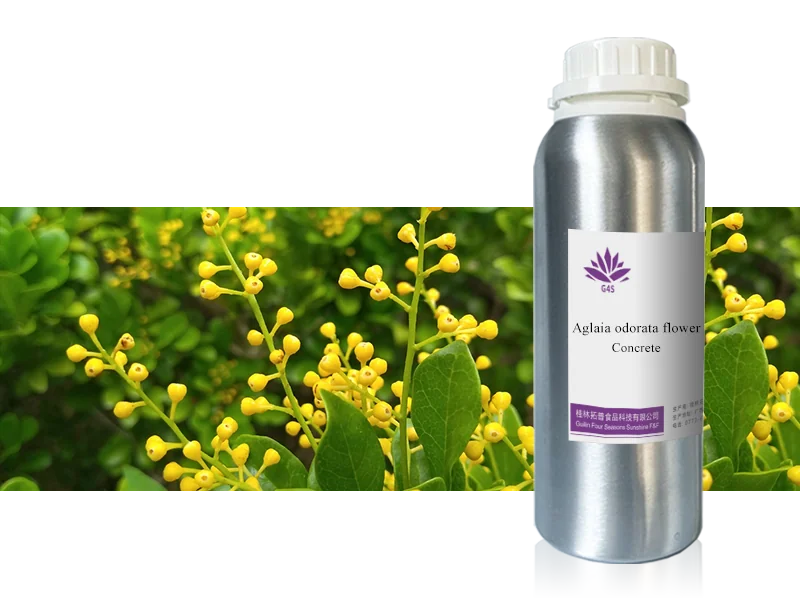
Aglaia Odorata Concrete (米仔兰浸膏, Chinese rice flower concrete) is a solvent-extracted waxy concrete made from the flowers of Aglaia odorata Lour. in Fujian, China. It is a golden-yellow to amber paste with cyclopropyl ester and terpenoid floral markers. It is not an absolute, not a distilled oil, and not a synthetic floral blend. For a US importer or trading-company buyer, that distinction is the whole commercial ballgame: the product has no single CAS, is non-food, and has no published bulk price, so a per-kg quote for "Aglaia oil" or "absolute" is not a comparable basis for a 25 kg drum of concrete.
This page is the cost-and-commercial-decision support section of the Aglaia Odorata Concrete buying topic map. It answers one question: how do you build a tax-inclusive landed cost you can audit line by line, and how do you keep form, duty and freight variables from turning into a margin error? Sourcing, aroma evaluation and formulation belong to the sibling pages linked at the end.
1. Lock the Form First: a Four-Form Comparison That Stops a Concrete Being Quoted as Absolute or Oil
1.1 Four forms, four price bases
A concrete is a solvent-extracted waxy mass; an absolute is the liquid obtained by ethanol-refining that concrete; a distilled or "essential" oil is a different form that third parties label CAS 8105-64-3; a synthetic floral accord is a compounded blend. Different forms have different yields, units and use levels — they cannot be compared per kg.
Table 1. Four-form comparison (identity and price basis)
| Form | Appearance | Extraction / process | Further refining needed? | Price unit | Directly comparable to concrete? |
|---|---|---|---|---|---|
| Concrete — this product | Golden-yellow to amber waxy mass / paste | Solvent extraction of A. odorata flowers; non-reconstituted | Direct perfuming or ethanol-refined to absolute | per kg of concrete | Baseline |
| Absolute | Liquid | Ethanol washing of concrete | Ready to use | per kg of absolute | No — different form and yield |
| Distilled / "essential" oil | Clear liquid | Distillation or other; third parties tag A. odorata oil as CAS 8105-64-3 | Ready to use | per kg of oil | No — oil, not concrete |
| Synthetic floral accord | Liquid compound | Compounding | Ready to use | per kg of compound | No — not natural |
1.2 Synonyms and mislabeling
米仔兰 = 树兰 = Chinese rice flower = Aglaia odorata Lour. Use the COA species, plant-part and form fields plus the GC-MS/HPLC fingerprint against a retained reference standard to detect an "oil" or synthetic floral being sold as concrete. A quote that states only "Aglaia fragrance raw material" is not an auditable quote.
1.3 Identity boundary (the non-negotiable positioning)
The material is a 100% natural, undiluted concrete from a single botanical source — flower only, no leaf, stem or synthetic substitute, no carrier oil, preservative or reconstitution. It has no single CAS: the third-party CAS 8105-64-3 refers to an oil, not this concrete. It is non-food and is not claimed for food, beverage or TCM edible use. The product page lists "food & beverage" under Application while Food Use says non-food; that conflict must be clarified in writing by the supplier (to be confirmed), and no food claim is made here.
Checklist — 5 identity checks before comparing any price
- COA states botanical name Aglaia odorata Lour., plant part Flower, origin Fujian.
- Form field says solvent-extracted concrete (waxy/paste), not absolute or oil.
- 100% natural / undiluted / single-flower-source statement in writing.
- No single CAS; written boundary versus third-party CAS 8105-64-3 oil.
- non-food statement; Application vs Food Use conflict clarified in writing.
Quick win (3 minutes): if a quotation line reads "absolute", "oil" or CAS 8105-64-3 while you asked for concrete, stop the comparison and request a corrected form-specific quote.
Seen & Trusted evidence slot: request the species/form/no-CAS/non-food identity letter sample with batch number, botanical name, Fujian origin, INCI, GC-MS/HPLC fingerprint and a COA sample (internal link: Species & Form Identity Letter page; GC-MS/HPLC Evidence page).

2. Break the 25 kg Drum into Seven Checkable Cost Lines
2.1 The landed-cost formula
Tax-inclusive landed cost of one 25 kg drum = concrete goods value (1 kg base × 25) + ocean freight (West Coast 15–18 days, to confirm) + cargo insurance + duty (including Section 301, to confirm) + customs/document fees + destination inland and warehousing + working-capital cost of payment terms. Each line needs a payer, a basis and a document.
Table 2. Seven cost lines and their verification documents
| # | Cost line | Who pays / basis | Verification document |
|---|---|---|---|
| 1 | Concrete goods value | Buyer to seller; 1 kg base × 25; no published bulk price, to be quoted | Supplier quote / proforma invoice |
| 2 | Ocean freight | Buyer to forwarder; 25 kg drum; West Coast 15–18 days (to confirm) | Forwarder booking note |
| 3 | Cargo insurance | Buyer; insured value × rate (to be quoted) | Insurance certificate |
| 4 | Duty | Importer to CBP; HTS 3301.29 rate + Section 301 (to confirm) | Broker written confirmation |
| 5 | Customs / document fees | Buyer to broker | Broker fee sheet |
| 6 | Destination inland + warehouse | Buyer to local providers | Local invoices |
| 7 | Working-capital cost | Buyer internally; deposit / Net 30 days at actual rate | Finance calculation |
| — | Landed cost per kg | Sum of lines 1–7 ÷ 25 | Completed worksheet |
2.2 Three misses that inflate or understate the quote
First, applying an absolute or oil per-kg price to a concrete. Second, treating an untaxed FOB price as a landed cost. Third, ignoring the De Minimis $800 exemption removal (2025, to recheck with CBP) and the possible surcharge for booking a flammable organic extract (to confirm).
2.3 Fold the payment terms into the per-kg number
A 30% deposit plus 70% against a bill-of-lading copy, or Net 30 on a repeat order, has a real capital cost. Convert it into line 7 at your actual interest rate and days — not a guessed percentage.
Table 3. Illustrative worksheet — all inputs are placeholders to be replaced by actual quotes
| Line | Variable | Input to be filled | Source |
|---|---|---|---|
| 1 Goods | P₁ × 25 | P₁ = 1 kg concrete base price, to be quoted (no published bulk price) | Supplier quote |
| 2 Freight | F | To be quoted; 15–18 days (to confirm) | Forwarder |
| 3 Insurance | I | To be quoted | Insurer |
| 4 Duty | D | To be confirmed by broker (HTS + Section 301) | Broker |
| 5 Customs/docs | C | To be quoted | Broker |
| 6 Inland/warehouse | L | To be quoted | Local providers |
| 7 Capital | W | Actual rate × days | Finance |
| Result | (P₁×25 + F + I + D + C + L + W) ÷ 25 | Output, not a guess | Worksheet |
- Is the base price a concrete price, not absolute/oil?
- Is insurance included or excluded?
- Is duty shown as a to-confirm variable, not a fixed rate?
- Are broker, inland and warehouse fees itemised?
- Is the payment-term capital cost converted into per-kg?
Quick win: ask for the 1 kg concrete price first, multiply by 25, then add each line with its document. Five minutes exposes most missing lines.
Evidence anchor, with caveat: osmanthus concrete from the same factory at ¥1,150–1,350/kg is a different-form, different-product reference anchor only — it is not this product's price and cannot be used for direct comparison (to verify). A peer's flower absolute FOB is negotiated with MOQ 5 kg (platform, to verify).

3. Write Section 301 and HTS Classification as "To-Confirm Variables"
3.1 HS classification
The product page marks 3301.29 (concretes and absolutes). A Aglaia odorata flower concrete belongs under 3301.29 Other, not the "of jasmine" subheading. The exact subheading description and rate must be checked against the current USITC HTS and confirmed by your broker (to confirm).
3.2 Section 301 handling
Chinese origin may attract additional duties (to verify). Put it in the quotation as a to-confirm variable and price two scenarios — applicable and not applicable — with a named responsible party and a review date.
Table 4. Section 301 scenario impact on the 25 kg landed cost (to confirm)
| Scenario | Section 301 status | Duty input | Effect on landed cost |
|---|---|---|---|
| A | Applies (to verify) | D = customs value × (HTS 3301.29 rate + Section 301 rate); both to be confirmed by broker | Add D; re-quote before booking |
| B | Does not apply (to verify) | D = customs value × HTS 3301.29 rate; to be confirmed | Add D; lower than A by the 301 component (not quantified here) |
3.3 The no-CAS / wax-paste communication pack
Attach botanical name and part, form, INCI, Fujian origin, GC-MS/HPLC fingerprint and per-batch COA with a written identity letter. That is how you avoid a classification dispute holding the drum at the port.
Checklist — 6 pre-shipment classification confirmations
- HTS 3301.29 Other subheading confirmed by broker (not "of jasmine").
- Section 301 applicability and rate confirmed in writing.
- De Minimis status rechecked against current CBP notices.
- No-CAS / non-food identity letter included.
- Form (waxy concrete) and flammability noted on SDS.
- Review date and responsible party written into the quote.
Quick win: add one line to every quotation — "Section 301 to confirm; rate per customs broker" — and remove the downstream price dispute.
Evidence slot: leave a blank for the USITC HTS citation and a blank for the broker's written confirmation. Do not fill either with an unverified rate.

4. Back-Solve the Arrival Date and Safety Stock from the 15–18 Day Transit
4.1 Route comparison
Table 5. Route, transit, cost and exam-risk comparison (all transit figures to verify)
| Route | Transit (to verify) | Relative cost | Exam risk | Best for |
|---|---|---|---|---|
| Los Angeles / Long Beach | 15–18 days to West Coast (to verify) | Mid | High customs/FDA exam volume | Bulk 25 kg drums |
| East Coast via Panama | 30–36 days (to verify) | Higher | Comparable exams, longer buffer | East Coast fragrance clusters |
| Air freight | Shortest (to verify) | High | Simpler | 1–5 g evaluation samples |
4.2 Harvest window and replenishment rhythm
A fixed harvest window and hand-picked tiny flowers mean supply is seasonal. Set MOQ from a 2–4 week safety stock; a peer's flower absolute MOQ of 5 kg is a platform reference (to verify), not a published price for this concrete.
4.3 Booking the flammable organic extract
Keep the wax sealed, dark and away from ignition sources; warm-soften for sampling. Dangerous-goods shipping documents can be arranged on request (to confirm), and cargo insurance is recommended.
Checklist — 5 booking-condition confirmations
- SDS classification shared with forwarder and broker.
- Sealed, light-resistant packaging confirmed.
- Warm-softening sampling instruction in the SOP.
- DG document requirement confirmed (to verify).
- Insurance bound before vessel departure.
Quick win: give your customer a conservative arrival date of 18 days plus a 5-day customs buffer, rather than the fastest quoted transit.
5. Use the COA and GC-MS/HPLC Fingerprint to Prove the Premium Drum
5.1 Per-batch COA fields
Each batch carries a batch number, manufacture date, retained-sample reference and a botanical name / origin / date statement, with a full panel: GC-MS/HPLC fingerprint against the retained reference standard, solvent residue per GB 5009.262, contaminants per the GB 5009 series, microbiology per GB 4789, heavy metals screened to ChP/USP limits, routine pesticide screen, and an expanded multi-residue scan appended on request.
5.2 Markers and retention
Cyclopropyl ester florals and terpenoids are the signature. The reference standard is retained 3 years, retained samples ≥24 months (typically 36), and shelf life is 36 months — the basis for batch consistency and dispute review.
5.3 Three steps against a low-price substitute
Check the form field; compare the GC-MS/HPLC fingerprint; then justify the premium with 100% natural, single-flower-source and per-batch COA evidence rather than following the oil or synthetic price band.
Table 6. Batch — retained sample — fingerprint mapping template (fill per batch)
| Batch no. | Manufacture date | Retained sample ref | GC-MS/HPLC fingerprint ID | COA issue date | Shelf life |
|---|---|---|---|---|---|
| To be filled | To be filled | To be filled | To be filled | To be filled | 36 months |
- Batch number, manufacture date, retained-sample reference.
- Botanical name / origin / date statement.
- GC-MS/HPLC fingerprint vs retained reference standard.
- Solvent residue GB 5009.262.
- Contaminants GB 5009 series.
- Microbiology GB 4789 series.
- Heavy metals ChP/USP; pesticide screen; expanded scan on request.
- Allergen declaration under EU 1223/2009 / GB 4806 where applicable.
Quick win: request a COA sample with the fingerprint chromatogram before ordering and complete the evidence check in 30 minutes.
Seen & Trusted evidence slot: COA sample with chromatogram, 3-year reference-standard and retained-sample policy, and G4S credentials (25,000 m² base, 137 IP assets, 30+ years of plant-extraction experience; company-level Givaudan / DSM-Firmenich / Symrise endorsement — product-level end-use case to be investigated, not claimed).
6. From 1 g Samples to a 25 kg Drum and an Annual Framework: Tiered Quotes and a 90-Day Lock
6.1 First-round must-asks
Ask for the 1 g sample price and the 1 kg concrete quote (no published bulk price — the supplier should quote proactively), sampling within 7 days, and a 90-day price lock. Evaluate at a 1 g / 5 g / 100 g cadence before committing to a drum.
6.2 Five-tier quotation template
Table 7. Tiered quote template — every price to be filled by the supplier
| Tier | Price basis | MOQ | COA / fingerprint included | Sample fee creditable | Quote |
|---|---|---|---|---|---|
| 1 g | per g | 1 g | COA + GC-MS/HPLC | Against first commercial order (to confirm) | To be quoted |
| 5 g | per g | 5 g | COA + GC-MS/HPLC | To confirm | To be quoted |
| 100 g | per 100 g | 100 g | COA + GC-MS/HPLC | To confirm | To be quoted |
| 1 kg | per kg | 1 kg | Full COA pack | N/A | To be quoted |
| 25 kg | per drum | 1 drum | Full COA pack + retained sample | N/A | To be quoted |
6.3 The 90-day lock and 3-supplier normalization
Lock which tiers, tie price to volume, and name exceptions such as a Section 301 change. Recalculate all three quotes on the same form, Incoterms and test package.
Checklist — 8 first-round questions
- 1 g sample price and 1 kg concrete quote?
- Sample dispatch within 7 days?
- 90-day price lock?
- COA + GC-MS/HPLC with the sample?
- Identity letter (no CAS / non-food)?
- English MSDS and allergen statement?
- Tiered prices with MOQ per tier?
- Sample fee credited against the first order?
Checklist — 6 lock terms
- Tiers covered; quantity bands; validity window; Section 301 exception; Incoterms; review date.
Quick win: normalise three quotations to the same form, Incoterms and documents in 10 minutes to spot a false low price.
Seen & Trusted evidence slot: record of proactive English responses within 24 hours and a 7-day sample dispatch commitment (service commitment, actual terms per contract).
7. Complete Documents and Payment Terms Before Booking
7.1 Document pack
Commercial invoice, packing list, bill of lading / airway bill, CO, Form E, origin declaration (Made in China), identity letter, non-food statement, English MSDS, per-batch COA and allergen statement. Dangerous-goods documents as required (to confirm); phytosanitary certificate per port or customer (to confirm).
7.2 MoCRA / OEM handoff
FEI and product listing are provided by the US responsible person / importer, together with US agent information. Private-label COA can be issued in the customer's brand. Support IFRA 51st/52nd amendment checks and EU 1223/2009 / GB 4806 allergen declarations where applicable. No food claim is made.
Checklist — 11 document items before booking
- Commercial invoice · packing list · B/L or AWB
- CO · Form E · Made in China declaration
- Identity letter (species / form / no CAS / non-food)
- English MSDS · per-batch COA · allergen statement
- DG transport document or confirmation (to verify)
Table 8. Payment terms and risk
| Terms | Typical use (to verify) | Buyer risk | Mitigation |
|---|---|---|---|
| Prepay for samples | 1 g / 5 g evaluation | Low | Keep the sample record |
| 30% deposit + 70% against B/L copy | New supplier (industry practice, to verify) | Medium | Confirm bank details independently |
| Net 30 / Net 60 | Repeat order | Low for buyer | Fold capital cost into Table 2 line 7 |
8. Conclusion and Next Steps: Quote in Six Steps, Not as an Oil Price
8.1 Six-step recap
- Lock the form and identity as a 100% natural, single-flower-source concrete.
- Split the 25 kg drum into seven cost lines with documents.
- Set Section 301 and HTS 3301.29 as to-confirm variables with two scenarios.
- Back-solve arrival from the 15–18 day transit (to confirm) plus a safety stock.
- Require the COA, GC-MS/HPLC fingerprint and a tiered quote.
- Complete the document pack and payment-term template.
8.2 Quick wins
3-minute form check · 5-minute missing-line check · 10-minute three-quote normalization · 11-item document tick · 8 first-round questions.
8.3 Next Steps and contact
Request 1 g / 5 g samples, a COA with GC-MS/HPLC chromatogram, the identity letter and the landed-cost worksheet. Email sales@essentialoilsfactory.com. Internal links: Species & Form Identity Letter, GC-MS/HPLC Evidence, Section 301 & HTS Classification, Landed-Cost Worksheet, Arrival Inspection Documents, MoCRA / IFRA Compliance.
FAQ — For US Import Buyers
Q1. How does a tax-inclusive landed cost for a 25 kg drum differ from a net oil price? A net oil price is one per-kg goods figure for a different form; the landed cost adds freight, insurance, duty (to confirm), broker fees, inland costs and capital cost on top of the concrete goods value. Only the latter is budgetable.
Q2. How should Section 301 be quoted when it is to be confirmed? As an explicit variable with two scenarios — applicable and not applicable — and a broker-confirmed rate. Never insert an unverified percentage; name the review date and responsible party.
Q3. Is the 15–18 day transit guaranteed? No. The LA/Long Beach 15–18 day figure is to be verified with the forwarder, and customs release can take 1–5 business days or longer on exam (to verify). Quote a conservative date.
Q4. Why can't concrete, absolute and oil be compared per kg? They are different forms with different extraction routes, yields and use levels; third parties tag the oil CAS 8105-64-3, which does not describe this concrete. Normalise form and documents first.
Q5. Can CAS 8105-64-3 be used on the concrete? No. It refers to Aglaia odorata oil, not this waxy concrete, which has no single CAS. Define identity with species, part, form, Fujian origin, INCI, GC-MS/HPLC and COA in writing.
Q6. There is no published bulk price — how do I negotiate tiers and a 90-day lock? Ask the supplier to quote proactively at 1 g / 5 g / 100 g / 1 kg / 25 kg, then lock the tiers for 90 days with volume bands and a Section 301 exception clause.
Q7. What comes with a 7-day sample dispatch? Normally the sample plus COA, GC-MS/HPLC fingerprint, identity letter and English MSDS; confirm the exact list and whether the sample fee is credited against the first order.
Q8. Which documents are needed at arrival, and how much does Form E save? Invoice, packing list, B/L or AWB, CO, Form E, origin declaration, identity letter, non-food statement, MSDS, COA and allergen statement. Any Form E duty saving is to be confirmed by your broker; no figure is given here.
Q9. Net 30 or 30/70? New suppliers commonly ask for 30% deposit and 70% against the B/L copy (industry practice, to verify); Net 30/60 suits repeat orders. Convert the capital cost into the landed-cost worksheet either way.
Q10. How do we handle non-food versus the "food & beverage" Application line? Treat the product as non-food and make no food or TCM edible claim. Ask the supplier to clarify the Application/Food Use conflict in writing in the identity letter before import (to confirm).
This article was published on 2026-11-25, and last updated on 2026-11-25. The article will be continuously updated.