
How US Fragrance Manufacturer Buyers Verify the CAS Gap in Chachiensis Steam-Distilled Fruit Oil and Secure Tiered Quotes by Species, Fruit Part and Process
A US manufacturer's buyer can unblock QA and obtain a comparable tiered quote for Chachiensis (Citrus reticulata 'Chachiensis') steam-distilled fruit oil by demanding a written CAS/EC/INCI gap letter tied to species + Fruit part + steam-distillation process, then sending one three-dimension specification card to at least three suppliers for 1–5 kg / 25 kg / 50–180 kg prices under a 90-day price lock — with every amount, tax rate and MOQ kept as inquiry-only until the dossier is complete.
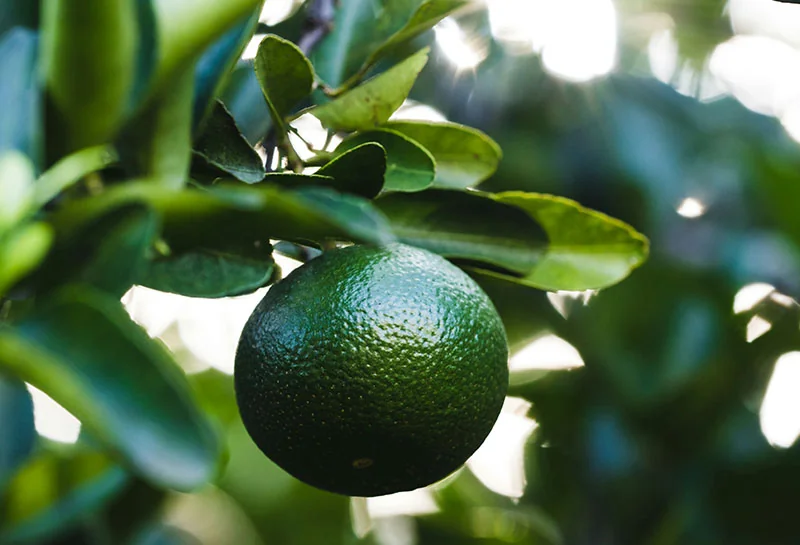
If you are a buyer at a US fragrance, flavor, cosmetics, personal-care or home-fragrance manufacturer sourcing a green-citrus top note, the blocker is rarely the price. The product page for Green Orange Oil shows blank CAS and EINECS fields, the source folder is named Green-Mandarin-Oil, the title says Green Orange Oil, and the actual slug is green-orange-oil. That identity gap is what stalls first inquiries at QA. This guide gives you the verification steps, request lists and quote structures to move from a stalled email to a same-baseline, three-supplier comparison. Throughout, the product in scope is strictly the steam-distilled fruit oil of tea-branch mandarin — not cold-pressed green mandarin peel oil, not chenpi (aged peel) extract, not a CO2 extract, and not a synthetic green-citrus accord.
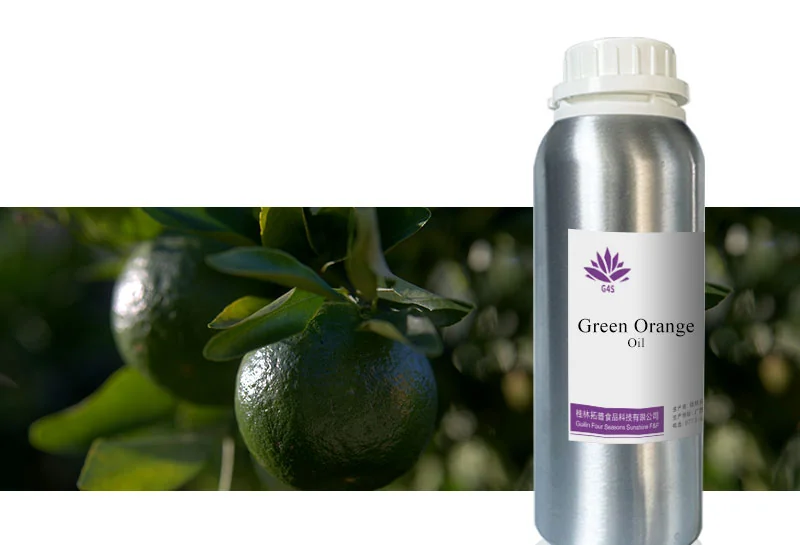
1. Clarify the CAS Gap First: Stop Your First Inquiry from Stalling at QA
A CAS gap is a documentation condition, not a quality defect. Most buyers read a blank CAS field as supplier sloppiness; in Citrus essential oils the public CAS references are genuinely mixed, and the decisive question is whether the supplier can issue a verifiable written explanation keyed to species, plant part and process — not whether a number happens to be printed.
1.1 Get a QA-writable definition of the "CAS/EC/INCI gap"
You should obtain one sentence you can paste into the QA record: the CAS/EINECS fields on the product page are blank, so a written correspondence letter is required; because public Citrus-genus essential-oil CAS references are mixed, CAS/EC/INCI must be confirmed against the tea-branch mandarin species (Citrus reticulata 'Chachiensis'), the part used (Fruit) and the steam-distilled-fruit-oil process. Three elements are inseparable — drop any one and the quote loses its comparison baseline. The folder/slug/title mismatch (Green-Mandarin-Oil / green-orange-oil / Green Orange Oil) is the highest-priority risk and must be unified in COA, TDS and SDS before review.1.2 Use two first-round questions to get quote and sample together
Ask, in one email: (1) the 1 g sample price, and (2) the 1 kg steam-distilled fruit oil quote. Public channels are inquiry-based with no published bulk price, so a buyer must request rather than wait for a posted number. Quick win: a "two questions plus one attachment" email — ask for both prices and attach your intended use and specification basis; have the supplier write the response time into the contract annex.1.3 Judge a CAS letter against four standards
A credible letter (1) states the full botanical name, part Fruit and process steam distilled fruit oil; (2) explains the folder/slug/title mismatch and gives one unified wording; (3) separates this species from near Citrus species, cold-pressed peel oil, chenpi extract and synthetic accords; (4) gives a CAS/EC/INCI correspondence or a written commitment naming the open item and its confirmation deadline instead of a verbal answer.CAS gap verification table
| Verification item | Answer you should get | This product's stated position | Complete? | Owner | Due |
|---|---|---|---|---|---|
| Full botanical name | Citrus reticulata 'Chachiensis' (tea-branch mandarin), Rutaceae | As stated; voucher specimen required | Obtain letter | Supplier QA | Before quote |
| Part used | Fruit | Fruit | Yes | Supplier QA | Before quote |
| Process / product form | steam distilled fruit oil; Colorless to yellow liquid | Steam distillation | Yes | Supplier QA | Before quote |
| CAS / EINECS / EC / INCI | Written correspondence by species + part + process | Fields blank; no number invented | No | Supplier regulatory | Obtain letter |
| Folder / slug / title alignment | Green-Mandarin-Oil folder, green-orange-oil slug, Green Orange Oil title unified | Not yet unified in COA/TDS/SDS | No | Supplier QA | Before QA review |
| Non-confusion statement | Distinguish near species, cold-pressed oil, chenpi extract, synthetic accord | Required, not yet issued | No | Supplier QA | Obtain statement |
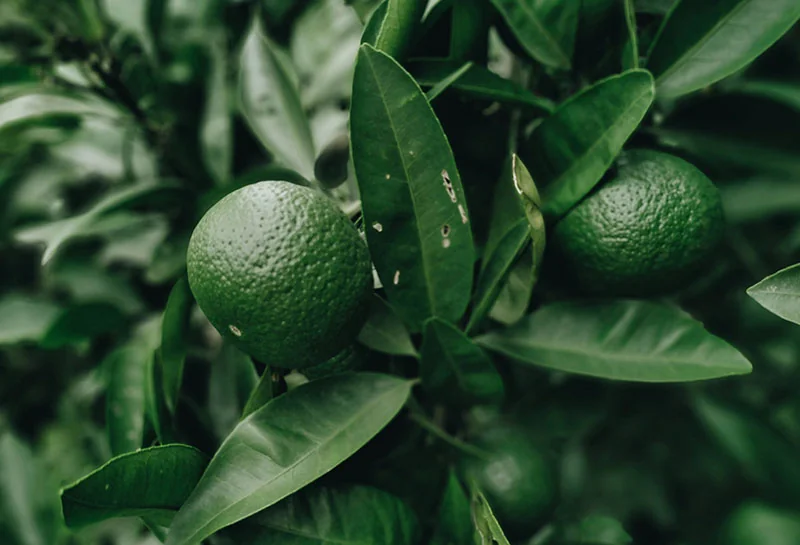
2. Lock the Comparison Baseline with Species + Fruit Part + Process
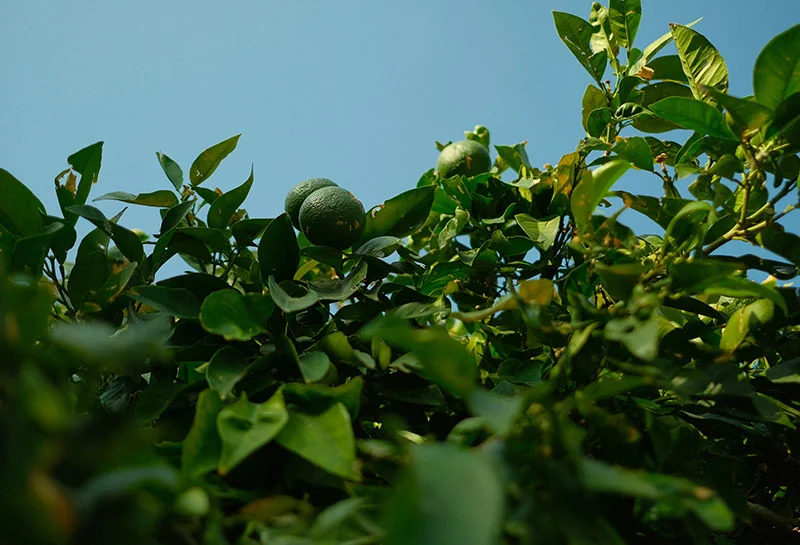
The three-dimension identity — species, fruit part, process — is the precondition for any comparable price. Treat it as an entity–attribute–value set: [tea-branch mandarin distilled oil] — [botanical origin] — [Citrus reticulata 'Chachiensis']; [part used] — [Fruit]; [process/form] — [steam distilled fruit oil]. Only when all three are fixed does a number become a quote rather than a label.
2.1 Lock the species entity: tea-branch mandarin, not a near Citrus species
Get the standardized spelling Citrus reticulata 'Chachiensis' in writing, plus a botanical voucher and an origin certificate for the Guangdong Xinhui area. The short harvest window means distillation batch, varietal state and aroma consistency must be locked in advance. Buyer result: an identity-mislabel risk becomes a checkable transparency advantage, and the QA path is clear.2.2 Lock the fruit part: Fruit distillation oil, not peel or root
Part Used = Fruit. Do not accept a near-part, root or seed-oil description as a substitute, and keep a hard line against cold-pressed green mandarin peel oil and chenpi-related extracts. Buyer result: no "same name, different part" pricing dispute.2.3 Lock the process: obtain a written steam distilled fruit oil form statement
The product is water-vapor distilled fruit oil, a Colorless to yellow liquid with the aroma of Green Orange; the same wording must appear in COA, TDS and SDS. Non-comparable list: steam-distilled fruit oil ≠ cold-pressed green-citrus peel oil ≠ chenpi extract ≠ cold-pressed Green Mandarin oil ≠ synthetic green-citrus fragrance. Their price bases cannot be mixed.2.4 Use a three-dimension spec card to make the request un-hedgeable
Deliverable: a species–part–process confirmation card attached to every quote request as the baseline.Species–part–process alignment table
| Dimension | This product | Cold-pressed green mandarin peel oil | Chenpi (aged peel) extract | Synthetic green-citrus accord |
|---|---|---|---|---|
| Botanical source | Citrus reticulata 'Chachiensis' fruit | Citrus reticulata peel | Aged Citrus reticulata peel | None (synthetic) |
| Part used | Fruit | Peel | Aged peel | N/A |
| Process | Steam distillation | Cold pressing | Extraction from aged peel | Compounding |
| Appearance | Colorless to yellow liquid | Yellow-green oil | Extract / oleoresin | Clear liquid |
| CAS / INCI basis | Gap letter by species + part + process (request the letter) | Different basis | Different basis | Different basis |
| Directly comparable on price? | Baseline | No | No | No |
3. Turn "Citrus Aroma" into Comparable Data with GC-MS Fingerprints and Markers
A fingerprint is the ruler that makes every comparison use the same scale. For a steam-distilled fruit oil you must build the marker profile from this process — never import the ratios published for cold-pressed peel oil.
3.1 Build a comparable fingerprint with three markers
Establish limonene, gamma-terpinene and citral by GC-MS as the evaluation baseline for this distilled fruit oil. Do not quote cold-pressed green peel ratios. Ask whether a varietal characteristic-peak map separating tea-branch mandarin from near Citrus materials has been established — ask the supplier. Buyer result: 100% natural status plus marker and GC-MS evidence can answer a low-price substitute claim with data, not adjectives.3.2 Align physical specifications batch by batch
Density 0.841–0.881 (20 °C), refractive index 1.455–1.475 (20 °C), solubility and appearance should be released batch by batch against the COA and the peroxide value. Wide ranges without batch-level release create inter-batch disputes; the folder/slug mismatch must be explained in the identity file.3.3 Write peroxide value and oxidation sensitization into the inquiry
Limonene, gamma-terpinene and citral carry higher sensitization risk after oxidation. Require quantitation, peroxide-value control, IFRA review and patch testing. Buyer result: a subjective "smells about right" judgment becomes a checkable oxidation-stability figure.GC-MS and marker request list
- GC-MS fingerprint chromatogram for the offered batch, with peak IDs for limonene, gamma-terpinene and citral
- Quantitative method and calibration for the three markers
- Peroxide value for the same batch
- Three-year retained reference sample and reference-standard comparison
- Written statement that cold-pressed green mandarin peel ratios were NOT applied to this distilled fruit oil
- Confirmation of a varietal characteristic-peak map versus near Citrus species (ask the supplier if none is established)
Seen & Trusted evidence slot: per-batch COA with GC-MS fingerprint, citral quantitation and peroxide value; three-year retained samples and reference standards.
4. Get the Three-Tier Quote: From 1–5 kg Samples to 25/50/180 kg Drums
This is the cost-and-execution core. "No public bulk price" is not a dead end — it is a reason to make the supplier quote in structure. Every figure below is inquiry-only; the article assigns no dollar amounts, tax rates or MOQ.
4.1 Turn "no public bulk price" into a negotiable quote sheet
Tier 1: 1–5 kg aluminum-bottle samples with COA, GC-MS, marker quantitation, peroxide value, SDS and the botanical/CAS gap letter for evaluation and blind assessment. Tier 2: 25 kg trial order as the framework price starting point for batch-consistency validation. Tier 3: 50 / 180 kg drums for an annual framework; request the flammable-liquid transport classification in the quote. Path: 1–5 kg → 25 kg → 180 kg.4.2 Replace cross-baseline comparisons with three or more same-baseline quotes
Every compared offer must be the same tea-branch mandarin steam-distilled fruit oil, same part, same process, same complete document set. Do not compare against cold-pressed peel oil, chenpi extract, synthetic green-citrus fragrance or a different species. Public figures are mixed in basis and credibility; stratify suppliers by markers and document completeness.4.3 Lock 7-day sampling plus a 90-day price hold
Request dispatch within 7 days for fast evaluation and negotiate a 90-day price lock against post-harvest volatility and low-price substitution. Payment practice: T/T prepayment or credit card for small samples, repeat orders Net 30/60, and for a new supplier 30% deposit + 70% against a copy of the bill of lading (industry practice, to be agreed). All commitments are negotiable and set out in the contract.4.4 Back-solve MOQ from 2–4 weeks of safety stock
Use 2–4 weeks of safety stock to set MOQ; phase replenishment at 100 g / 1 kg and 1–5 kg sample cadence. The short harvest window means distillation batches and replenishment rhythm must be locked ahead of time.Three-tier quote template
| Tier | Quantity band | Indicative price | Documents attached | Lead time | Price-lock period |
|---|---|---|---|---|---|
| Tier 1 — evaluation | 1–5 kg aluminum bottle | Quote on request | COA, GC-MS, marker quantitation, peroxide value, SDS, botanical + CAS gap letter | on request | on request |
| Tier 2 — trial | 25 kg drum | Quote on request | Tier 1 set + batch-consistency record | on request | 90 days (negotiable) |
| Tier 3 — annual framework | 50 / 180 kg drum | Quote on request | Tier 2 set + flammable-liquid transport classification on request | on request | 90 days (negotiable) |
| Supplier | Same species / part / process / full dossier? | Markers (limonene / gamma-terpinene / citral) | Dossier complete? | Tiered quote | MOQ | Sample dispatch | Price lock |
|---|---|---|---|---|---|---|---|
| A | Must be verified | On request | On request | Quote on request | On request | On request | On request |
| B | Must be verified | On request | On request | Quote on request | On request | On request | On request |
| C | Must be verified | On request | On request | Quote on request | On request | On request | On request |
Seen & Trusted evidence slot: source-factory direct supply and stable capacity — 25,000 m² production base, vertically integrated, sample through drum formats available.
5. Put the Compliance Dossier into the Inquiry: IFRA, Allergens, Phototoxicity, Residuals and non-food
A buyer's second gate is safety and claim eligibility. The dossier must cover the whole chain from botanical identity to US claim language; anything undisclosed is requested in writing rather than assumed.
5.1 Use IFRA 51st/52nd amendment, allergen and phototoxicity assessment to gain fragrance admission
Fragrance/cosmetic use needs MoCRA responsible-person and product-listing support, IFRA 51st/52nd amendment review, allergen and phototoxicity (furocoumarin) assessment, and patch testing; candles are reviewed by IFRA category. Buyer result: a clear addition path and a deliverable safety file.5.2 Use per-batch COA residues and microbes to control contamination
Per-batch COA carries batch number, production date, retained-sample number, full botanical name / part / origin, heavy metals Pb/Cd/As/Hg, pesticide residues and microbiology. Fruit/peel raw material needs stronger pesticide and mold screening; retain samples three years. Request a California Prop 65 assessment.5.3 Use the non-food / compliant aroma-description boundary to avoid FDA/FTC red lines
Mental clarity, digestive soothing, child-friendly and Chinese wellness tea are FDA/FTC red lines for physiological function, child safety or therapeutic claims; remove or rewrite them as compliant aroma descriptions in all US-facing material. Applications naming green mandarin tea, citrus beverages, fruit tea or Chinese wellness tea remain food/beverage scenarios: until FEMA GRAS/EAFUS entries and use limits for this species and this distilled-fruit-oil form are documented, the material is non-food and no food or wellness efficacy claim is made.5.4 Collect the full document set in one pass
Commercial: commercial invoice, packing list, bill of lading / air waybill, CO and Form E as needed. Product: COA, TDS, multilingual SDS. Compliance: botanical-name letter, non-confusion statement, CAS correspondence letter, food-use boundary statement, US claim review letter, IFRA certificate, allergen declaration.Compliance document checklist (must submit / as needed / to confirm)
Must submit:
- Per-batch COA with batch code, production date, retained-sample number, botanical name / part / origin
- GC-MS fingerprint, citral quantitation and peroxide value
- Heavy metals Pb/Cd/As/Hg, pesticide residues and microbiology
- English SDS in GHS format; multilingual SDS on request
- TDS with density 0.841–0.881 (20 °C) and refractive index 1.455–1.475 (20 °C)
- Botanical-name standardization letter and non-confusion statement (near species, cold-pressed oil, chenpi extract, synthetic accord)
- CAS/EC/INCI gap letter keyed to species + part + process
- IFRA 51st/52nd compliance statement and allergen declaration
- Phototoxicity (furocoumarin) assessment and patch-test guidance
- US claim review letter deleting mental clarity / digestive soothing / child-friendly / Chinese wellness tea
- Food-use boundary statement (non-food until FEMA GRAS/EAFUS for this species and form is confirmed)
As needed:
- MoCRA responsible person / product listing support
- California Prop 65 assessment (request the assessment)
- Certificate of Origin / Form E
- Flammable-liquid transport documents; DOT/PHMSA classification on request
- Third-party laboratory report; OEM private-label COA
To confirm:
- FEMA GRAS / EAFUS entry for this species and form (obtain the entry)
- HS classification 3301.29 or 1302 (customs broker to decide)
- Section 301 applicability (confirm with the broker)
- MOQ and production lead time (obtain from the supplier)
Seen & Trusted evidence slot (company-level verified; single-product applicability not claimed): Kosher; Halal since 2007; ISO 22000 2011–2017; SC food production license; Indonesia Halal from 2025; IFEAT member; participation in drafting 10 national standards + 1 industry standard.
6. One-Page Inquiry Checklist + 7/30/90-Day Execution Sheet
The final step turns every action above into a one-page, few-minute first inquiry and a tracked schedule.
6.1 Use a six-item first-round checklist
Ask for: (1) written botanical name + Fruit + steam distilled fruit oil; (2) CAS/EC/INCI gap letter and confirmation deadline; (3) GC-MS fingerprint + marker quantitation + peroxide value; (4) 1 g sample price and 1 kg quote (no public bulk price —quote on request); (5) 25/50/180 kg tiered prices and 90-day lock; (6) 7-day dispatch, MOQ and 2–4 week safety-stock replenishment cadence.6.2 Use a 7/30/90-day timeline
Day 7: sample in hand, start aroma blind assessment. Day 30: three same-baseline quotes, dossier verification, 25 kg trial decision. Day 90: lock tiered prices, retained-sample review, confirm replenishment cadence.6.3 Use three quick wins to cut inquiry friction
Attach a non-food fragrance-use statement for a more accurate quote; unify all three suppliers with the same spec card; put the folder/slug/title mismatch in the first question so QA never sees it first.One-page inquiry checklist
| Inquiry item | Why ask | Expected deliverable | Due | Owner |
|---|---|---|---|---|
| Botanical name + Fruit + steam distilled fruit oil in writing | Locks the comparison baseline | Three-dimension spec card | Before quote | Supplier QA |
| CAS/EC/INCI gap letter + confirmation date | Unblocks QA | Signed letter | Obtain letter | Supplier regulatory |
| GC-MS fingerprint + marker quantitation + peroxide value | Anti-low-price-mixing evidence | Batch report | With sample | Supplier lab |
| 1 g sample price + 1 kg quote | No public bulk price | Written quote | First reply | Supplier sales |
| 25 / 50 / 180 kg tiered prices + 90-day lock | Cost certainty | Tiered quote sheet | Obtain quote | Supplier sales |
| 7-day dispatch + MOQ + 2–4 week safety stock | Planning rhythm | Service commitment in contract | Obtain commitment | Supplier sales |
| Window | Buyer action | Pass check |
|---|---|---|
| Day 7 | Sample arrives; start blind aroma assessment | Sample + COA + GC-MS in one package |
| Day 30 | Three same-baseline quotes; dossier check; 25 kg trial decision | All three use the same spec card |
| Day 90 | Lock tiered prices; retained-sample review; replenishment cadence | 90-day lock in writing |
Hello [Supplier], We are a US fragrance manufacturer evaluating 100% natural Chachiensis (Citrus reticulata 'Chachiensis') steam-distilled fruit oil, Part Used = Fruit, for non-food fragrance use. Please reply with:
1) 1 g sample price and 1 kg quote (no public bulk price — please provide yours);
2) A written CAS/EC/INCI gap letter keyed to species + fruit part + steam-distillation process, with a confirmation date;
3) GC-MS fingerprint, limonene / gamma-terpinene / citral quantitation and peroxide value for the offered batch;
4) 25 / 50 / 180 kg tiered prices, MOQ and 90-day price-lock terms. Please confirm the Green-Mandarin-Oil folder / green-orange-oil slug / Green Orange Oil title are unified in COA, TDS and SDS. Regards, [Name / Company / Email / WhatsApp]Subject: Green Orange Oil (Chachiensis steam-distilled fruit oil) — 1 g sample price + 1 kg quote + CAS gap letter
Template entries: first-round inquiry email, CAS/EC/INCI gap letter, three-dimension spec card, tiered quote sheet and three-supplier matrix — copy the blocks above directly.
7. FAQ 1: What is the CAS number of Chachiensis steam-distilled fruit oil, and why is the product page blank?
The CAS/EINECS fields are blank and must be flagged for written confirmation. Public Citrus-genus essential-oil CAS references are mixed, so the supplier should issue a written CAS/EC/INCI correspondence statement keyed to the tea-branch mandarin species, the Fruit part and the steam-distilled-fruit-oil process. No specific number is invented here; the deliverable is the letter and its confirmation deadline.
8. FAQ 2: Can I compare it directly against a cold-pressed green mandarin peel oil quote?
No. The process and product form differ (steam distilled fruit oil versus cold-pressed peel oil), and the marker ratios and document basis differ with them. Keep them out of the same comparison column.
9. FAQ 3: With no public bulk price, how do I obtain three comparable quotes?
Use one identical species–part–process card and actively request 1 g / 1 kg / 25 / 50 / 180 kg tiered prices from three suppliers, require 7-day sampling and a 90-day price lock, and stratify the offers by document completeness and marker data rather than by posted figures.
10. FAQ 4: Can this supplier offer a 90-day price lock and 7-day sampling?
These are negotiable service commitments, not guaranteed terms. Nothing in this article asserts a confirmed number of days; both must be written into the inquiry and the contract.
11. FAQ 5: Can the oil be used in food or support "soothing / child-friendly" claims?
FEMA GRAS/EAFUS entries and use limits for this species and this distilled-fruit-oil form have not been documented. Until they are, treat the material as non-food, use compliant aroma descriptions only, and do not make food, therapeutic or child-safety claims.
12. FAQ 6: How do I reconcile the Green-Mandarin-Oil folder, the green-orange-oil slug and the Green Orange Oil title in my QA file?
Require the supplier to state one unified identity in COA, TDS and SDS — tea-branch mandarin (Citrus reticulata 'Chachiensis'), part Fruit, steam distilled fruit oil — and to explain in the identity letter that the folder, slug and title refer to the same single botanical material.
13. Conclusion and Next Steps — Seen & Trusted Evidence
13.1 Build trust with verifiable company-level evidence, not invented single-product cases
The supplier is a source factory serving brands and manufacturers with essential oils, natural flavors and stable supply (Guilin Four Seasons Sunshine / G4S): vertically integrated, 25,000 m² base, 137 IP assets, 30+ years of plant-extraction experience, founded 2007. Seen: company-level customers such as Givaudan, DSM-Firmenich and Symrise (verified at company level). Trusted: per-batch COA, three-year retained samples, GC-MS and markers, multilingual SDS, and identity/compliance letters; average sampling and adaptation cycle about 14 days (service commitment, subject to contract). A customer case specifically for green-orange-oil is not claimed here.13.2 Clear next-step CTA
Request the identity dossier + 1–5 kg sample + three-tier quote sheet + CAS/EC/INCI gap letter. Inquiry entry: Name / Company / Email / WhatsApp / Message; email sales@essentialoilsfactory.com. Internal links: back to the 204 product positioning and the green-orange-oil product page; to the CAS/EC/INCI letter template, GC-MS marker page, IFRA compliance page and tiered-quote page; laterally to sibling articles 0002, 0004, 0005, 0011 and 0022.This article was published on 2026-11-25, and last updated on 2026-11-25. The article will be continuously updated.