What Is the 1,8-Cineole Content Specification for Blue Gum Eucalyptus Oil, and How Do You Verify the 70–85% Range?
The core specification of blue gum eucalyptus oil (Eucalyptus globulus) is 1,8-cineole content of 70–85% (FCC grade ≥70%, USP grade ≥85%), and a supplier passes acceptance only when the batch stays stable in the mid-range of 75–82% with a batch-to-batch deviation of ≤1.5 percentage points, verified through a batch-matched GC-MS report and a COA with 15+ test items.
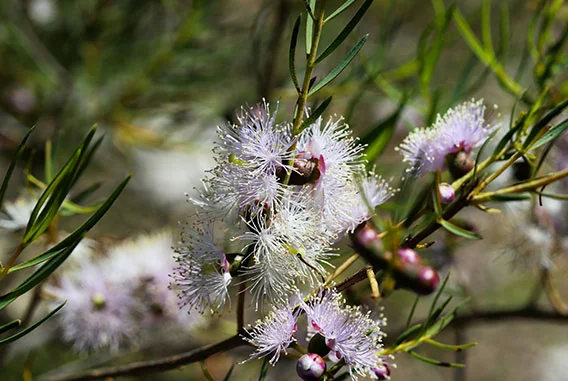
Blue gum eucalyptus oil (Eucalyptus globulus leaf oil) is a steam-distilled essential oil obtained from the leaves of the blue gum eucalyptus tree. The United States has no commercial-scale cultivation and relies 100% on imports, with China among the major global supply sources. For a procurement buyer at a US pharmaceutical, food, personal care or cleaning products manufacturer, the first document to review before any formula testing is the specification sheet — because 1,8-cineole content decides whether the oil can enter your formula, at what grade, and at what price.
This guide walks US manufacturing buyers through the 1,8-cineole specification for blue gum eucalyptus oil, why the 70–85% range matters, how to verify the range during acceptance, and how to control batch-to-batch consistency so the oil you receive is the oil you validated.

What Is the Core Specification of Blue Gum Eucalyptus Oil?
A qualified specification sheet must cover the chemical and physical parameters that a US manufacturer's internal quality standard actually verifies:
| Parameter | Preferred operating range | Specification limit | Why it matters |
|---|---|---|---|
| 1,8-Cineole content | 75–82% (mid-range target) | 70–85% | The first decision factor for grade, efficacy and price |
| alpha-Pinene | Reported as typical range | Listed on COA | Supports natural-source fingerprint verification |
| Density (20°C) | 0.906–0.925 | Within standard range | Quick screening check for adulteration |
| Refractive index (20°C) | 1.4580–1.4700 | Within standard range | Quick screening check for adulteration |
| Optical rotation | Reported per batch | Within standard range | Detects camphor or synthetic cineole addition |
| Flash point | ≥50°C | Listed on SDS | Logistics and storage safety |
- Key component profile: 1,8-Cineole, alpha-Pinene, beta-Pinene, Limonene, gamma-Terpinene, alpha-Terpineol must be listed with typical ranges — not just a single 1,8-cineole number
- Traceability fields: INCI name (Eucalyptus Globulus Leaf Oil), CAS number (8000-48-4), batch number, production date, shelf life and storage conditions
- COA coverage: a 15+ item Certificate of Analysis, covering the core parameters above plus appearance, color, odor and heavy-metal/microbial limits for food or personal care grades
Tool block 1 — Specification sheet checklist
Before you send the RFQ, screen any blue gum eucalyptus oil spec sheet with this list:
- [Check] INCI name and CAS number printed on the sheet (missing = reject)
- [Check] 1,8-cineole declared as "minimum + test method (GC)" format, with a 70–85% operating range
- [Check] FCC grade (≥70%) or USP grade (≥85%) stated explicitly
- [Check] Component profile lists at least 6 components, not only 1,8-cineole
- [Check] Density, refractive index and optical rotation within standard ranges
- [Check] Batch number on the spec sheet cross-matches the COA
- [Check] Spec sheet is signed and stamped by the supplier, not a website screenshot
A spec sheet is the supplier's promise; a COA is the measured proof for each batch. They cannot replace each other.

Why Is 1,8-Cineole the First Decision Factor for Blue Gum Eucalyptus Oil?
1,8-Cineole (eucalyptol) is the signature component of blue gum eucalyptus oil. It carries the characteristic cooling, camphoraceous, eucalyptus odor and drives the functional performance that pharmaceutical, respiratory-care and cleaning products depend on. For a buyer, 1,8-cineole is not a marketing description — it is a quantifiable proxy for grade, price and authenticity.
1,8-Cineole content directly determines the grade and application:
| 1,8-Cineole content | Grade | Typical application |
|---|---|---|
| ≥70% | FCC grade | Food and flavor, personal care, household cleaning |
| ≥85% | USP grade | Pharmaceutical and respiratory care products |
| Below 70% | Sub-spec / off-grade | Not accepted for manufacturing use at specification |
1,8-Cineole is also the first adulteration signal. Blue gum eucalyptus oil is sometimes stretched with synthetic cineole or blended with cheaper cineole-rich oils such as camphor oil fractions. If a COA claims an unexpectedly uniform 1,8-cineole level batch after batch with no natural variation, or if optical rotation falls outside the natural range, treat it as a red flag and request a third-party retest.

How Do You Verify the 70–85% Range During Acceptance?
The 70–85% range is wide enough to cover natural seasonal variation but still narrow enough to exclude off-grade material. Verification is not "read the COA and trust it" — it is a repeatable process with three layers:
Layer 1 — Batch-matched third-party GC-MS. The report must come from a recognized independent laboratory (SGS, ALS, Eurofins, Bureau Veritas or equivalent), not a supplier's self-printed sheet. The report batch number must equal the COA batch number and the drum label batch number.
Layer 2 — Mid-range stability. The target is not merely "inside 70–85%" but stable in the mid-range of 75–82%. A batch at 68% is off-spec; a batch that swings between 72% and 84% is a consistency problem for your downstream formula, even if every batch stays inside the range.
Layer 3 — Historical batch data. One good COA proves one batch. Ask for the last 5–10 batches' 1,8-cineole results and the batch-to-batch deviation. A mature supplier should show deviation within 1.5 percentage points around the mid-range.
Tool block 2 — Acceptance verification checklist
- [Check] Third-party GC-MS report from SGS, ALS, Eurofins, Bureau Veritas or equivalent
- [Check] Report batch number = COA batch number = drum label batch number
- [Check] 1,8-cineole within 70–85%, with the target band of 75–82% agreed in the RFQ
- [Check] Batch-to-batch deviation ≤1.5 percentage points over the last 5–10 batches
- [Check] Optical rotation and refractive index within natural range (no synthetic cineole red flag)
- [Check] COA covers 15+ items including appearance, physical constants and safety data
- [Check] Retest path agreed: reserve sample available for third-party retest at any time

How Do You Control Batch-to-Batch Consistency?
Batch consistency is the KPI US manufacturers actually track, because downstream products must smell and perform the same every time. The number that matters for blue gum eucalyptus oil is the batch-to-batch deviation in 1,8-cineole content.
- Working target: batch-to-batch deviation ≤1.5 percentage points, with content held in the 75–82% mid-range
- Warning level: deviation of 3–5 percentage points between batches requires formula adjustment and triggers a supplier review
- Reject level: content jumping across the 72–84% band batch after batch is a direct rejection reason for a manufacturing contract, because it forces constant re-validation of finished products
Before signing a framework agreement, request historical batch data and verify that the supplier retains a reserve sample from every batch for at least 12 months and can re-issue a test report on demand. A supplier that cannot show 5–10 consecutive batches within the target band is a supplier you cannot schedule production around.
Tool block 3 — Batch consistency control checklist
- [Check] Historical batch data: last 5–10 batches, 1,8-cineole each with date and batch number
- [Check] Batch-to-batch deviation ≤1.5 percentage points around the agreed mid-range
- [Check] Reserve-sample policy: every batch retained ≥12 months, retest available on demand
- [Check] Specification-lock clause: content band written into the contract, not a verbal agreement
- [Check] Escalation rule: deviation 3–5 points triggers review; persistent out-of-band movement triggers replacement sourcing
What Does the Incoming Inspection and Retest Process Look Like?
Even after the supplier passes the document review stage, set up a disciplined incoming inspection flow:
- Incoming batch inspection: appearance check, COA cross-check against the ordered specification, and physical-constant spot checks (density / refractive index)
- Sample-to-production consistency: if the production batch's odor or 1,8-cineole differs from the approved sample by more than the agreed tolerance (working target <5%, reject at >10%), the batch is rejected
- Reserve-sample system: every batch retained for at least 12 months, with batch number ↔ COA traceability
- Retest path: when a batch is in doubt, a third-party retest of the supplier's reserve sample and your reserve sample settles the dispute
- Heavy metals and microbes: pharmaceutical and food uses require heavy-metal (Pb/As/Hg/Cd) and full microbial testing within US EP/USP limits
Split the duties with QA: the buyer initiates incoming inspection, QA reviews the data and makes the release decision. The dual-check mechanism prevents out-of-spec batches from reaching production.
FAQ
What is the normal 1,8-cineole content range for blue gum eucalyptus oil?
Steam-distilled blue gum eucalyptus oil normally contains 70–85% 1,8-cineole. FCC grade requires ≥70% and USP grade ≥85%. The operating target for stable supply is the mid-range of 75–82%.
Why is the range specified as 70–85% instead of a fixed value?
Because natural seasonal, soil and harvest variation moves 1,8-cineole within that band. A fixed value would be unachievable for genuine steam-distilled oil; the 70–85% range excludes off-grade and adulterated material while accommodating natural variation.
How much batch-to-batch deviation is acceptable?
The working target is ≤1.5 percentage points around the agreed mid-range. Deviation of 3–5 points triggers a supplier review, and persistent jumps across the 72–84% band are a rejection reason for manufacturing contracts.
What is the difference between FCC grade and USP grade eucalyptus oil?
FCC grade requires 1,8-cineole ≥70% and serves food, flavor, personal care and cleaning applications. USP grade requires ≥85% and serves pharmaceutical and respiratory-care applications. The two grades carry different specifications, test items and price bands.
How do I tell whether a GC-MS report is genuine?
Check four things: the laboratory must be a recognized third party (SGS, ALS, Eurofins, Bureau Veritas or equivalent); the batch number must match the COA and drum label; the component values must sit in natural ranges with visible batch-to-batch variation; and the report must list multiple components, not a single 1,8-cineole number. Unnaturally uniform values are a red flag.
What does 1,8-cineole below 70% mean for my product?
It means the oil is off-spec for FCC use. Your finished product may fail its own specification or regulatory review, and the aroma/performance will not match the validated formula. Off-grade oil should be rejected at incoming inspection, not discounted into production.
What should the COA cover for blue gum eucalyptus oil?
A complete COA covers 15+ items: 1,8-cineole content with test method, alpha-pinene, density, refractive index, optical rotation, appearance, color, odor, flash point, plus heavy-metal and microbial limits for food or pharmaceutical grades.
How large a difference between the approved sample and the production batch is acceptable?
The working target is a difference of <5% in 1,8-cineole content and odor between sample and production batch; a difference greater than 10% is a rejection reason, because it means the production-grade batch is a different product from the one you validated.
Conclusion and Next Steps
1,8-Cineole content is the first decision factor when sourcing blue gum eucalyptus oil. A usable oil is not the one with the best-looking COA — it is the one whose specification, batch-matched third-party GC-MS data and consistency history can all be verified, with content stable in the 75–82% mid-range and batch-to-batch deviation within 1.5 percentage points.
Next steps for US manufacturing buyers:
- Write your target 1,8-cineole band (75–82%) and grade (FCC ≥70% or USP ≥85%) into the RFQ
- Require a batch-matched third-party GC-MS report and a COA with 15+ items
- Request historical batch data for the last 5–10 batches and verify the ≤1.5-point deviation
- Order a 100–500 g sample with the full document package for your own verification
- Sign the framework agreement only after confirming the reserve-sample and retest policy
As a Chinese professional blue gum eucalyptus oil export supplier, we provide grade-based specification (FCC ≥70% / USP ≥85%), full documentation (COA with 15+ items, third-party GC-MS, batch history) and 100–500 g trial samples, with content held in the 75–82% mid-range and batch deviation within 1.5 percentage points. Contact us for a full specification sheet and a sample COA to run the verification yourself.
This article was published on 2026-09-07, and last updated on 2026-09-07. The article will be continuously updated.