What Are the Key Ingredient Specifications for Importing Neroli Oil into the US (Linalool and Linalyl Acetate Content)?
The key ingredient specifications for importing neroli oil (Citrus aurantium subsp. amara) into the US are Linalool 39–53% (spec minimum ≥39%), Linalyl acetate 9–20% (minimum ≥9%), density 0.8630–0.8760, with batch-to-batch GC-MS variation of key components ≤3% (>5% is a direct reject), accompanied by FDA/MoCRA compliance, a valid IFRA certificate and a Lacey Act declaration.
Neroli oil, steam-distilled from bitter orange blossoms, is one of the rarest and most valuable natural floral ingredients used in premium fragrance. The US market relies 100% on imports (HTS 3301.29, 0% duty), and for a manufacturing buyer the first numbers you verify before any formula trial are Linalool and Linalyl acetate content — they decide whether the oil can deliver the expected floral profile and whether the price is justified.
This guide walks US manufacturing buyers through the key ingredient specifications of neroli oil, COA acceptance practices and the compliance documents required for US import.
What Are the Key Ingredient Specifications of Neroli Oil?
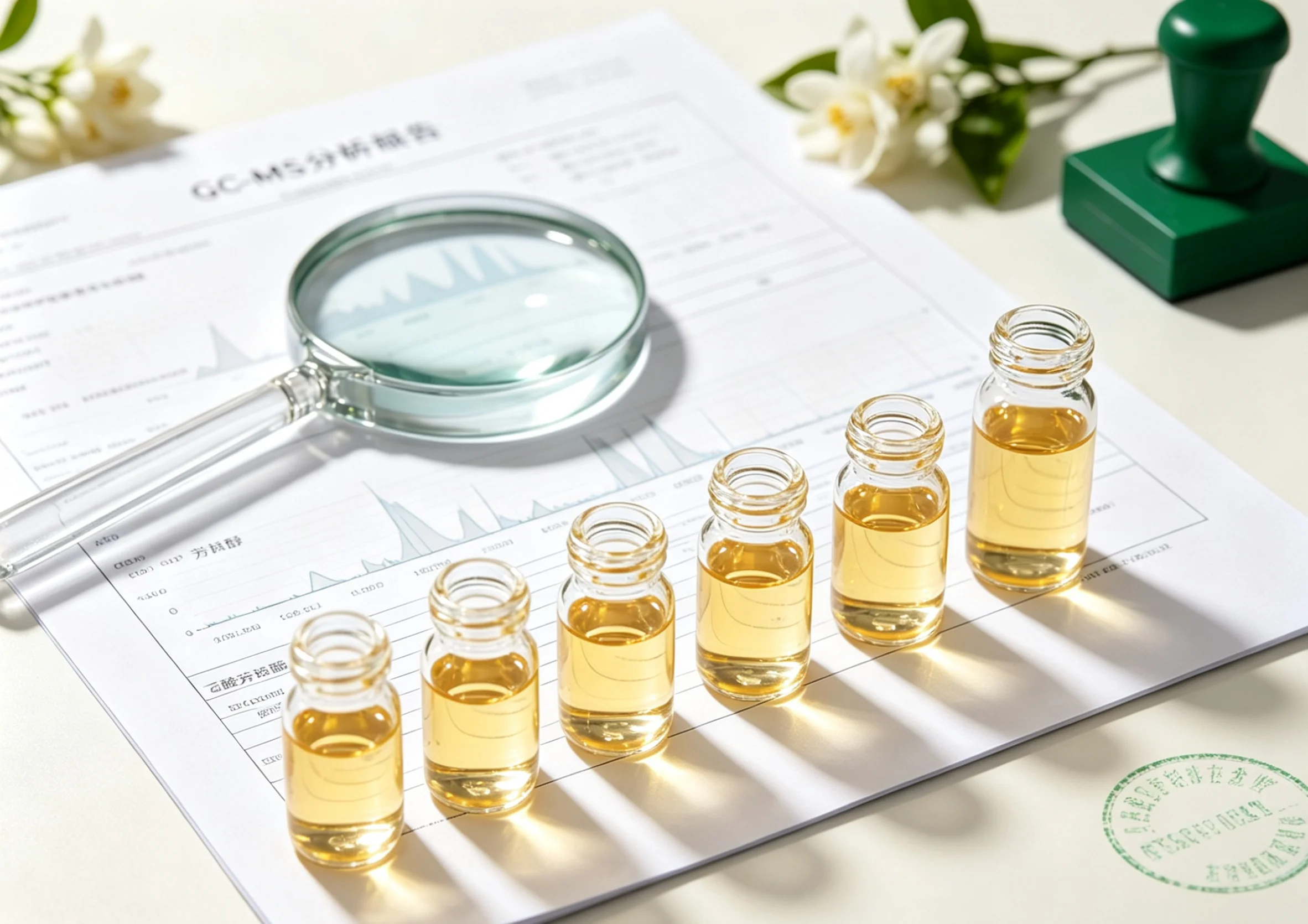
A compliant neroli oil COA must state the following core parameters with GC-MS data:
| Parameter | Specification | Why it matters |
|---|---|---|
| Linalool | 39–53% (minimum ≥39%) | Main floral character driver |
| Linalyl acetate | 9–20% (minimum ≥9%) | Sweetness, freshness and longevity |
| Density | 0.8630–0.8760 | Physical identity check |
- Linalool ≥39% and Linalyl acetate ≥9% are stated as measured values with the test method (GC-MS)
- Density sits in the 0.8630–0.8760 band
- CAS (8016-38-4 or the applicable neroli entry) and INCI name are printed
- Batch number matches the COA and container
- IFRA certificate is valid (not older than 12 months)

How Do Linalool and Linalyl Acetate Content Affect Formulas?
- Linalool carries the floral main character; a value below 39% cannot deliver the expected neroli profile and rejects the oil.
- Linalyl acetate contributes the sweet, fresh and long-lasting facet; below 9% the oil smells flat and loses lift.
- Different applications impose different demands: fine fragrance weighs both components heavily; skincare weighs IFRA category limits and stability; aromatherapy blends weigh sensory profile and compliance.
Tool block 2 — Application scenario × specification matching table
| Application | Priority | Practical guidance |
|---|---|---|
| Fine fragrance | Linalool ≥39% + Linalyl acetate ≥9% | Verify both against the target formula |
| Facial skincare | Linalool ≥39% + IFRA Cat limit compliance | Stability and allergen declaration matter |
| Aromatherapy | Sensory profile + IFRA category | Confirm the maximum use level |
How Do You Verify Batch Consistency?
Batch consistency is where neroli oil purchases succeed or fail — single-batch data proves nothing.
| Scenario | Outcome |
|---|---|
| Key-component GC-MS deviation ≤3% | Within the committed standard |
| Later-batch deviation >5% | Direct reject |
| Sample vs bulk sensory mismatch | Investigate; suspected adulteration if confirmed |
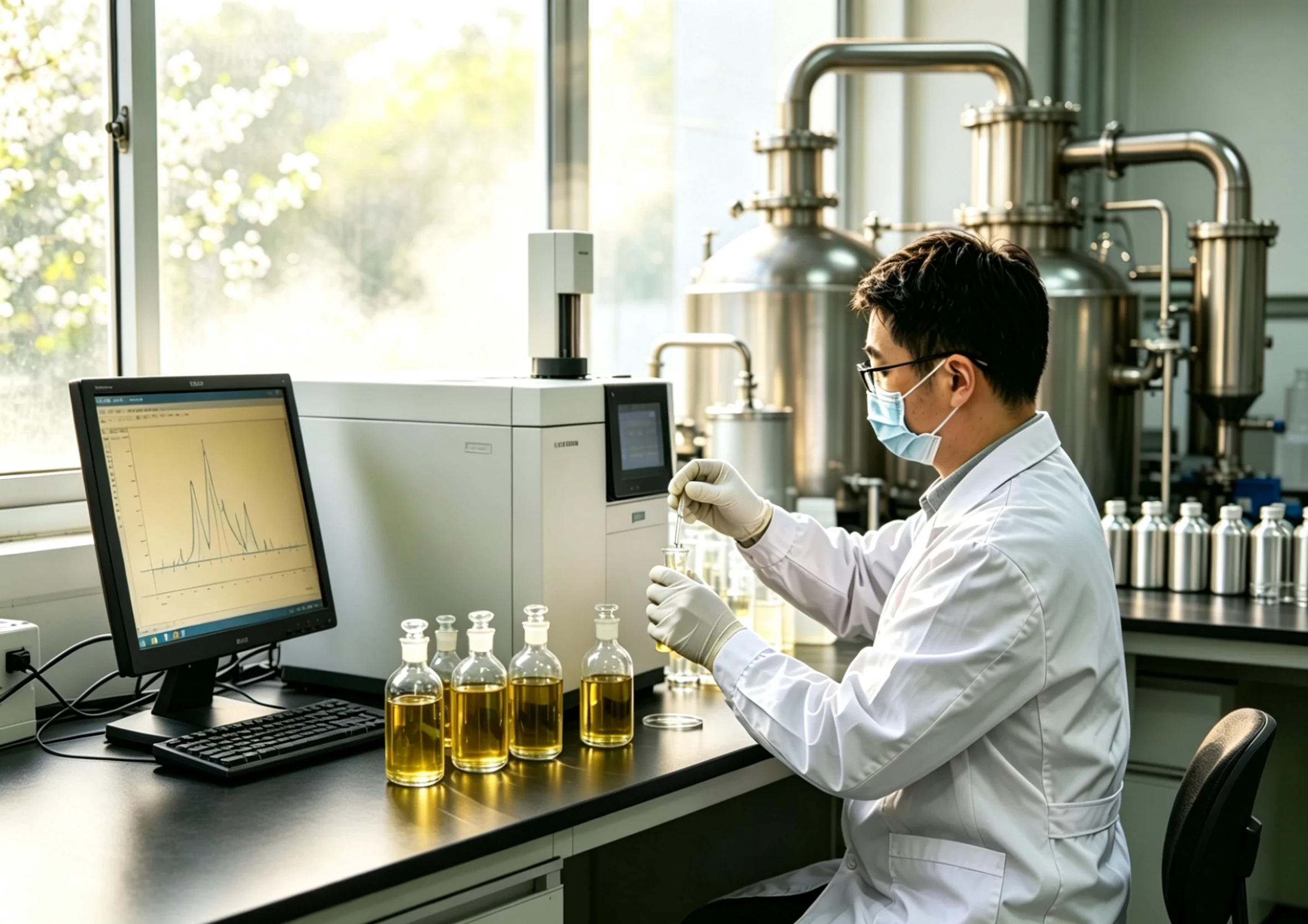
- Compare the last 5–10 batch GC-MS reports for Linalool and Linalyl acetate
- Confirm the deviation stays within 3%
- Retain a sample from the approved batch for re-testing
- Verify the supplier's retained-sample policy before any large order
What Compliance Documents Are Required for US Import?
- FDA cosmetic compliance (MoCRA 2022) — facility registration and product listing obligations
- IFRA certificate — must be valid; a certificate older than 12 months rejects the supplier
- Lacey Act declaration — legal plant-sourcing statement required at customs
- MSDS (GHS format) — safety data sheet compliant with US hazard communication
- Pesticide residue — any non-zero detection is a direct reject with claim
Tool block 4 — Compliance document checklist
- IFRA certificate dated within 12 months
- Lacey Act plant-source declaration
- GHS-format MSDS
- COA with GC-MS data and batch match
- Pesticide residue and microbiology (total count ≤1000 CFU/g) data
How Do You Verify Supplier Qualifications and Third-Party Testing?
- ISO 9001 / ISO 22716 certification reviewed at qualification
- Third-party batch testing by a recognized lab as a trust signal
- Supplier scorecard across five dimensions (price, quality, delivery, compliance, service)
- Maintain 2–3 qualified suppliers per category; single-supplier share ≤40%
- New suppliers undergo a joint purchasing + QA site audit
FAQ
What is the normal Linalool range for neroli oil?
The specification is Linalool 39–53% with a minimum of ≥39%. Values below the minimum cannot deliver the neroli floral profile and reject the oil.
What does a low Linalyl acetate content indicate?
Below 9% the oil loses sweetness, freshness and lift — it smells flat and cannot support the expected top note.
How much batch-to-batch GC-MS deviation is acceptable?
US manufacturers commit to ≤3% for key components. Deviation above 5% is a direct reject reason.
What should I do when the IFRA certificate expires?
A certificate older than 12 months is a reject reason. Require the supplier to renew it before the next shipment is accepted.
What happens when pesticide residues are detected?
Any non-zero detection is a direct reject with claim — it blocks US cosmetic use and triggers a compliance investigation.
What data should I request for a 100 g trial sample?
Request the full COA with GC-MS data, the IFRA certificate, the Lacey Act declaration, the GHS-format MSDS, and pesticide residue/microbiology data — all before your own formula tests.
Why is the Lacey Act declaration mandatory?
The Lacey Act requires legal plant-sourcing documentation at US customs. A missing declaration creates a clearance risk and is a direct reject signal.
Do organic neroli oil specifications differ?
Organic-certified neroli oil must meet the same core chemical parameters plus verifiable organic sourcing traceability, and it typically commands a significant price premium (>$1,000/kg).
Conclusion and Next Steps
Linalool ≥39% and Linalyl acetate ≥9% are the first selection indicators for neroli oil, and together with batch consistency and US compliance documents they form a complete acceptance framework. The supplier that wins your order is the one whose GC-MS data and compliance file you can verify.
Next steps for US manufacturing buyers:
- Send the supplier your specification requirements (Linalool ≥39%, Linalyl acetate ≥9%)
- Request a batch-matched third-party GC-MS report and batch consistency data
- Verify the IFRA certificate, Lacey Act declaration and GHS MSDS
- Order a trial sample and run formula compatibility tests
- Sign an annual framework agreement after verifying the compliance file
As a Chinese professional neroli oil export supplier, we provide complete specification sheets, third-party GC-MS reports, batch consistency data and full US compliance documentation. Contact us for the full specification and a sample COA to evaluate.
This article was published on 2026-09-07, and last updated on 2026-09-07. The article will be continuously updated.