What Are the Key Ingredient Specifications of White Michelia Oil, and How Does Linalool Content Affect Formula Selection?
The key specifications of white michelia oil (Michelia alba DC.) are Linalool content ≥55% (premium grades ≥70%), free acid value ≤5.0 (spec limit ≤7.0), and ester value ≥25.0 (spec minimum ≥20.0), and Linalool content is the first decision factor that determines aroma strength, ingredient grade, price band and formula compatibility for US manufacturers.
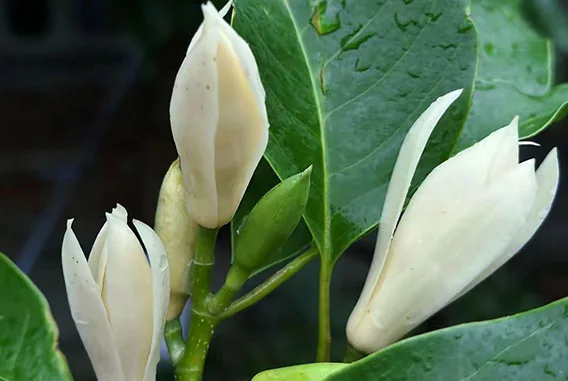
White michelia oil — also known as White Orchid oil, White Champaca or Magnolia Flower Essential Oil — is a steam-distilled natural essential oil extracted from white michelia flowers. The United States has no commercial white michelia cultivation and relies 100% on imports, with China supplying more than 60% of global volume. For a procurement buyer at a US cosmetics, aromatherapy or fragrance manufacturer, the first document you check before any formula trial is not the aroma description — it is the ingredient specification sheet, because three core parameters decide whether the oil can enter your formula at all: Linalool content, free acid value and ester value.
This guide walks US manufacturing buyers through the key ingredient specifications of white michelia oil, explains how Linalool content drives formula selection, and gives you a verifiable path to validate supplier data before you commit to a trial order.
What Are the Core Ingredient Specifications of White Michelia Oil?
A compliant white michelia oil specification sheet must cover the three core chemical parameters that US manufacturers verify against their internal quality standards:
| Parameter | Premium target for formula use | Specification limit | Why it matters |
|---|---|---|---|
| Linalool content | ≥55% (≥70% for premium grades) | ≥50% minimum | Drives aroma character, grade and price |
| Free acid value | ≤5.0 | ≤7.0 upper limit | Above 7.0 signals oxidation and formula instability |
| Ester value | ≥25.0 | ≥20.0 minimum | Higher ester value indicates a fuller, higher-quality aroma profile |
- Physical properties: density 0.870–0.920 (20°C); refractive index 1.4600–1.500 (20°C); shelf life 12–24 months when stored sealed and protected from light
- Key component spectrum: Linalool, Geraniol, Citral, Limonene, beta-Pinene and Methyl eugenol should all be listed with typical ranges
- Traceability fields: INCI name (Michelia Alba Flower Oil), CAS number (92457-18-6), batch number, production date, shelf life and storage conditions
Tool block 1 — Specification sheet review checklist
Before you send an RFQ, use this checklist to screen any white michelia oil spec sheet:
- INCI name and CAS number are printed on the spec (missing = reject)
- Linalool is stated as a minimum value with test method (GC-MS)
- Free acid value ≤7.0 and ester value ≥20.0 are declared
- Full component spectrum lists at least 6–8 constituents, not just Linalool
- Density and refractive index ranges are within the normal bands
- Batch number and COA are cross-referenced
- The spec is signed/stamped by the supplier, not a photocopy from a website
The specification sheet is the supplier's commitment; the COA is the measured proof for each batch. Never treat them as interchangeable.
Why Is Linalool the Number-One Indicator of White Michelia Oil?
Linalool is the signature compound of white michelia oil. It produces the fresh, sweet, floral top note that distinguishes white michelia from jasmine, neroli and ylang-ylang in fine fragrance and natural cosmetics. For a buyer, Linalool is not just a marketing descriptor — it is the measurable proxy for quality, price and authenticity.
Linalool content directly drives grade and price:
| Linalool content | Market grade | Typical price positioning (USD/kg) |
|---|---|---|
| ≥50% | Base industrial grade | $80–$150 (bulk) |
| ≥70% | Professional aromatherapy grade | $150–$300 |
| ≥85% | Top / custom grade | $300–$600+ |
Linalool is also the first anti-adulteration signal. White michelia oil is frequently adulterated with synthetic linalool. If a COA claims a Linalool level that sits outside the natural reasonable range — for example, values above 90% — treat it as a red flag for synthetic blending or fabricated data, and require third-party verification.

How Does Linalool Content Affect Formula Selection in Different Applications?
Different formula scenarios impose different requirements, so one specification does not fit all products. Match the spec to the application:
| Application scenario | Specification priority | Practical guidance |
|---|---|---|
| Fine fragrance top note | High Linalool (≥70%) | Stronger, cleaner top note; verify IFRA limit for the fragrance category |
| Facial skincare / body care | Free acid value <5.0 + ester value ≥25.0 | Lower free acid improves formula stability and skin compatibility |
| Aromatherapy blends | IFRA-compliant concentration | Different use categories (facial, body, diffuser) carry different maximum levels |
| Home fragrance / candles | Consistent Linalool across batches | Batch-to-batch variation <5% keeps finished product consistent |
When R&D hands a sourcing request to you, confirm three things before RFQ:
- What is the target Linalool range for the formula (base ≥50%, premium ≥70%)?
- Is the free acid value critical for your emulsion or skincare base (require <5.0)?
- Which IFRA use category applies, and what is the maximum addition level?
Compatibility data also matters at the selection stage. A qualified supplier should provide solubility data against the base oils US manufacturers commonly use — sweet almond oil, jojoba oil and ethanol — because poor solubility shows up later as separation or precipitation in the finished formula.

How Do You Verify the Authenticity of Supplier Specifications and GC-MS Reports?
Specification sheets are easy to print; verifiable data is not. US manufacturing buyers typically reject a white michelia oil supplier over data credibility, not aroma preference.
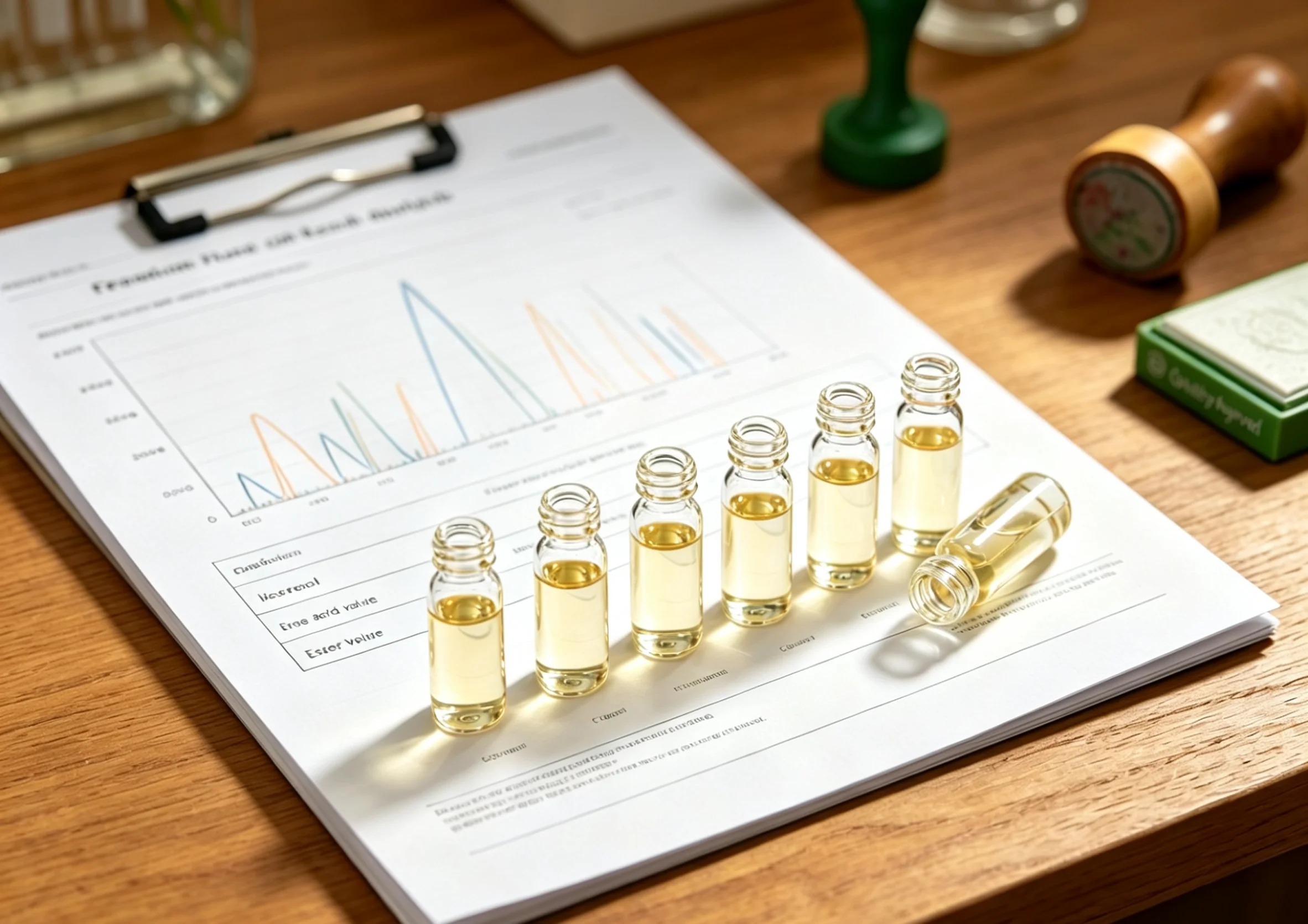
Tool block 3 — GC-MS report verification checklist
- The GC-MS report comes from a recognized third-party lab (SGS, ALS, Bureau Veritas or equivalent), not an in-house printout
- The report is batch-matched: batch number on the report equals the batch number on the COA and on the drum/container
- Component values sit inside natural reasonable ranges (Linalool below ~90% for authentic steam-distilled oil)
- At least 6–8 components are reported, not a single Linalool number
- The report has a lab report number, issue date and can be re-issued for the retained sample
- Ask the supplier for historical batch data: Linalool variation across the last 5–10 batches
Batch consistency is the KPI that matters. US manufacturers set a target of Linalool variation below 5% between batches; variation above 8% is a direct reject reason, because it makes finished-product aroma inconsistent. Before you sign a framework agreement, ask for historical batch data and verify the supplier keeps a 12-month retained sample per batch so any batch can be re-tested on demand.
How Should Incoming Inspection and Re-Testing Work for These Key Specifications?
Even after a supplier passes the documentation stage, you still need a disciplined incoming inspection process:
- Incoming batch check: verify appearance, cross-check the COA against the ordered spec, and spot-check physical parameters (density, refractive index)
- Sample-to-bulk consistency: if the bulk shipment aroma or Linalool differs from the approved sample by more than 10%, treat the batch as failed
- Retained sample: keep a sample from each batch for at least 12 months, matching batch number to COA
- Re-test route: if a batch is disputed, request re-testing of the supplier's retained sample by a third-party lab
- Heavy metals and microbiology: for cosmetic use, require the four heavy metals (Pb/As/Hg/Cd) and full microbiology panel to meet US EP/USP limits
Coordinate with QA: the buyer initiates the incoming inspection, QA reviews the data and makes the release decision. A double-check mechanism prevents a problem batch from entering production.
FAQ
What is the normal Linalool range for white michelia oil?
Authentic steam-distilled white michelia oil typically contains Linalool in the range of 50% to about 85%. Premium grades are ≥70%, and values claimed above roughly 90% should be treated as suspicious.
What formula risks does a free acid value above 7.0 create?
A free acid value above the 7.0 spec limit usually indicates oxidation or poor refining. In finished formulas it can cause instability, off-odors, emulsion separation and shorter shelf life.
What does a low ester value indicate?
An ester value below 20.0 suggests a weaker or more degraded aroma profile. Buyers targeting high-quality fragrance or skincare formulas typically require ester value ≥25.0.
How can I tell whether a GC-MS report has been fabricated?
Check four things: the lab must be a recognized third party; the batch number must match the COA and container; the component values must sit inside natural ranges; and at least 6–8 components must be reported. A single out-of-range Linalool value, such as >90%, is a red flag.
What is the difference between white michelia flower oil and white michelia leaf oil?
Flower oil is the scarcer, higher-value fraction with a purer, sweeter floral profile and higher Linalool content. Leaf oil is cheaper and weaker in aroma. The two are different products with different CAS/product identities and should never be substituted without R&D approval.
What specification data should I request for a 100–500 g trial sample?
Ask for the full spec sheet, a batch-matched third-party GC-MS report, the free acid and ester values, solubility data for sweet almond oil, jojoba oil and ethanol, and the IFRA use guideline — all before you run your own compatibility and stability tests.
Do USDA Organic white michelia oil specifications differ?
Organic-certified oil must meet the same core chemical parameters, plus verifiable organic sourcing and processing traceability. Organic supply is limited and typically carries a 20–40% price premium.
What Linalool variation between sample and bulk shipment is acceptable?
US manufacturers usually accept a variation below 5% between batches; a difference above 8% is a reject reason. If the bulk shipment differs from the approved sample by more than 10%, treat the batch as failed.
Conclusion and Next Steps
Linalool content is the first decision indicator for selecting white michelia oil, and together with free acid value and ester value it forms a complete specification judgment framework. The oil that fits your formula is not the one with the best aroma description — it is the one whose spec sheet, batch-matched GC-MS data and consistency history you can verify.
Next steps for US manufacturing buyers:
- Send the supplier your own specification requirements (Linalool ≥55%, free acid ≤5.0, ester value ≥25.0)
- Request a batch-matched third-party GC-MS report and historical batch consistency data
- Order a 100–500 g trial sample with the full document package
- Run compatibility and accelerated stability tests in your target formula
- Verify the retained-sample and re-test policy before signing an annual framework agreement with price lock
As a Chinese professional white michelia oil export supplier, we provide complete specification sheets, third-party GC-MS reports, batch consistency data and 100–500 g trial samples for US manufacturers. Contact us for the full specification and a sample COA to evaluate.
This article was published on 2026-09-07, and last updated on 2026-09-07. The article will be continuously updated.