What Are the Linalool Content Specifications of Michelia Leaf Oil, and How Do You Verify the ≥70% Standard?
The key specification of michelia leaf oil (Michelia alba DC. leaf, CAS 92457-18-6, FEMA 3950) is Linalool content ≥70% as a hard gate — anything below is excluded before price comparison — and for perfumery grades you also need (R)-Linalool enantiomeric excess (ee) ≥90%, methyl eugenol below the IFRA limit for each category, and batch consistency verified by batch-matched third-party GC-MS reports with Linalool variation ≤±2%.
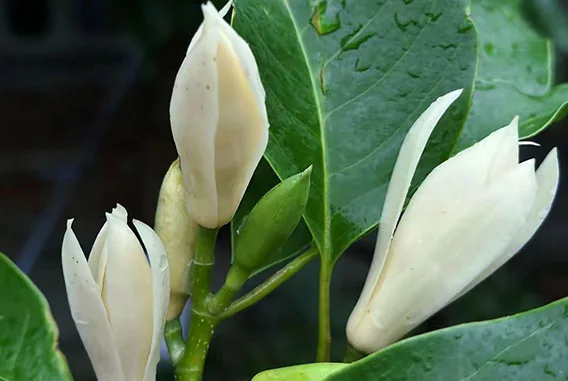
Michelia leaf oil is a steam-distilled essential oil from the leaves of the white michelia tree (Michelia alba DC.). It carries the same fresh, sweet, floral signature as white michelia flower oil at a significantly lower cost, which makes it one of the most frequently sourced natural floral raw materials for US cosmetic, personal care and fragrance manufacturers. For a procurement buyer, the first number you verify before any formula trial is Linalool content — because ≥70% is the hard gate that decides whether the oil can even enter your comparison list.
This guide walks US manufacturing buyers through the Linalool specification of michelia leaf oil, explains why enantiomeric purity matters for perfumery grades, and gives you a verifiable path to validate supplier data before you commit to a trial order.

What Core Indicators Must a Michelia Leaf Oil Specification Sheet Contain?
A compliant michelia leaf oil spec sheet must state the following four groups of data:
| Parameter | Requirement | Why it matters |
|---|---|---|
| Linalool content | ≥70% hard gate (alternative spec 68–72%) | Below 70% the oil cannot meet fragrance formula requirements |
| Enantiomeric purity (perfumery grade) | (R)-Linalool ee ≥90% | Chiral purity determines the quality of the floral top note |
| Methyl eugenol | Below IFRA limit per category (e.g. Cat 1 leave-on facial 0.0004%) | Restricted compound; exceeding it blocks US market compliance |
| Batch traceability | Batch number ↔ COA ↔ GC-MS report | The basis of incoming inspection and re-testing |
Tool block 1 — Specification sheet review checklist
Before you send an RFQ, screen any michelia leaf oil spec sheet:
- INCI name and CAS number (92457-18-6) are printed — missing = reject
- Linalool is stated as a minimum (≥70%) with the test method (GC-MS)
- Methyl eugenol and safrole limits are declared
- Perfumery grade states the (R)-Linalool ee target (≥90%)
- Batch number matches the COA
- The spec is signed/stamped by the supplier
Why Is Linalool the Number-One Indicator of Michelia Leaf Oil?
Linalool is the signature compound of michelia leaf oil. It produces the recognizable fresh sweet floral profile that formulators expect, at a price point that makes it a workhorse natural raw material in the US market.
Linalool content drives grade and acceptance:
| Linalool content | Grade positioning | Buying implication |
|---|---|---|
| <70% | Off-spec | Rejected before price comparison |
| ≥70% | Standard manufacturing grade | Enter the shortlist; verify batch consistency |
| ≥70% + (R)-ee ≥90% | Perfumery grade | Higher value; verify chiral GC-MS |

How Does Linalool Content Affect Formula Selection in Different Applications?
Different formulas impose different requirements on the same Linalool number:
| Application scenario | Specification priority | Practical guidance |
|---|---|---|
| Fine fragrance / perfume | Linalool ≥70% + (R)-ee ≥90% | Chiral purity protects top-note quality; verify IFRA category limit |
| Facial / body care | Linalool ≥70% + methyl eugenol within IFRA Cat limit | Restricted compound must be documented in the COA |
| Aromatherapy blends | IFRA-compliant concentration | Different use categories carry different maximum levels |
| Soap / wash-off products | Consistent Linalool across batches | Batch-to-batch variation ≤±2% keeps finished product consistent |
When R&D hands a sourcing request to you, confirm three things before RFQ:
- Is the target Linalool minimum ≥70%, and does the formula need perfumery-grade chiral purity?
- Which IFRA use category applies to the finished product, and what is the methyl eugenol limit?
- Does the formula sit in a use category where (R)-Linalool enantiomeric purity is critical?

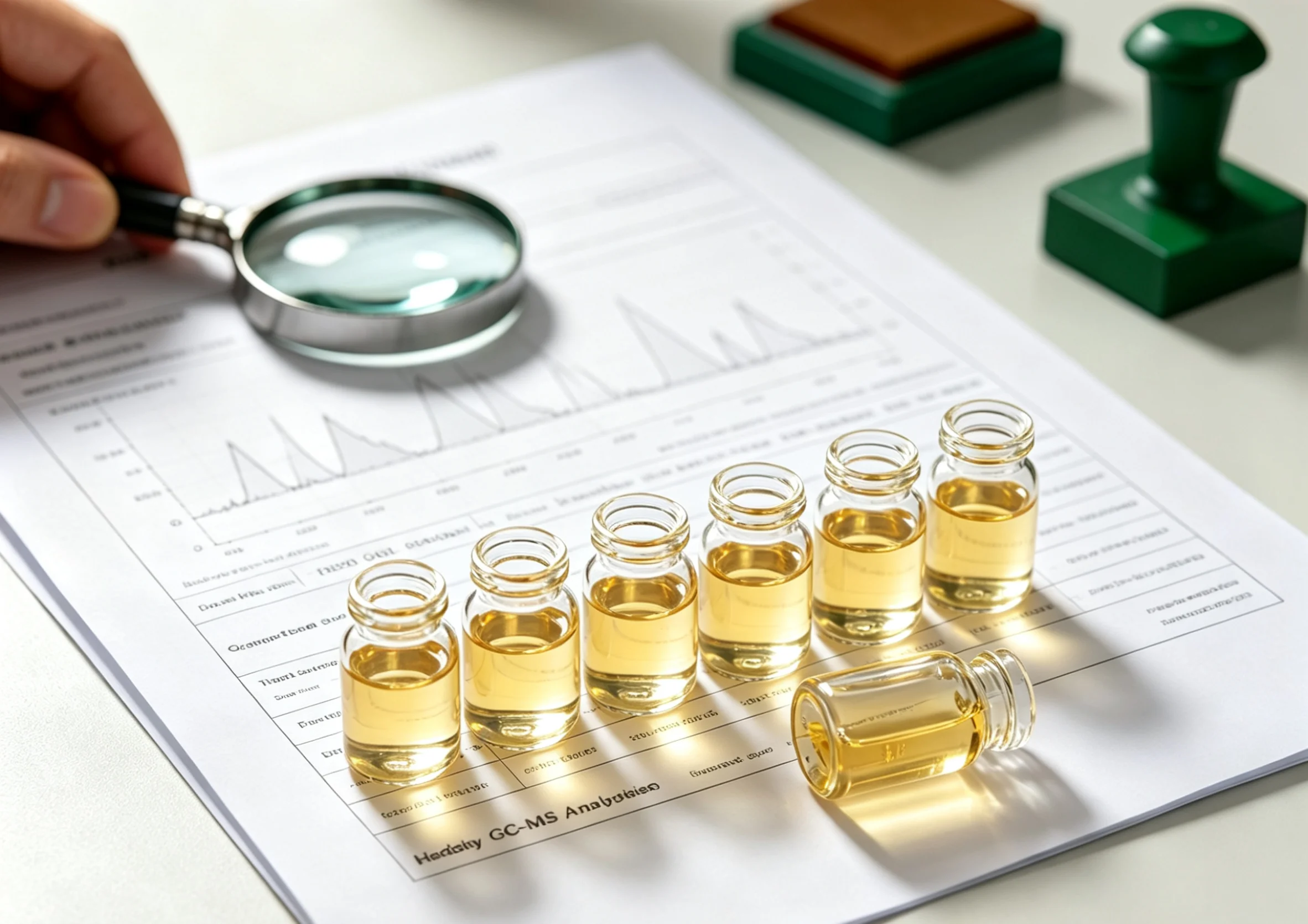
How Do You Verify the Authenticity of Supplier GC-MS Reports?
Spec sheets are easy to print; verifiable data is not. US manufacturing buyers reject michelia leaf oil suppliers over data credibility more often than over aroma.
Tool block 3 — GC-MS report verification checklist
- The report comes from a recognized third-party lab (SGS, Eurofins, Silliker, Bureau Veritas or equivalent)
- The report is batch-matched: report batch = COA batch = container batch
- Linalool sits in a stable, natural reasonable range (no unexplained 68–75% swings)
- At least the key components are reported (Linalool, methyl eugenol, safrole), not a single number
- The report has a lab report number, issue date and can be re-issued for the retained sample
- Ask for historical batch data: Linalool variation across the last 5–10 batches
Batch consistency is the KPI that matters. US manufacturers target Linalool variation ≤±2% between batches; a difference of more than that triggers quality review, and a sample-to-bulk drop of more than 3% fails the batch. Before signing a framework agreement, ask for historical batch data and verify the supplier keeps a retained sample per batch for re-testing.
How Should Incoming Inspection and Batch Consistency Work?
Even after a supplier passes the documentation stage, discipline at incoming inspection protects the formula:
- Incoming batch check: within 5 working days of arrival, check the outer packaging, compare the COA against the ordered spec, and send samples for independent testing
- Pesticide residue report: effective ≤6 months (re-test if older); detection limit ≤0.01 mg/kg for US food/cosmetic compliance
- Sampling plan: AQL Level II, defect rate ≤1.0%
- Sample-to-bulk consistency: if the bulk Linalool drops more than 3% versus the approved sample, treat the batch as failed
- Retained sample: keep a sample per batch for at least 12 months, matching batch number to COA
Coordinate with QA: the buyer initiates incoming inspection, QA reviews the data and makes the release decision.
FAQ
What is the normal Linalool range for michelia leaf oil?
The specification standard is ≥70%, with an alternative spec band of 68–72%. Any value below 70% is excluded before price comparison.
Why does perfumery grade also require (R)-Linalool enantiomeric purity?
The (R) enantiomer carries the characteristic floral top note. An ee of ≥90% is the perfumery-grade target; racemic linalool is acceptable for standard aromatherapy grade but not for fine fragrance.
What compliance risk does methyl eugenol above the limit create?
Methyl eugenol is a restricted compound under IFRA. Exceeding the category limit (e.g. 0.0004% in Cat 1 leave-on facial) blocks compliant use and can trigger formula redesign or market-access rejection.
How can I tell whether a GC-MS report has been fabricated?
Check four things: the lab must be a recognized third party; the batch number must match the COA and container; Linalool must sit in a stable natural range; and key restricted compounds (methyl eugenol, safrole) must be reported. A single unexplained value or a missing restricted-compound line is a red flag.
What Linalool variation between sample and bulk shipment is acceptable?
The batch-to-batch target is ≤±2%. If the bulk shipment drops more than 3% versus the approved sample, treat the batch as failed.
What data should I request for a 100–500 g trial sample?
Ask for the full spec sheet, a batch-matched third-party GC-MS report, the methyl eugenol and safrole data, the IFRA use guideline, and the pesticide residue report (≤6 months old) — all before you run your own compatibility tests.
What is the difference between michelia leaf oil and michelia flower oil specifications?
Both share Linalool as the signature compound, but flower oil is scarcer, higher-value and higher in Linalool with a purer floral profile. Leaf oil is the cost-effective workhorse. They have different product identities and should not be substituted without R&D approval.
How long is a pesticide residue report valid?
US manufacturers generally require the report to be no older than 6 months; if it expires, the supplier must re-test before the next shipment is accepted.
Conclusion and Next Steps
Linalool ≥70% is the first hard gate in michelia leaf oil selection, and together with enantiomeric purity, methyl eugenol compliance and batch consistency it forms a complete acceptance framework. The oil that fits your formula is the one whose spec sheet, batch-matched GC-MS data and consistency history you can verify.
Next steps for US manufacturing buyers:
- Send the supplier your specification requirements (Linalool ≥70%, restricted compounds within IFRA limits, batch variation ≤±2%)
- Request a batch-matched third-party GC-MS report and historical batch data
- Order a 100–500 g trial sample with the full document package
- Run compatibility and stability tests in your target formula
- Verify the retained-sample and re-test policy before signing an annual framework agreement with price lock
As a Chinese professional michelia leaf oil export supplier, we provide complete specification sheets, third-party GC-MS reports, batch consistency data and trial samples for US manufacturers. Contact us for the full specification and a sample COA to evaluate.
This article was published on 2026-09-07, and last updated on 2026-09-07. The article will be continuously updated.