
How US Manufacturers Can Put a 90-Day Price Lock and Batch-Consistency Clause into One Annual Astragalus Oil Contract
Before signing an annual Astragalus membranaceus CO2 oil supply contract, put the 90-day price lock and the batch-consistency clause in the same agreement, attach the EAV subject list and five clarification letters, and make three-party QA, procurement and regulatory sign-off a condition precedent to effectiveness.
An annual supply framework contract for Astragalus membranaceus essential oil is a transaction document in which a US manufacturer or processor (buyer) and a vertically integrated source factory (seller) fix both the commercial terms and the physical identity of one subject: Astragalus root supercritical CO2 extract oil. For the decision maker accountable for supply security and total cost, the failure mode is rarely the unit price alone. It is a price that moves after a formulation is validated, a batch whose GC-MS fingerprint drifts after the formula is locked, or a CAS and botanical-origin gap that surfaces during QA review or customs clearance. This guide converts those three risks into signable clause structures, with every unconfirmed commercial figure left as a to-be-confirmed field rather than an invented number.
1. Write the Price Lock and the Quality Lock into One Contract: Three Outcomes for the Buyer
What the annual framework contract is: three entities
An annual supply framework contract, in this context, is not a one-off purchase order. It is a standing agreement under which repeated shipments of a single botanical oil are released against pre-agreed price and quality rules. Three entities must be named precisely:
- Buyer: the US manufacturer or processor, with the decision maker leading a three-party sign-off of quality, procurement and regulatory.
- Seller: the vertically integrated source factory in Guilin, China, controlling the root intake, CO2 extraction and sealed-drum release under one roof.
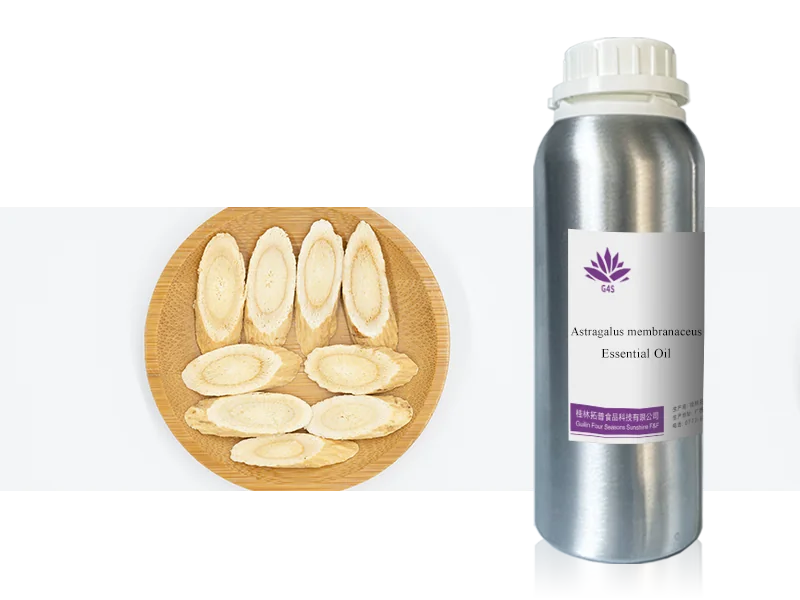
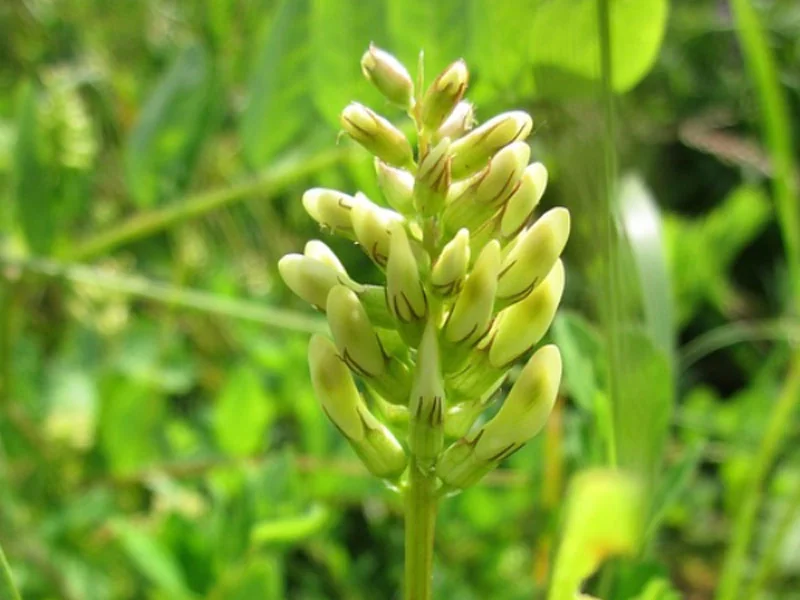
- Subject: Astragalus root supercritical CO2 extract oil — a 100% natural, single-botanical, undiluted thick yellow-brown to brown liquid with the characteristic root aroma.
Why the price clause and the quality clause belong in the same document
Splitting price into a purchasing schedule and quality into a separate supplier questionnaire is the common mistake. The two interact: a lower quoted price is worthless if a drifting batch forces formulation rework or a production stoppage.
| Buyer outcome | Clause that delivers it | Risk removed |
|---|---|---|
| Total cost control | 90-day price lock plus a price-increase notice mechanism | Post-award repricing, Section 301 and freight volatility |
| Line-stop control | Batch-consistency clause with GC-MS fingerprint, retained samples and batch traceability | Formulation rework, rejected lots and production downtime |
| Audit control | EAV subject list plus five clarification letters | QA rejection, customs classification disputes and FTC claim challenges |
Scope boundary: what this contract does not cover
The subject is a non-food aromatic raw material. Delete tonify qi, lift yang, immune support, adaptogenic wellness, anti-aging repair and barrier restoration from every US-facing document. Public powder and monomer figures (astragalus polysaccharide powder US$12–22/kg, astragaloside IV 98% US$50–80/kg, raw-material median US$75.91/kg) are form-caliber references only and are not directly comparable with this CO2 oil; this product has no published bulk price and is quoted on inquiry.
Quick win: sign the EAV subject list first, then negotiate price — never the reverse.
2. Freeze the Subject with a 12-Row EAV Table Before You Discuss Price
Contract subject EAV table (attach as Annex 1)
| Attribute | Value | Contract wording / buyer check point |
|---|---|---|
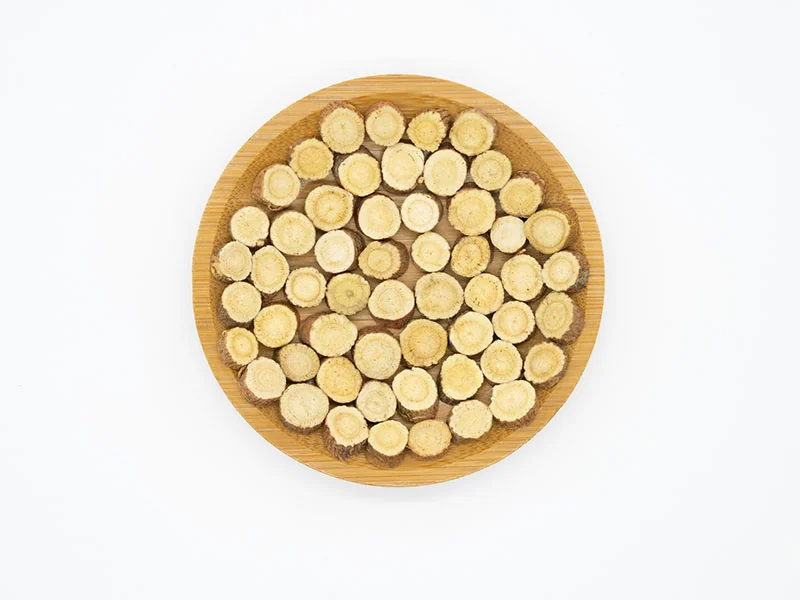
| Botanical origin | A. membranaceus or A. mongholicus (confirm from the botanical voucher) | Botanical voucher and GAP base certificate required in an annex; no other Astragalus species confusion |
| Part used | Root | Write "root" consistently in the contract and every COA, not whole herb |
| Process | Low-temperature supercritical CO2 extraction | State CO2 extract oil versus essential oil caliber explicitly |
| Form | Thick yellow-brown to brown liquid, warm herbal root aroma | Appearance and odour as sensory acceptance items |
| CAS | Vacant; candidate 94166-93-5 (obtain written confirmation) | Do not substitute astragaloside IV CAS 84687-43-4; written confirmation governs |
| EC / EINECS | Vacant; candidate 303-391-9 (obtain written confirmation) | Clarify together with CAS |
| INCI | Obtain proposed INCI name | Proposed INCI name required for cosmetic use |
| Markers | Unnamed; GC-MS fingerprint plus named volatile-oil markers (markers to be named in the COA) | Do not apply powder astragaloside IV or polysaccharide markers to this oil |
| Relative density | 0.9240–0.9850 (25 °C) | Per-batch release item |
| Refractive index | 1.4680–1.5080 (20 °C) | Per-batch release item |
| Solubility | Soluble in ethanol and fixed oils; insoluble in water | Application-fit check |
| Allergens / use | Eugenol (CAS 97-53-0) and cresol to be quantified; non-food; claim red lines deleted | IFRA/EU assessment, food-boundary statement and US claim-review letter |
Five clarification letters: a pre-condition, not a courtesy
- CAS / EC / INCI confirmation letter
- Botanical-origin statement with voucher and GAP base evidence
- GC-MS fingerprint and named volatile-marker statement
- Eugenol / cresol quantification with IFRA and toxicology assessment
- Food-boundary statement and US claim-review letter
Tool/template entry: use the EAV subject-list template as Annex 1; every to-be-confirmed field becomes a written clarification obligation with a named owner and a due date before price terms take effect.

3. The 90-Day Price Lock: Four Signable Clauses for Notice and Volume Linkage
Lock object and baseline: three price tiers
The seller is an inquiry-based source with no published bulk price; the seller's written proactive quotation is the baseline. Attach a three-tier price schedule as Annex 2: 1–5 kg sample price, 25 kg framework price, and 50–180 kg drum price. Unit prices are set out in the seller's written quotation. The three public anchor figures in Section 1 are caliber references only and are not a pricing benchmark for this product.
The 90-day window: start point and trigger rules
- Start: the contract effective date or the first trial-order confirmation date — choose one and write it down.
- Duration: the three tier prices hold unchanged for 90 days.
- Renewal: start renegotiation N days before expiry (a term to be agreed) so no gap appears between lock periods.
Price-increase notice mechanism
Specify written notice N days in advance and a single-increase ceiling of X% (both terms to be agreed in the contract). Trigger events can include GAP base root cost, Section 301 duties, freight and combustible-liquid booking costs. Write the remedy as a single sentence: "no advance notice, no price adjustment."
Quick win: make the notice obligation a unilateral breach remedy rather than a discussion item.
Volume–price linkage: annual volume tier versus price tier
| Annual volume tier | Price tier | Rebate / added value | Note |
|---|---|---|---|
| 1–5 kg samples | Sample price | GC-MS, marker, allergen, COA, SDS and identity files attached | Evaluation stage |
| 25 kg trial order | Framework price A | Proactive written quotation | Trial-production stage |
| 50–180 kg | Framework price B | OEM private-label COA, Form E / CO on request | Commercial stage |
4. Batch Consistency: GC-MS Fingerprint, Three-Year Retained Samples and Batch Traceability
Consistency basis: fingerprint versus retained reference
Each batch is compared by GC-MS fingerprint against a retained reference standard, held for three years. Named volatile markers and major volatile constituents are quantified; public studies report geraniol, phytol and benzyl salicylate among the volatiles, but the naming and method for this CO2 oil must be confirmed in the COA. Tolerance values belong in an annex — write a blank "tolerance field" into the annex rather than inventing a percentage.
Per-batch COA field checklist (Annex 3)
- Batch number, production date and retained-sample reference
- Botanical origin, part, GAP origin and date declaration
- GC-MS fingerprint against the retained reference standard
- Named volatile-marker quantification
- Eugenol and cresol quantification
- Heavy metals (ChP/USP), pesticide residues, microbes, soil and irrigation water, CO2 process residue
- Statement of non-confusion with other Astragalus species
Three-year retention and dispute review
Retain both samples and reference standards for three years. On a quality dispute, the contract should name the batch, the call-up procedure, the third-party laboratory and the review time limit. Traceability runs from root intake through extraction to the sealed drum, with a single contracted GAP base, fixed spring/autumn digging window and locked extraction parameters.
Physicochemical release: three items per batch
| Release item | Agreed value | Acceptance action |
|---|---|---|
| Relative density | 0.9240–0.9850 (25 °C) | Compare against per-batch COA |
| Refractive index | 1.4680–1.5080 (20 °C) | Compare against per-batch COA |
| Solubility | Soluble in ethanol / fixed oils, insoluble in water | Application-fit recheck |
5. Document Package: Identity, Testing and Safety Files with Delivery Timing
Identity and compliance file pack (before signature)
- CAS / EC / INCI confirmation letter
- Botanical-origin statement and non-confusion declaration
- Food-use boundary statement
- US claim-review letter
Safety and testing file pack (before release)
- Heavy metals (ChP/USP), pesticide residues, microbes, soil and irrigation water, CO2 process residue
- Eugenol / cresol quantification, IFRA / EU allergen declaration and sensitization / toxicology assessment
- IFRA 51st/52nd amendment check; California Prop 65 assessment (request the assessment)
MoCRA and SDS (use-dependent)
For cosmetic and fragrance use, align MoCRA foreign-facility registration FEI and US responsible-person product listing where applicable. Provide English or multi-language SDS; label as a combustible liquid, keep away from flame and heat, and store sealed and protected from light.
Delivery timing by stage
| Stage | Documents due | Hard gate |
|---|---|---|
| 1–5 kg sample | GC-MS, marker quantification, allergen data, COA, SDS, identity files | Blind evaluation starts only when the file is complete |
| 25 kg trial | Per-batch COA, physicochemical release, full test panel | Scale up only after pass |
| 180 kg annual framework | Full clarification letters, MoCRA/IFRA, retained-sample number, Form E / CO / dangerous-goods statement | Contract effective only when complete |
6. Three-Party Sign-Off: Make QA, Procurement and Regulatory a Condition Precedent
Sign-off roles and sequence
| Signatory | Focus | Signing requirement |
|---|---|---|
| Quality | GC-MS fingerprint, markers, physicochemical release, retained samples | Trial-production testing passed |
| Procurement | Tier prices, MOQ, lead time, lock window | Quotation and volume-price table confirmed |
| Regulatory | CAS / origin, IFRA / allergens, claim boundary, MoCRA | Five clarification letters complete |
Pilot validation as a prerequisite
1–5 kg sample → 25 kg trial order → 180 kg annual framework. For a US buyer with no local stock and no agent, a new supplier must pass small-batch validation first.
Warning clause
If the supplier is vague on a key item or cannot produce evidence on the spot more than twice, pause entry into contract negotiation. Write this as a negotiation-stage rule.
Exit mechanism
Define termination and cost-bearing when a clarification letter is missing, testing fails or a claim crosses the line; the specific figures are set in the contract.
7. Returns, Supply-Failure Compensation and Payment Risk: Price Extreme Costs Up Front
Non-conforming batch
Use COA / GC-MS retest and retained-sample call-up as the judgment basis. Write the return scope and who bears freight and testing fees; ratios are set in the return clause.
Supply-failure compensation
Risks include the spring/autumn digging window, single-origin concentration, 15–18 day west-coast freight and combustible-liquid booking delays. Define the compensation trigger and cap in the clause. Tie the compensation clause to retained-sample call-up so evidence and remedy travel together.
Dispute handling
Introduce a third-party laboratory retest; use the three-year retained sample as the arbitration basis; leave a blank field for the compensation cap.
Payment conditions linked to the 90-day lock
For a new supplier, 30% deposit plus 70% against a copy of the bill of lading, and Net 30/60 for repeat orders, are industry practices to be agreed in writing. Link the price lock to a credit-tier schedule rather than granting the same terms to every buyer.
| Extreme case | Judgment basis | Remedy | Cost-bearing |
|---|---|---|---|
| Batch out of specification | COA / GC-MS retest, retained sample | Return or replacement | Set in clause |
| Supply failure | Harvest window, single origin, booking records | Compensation per clause | Cap set in clause |
| Claim dispute | US claim-review letter, third-party review | Corrected documents or termination | Set in clause |
| Price increase without notice | Written notice record | No adjustment; unilateral remedy | Seller |
8. The Seven-Day Pre-Signing Checklist and Five Quick Wins
Seven-day document and clause checklist
- Five clarification letters
- Per-batch COA sample
- GC-MS fingerprint report
- Three-tier written quotation
- Retained-sample numbering rule
- Three-party sign-off sheet
- Tolerance, notice-days, cap and compensation fields filled or marked for follow-up
Five quick wins
- Lock the price only after the EAV subject list is confirmed.
- Put the GC-MS tolerance in an annex, not in a verbal promise.
- Front-load the retained-sample call-up and dispute-review clause.
- Write "no notice, no price adjustment" as a remedy.
- Delete TCM, immune and adaptogenic claims and file a US claim-review letter.
Tool and template entry
EAV subject-list template, 90-day price-lock clause template, COA field-check sheet, document completeness checklist and three-party sign-off sheet.
Seen & Trusted evidence position (company level only)
Vertically integrated source factory, 25,000 m² production base, more than CNY 50 million in fixed assets, 137 IP assets, 30+ years of plant-extraction experience, IFEAT member, chair company of the Guangxi Association of Fragrance Flavor, and participation in drafting 10 national standards plus one industry standard. Clients include Givaudan, DSM-Firmenich and Symrise at company level; no Astragalus-oil-specific customer case is claimed here.
9. FAQ 1: What price does the 90-day lock fix, and what is the baseline?
It fixes the three written tier prices — 1–5 kg sample, 25 kg framework and 50–180 kg drum — for 90 days. The baseline is the seller's proactive written quotation under an inquiry-based model; there is no published bulk price for this CO2 oil. See Section 3.
10. FAQ 2: How is batch consistency judged, and how are tolerance and retained samples set?
By GC-MS fingerprint against a retained reference standard, named volatile-marker quantification and three per-batch physicochemical release items. Tolerance numbers belong in an annex; retained samples and the reference standard are held for three years. See Section 4.
11. FAQ 3: Can the contract be signed while CAS / EC / INCI are empty?
Not safely. CAS candidate 94166-93-5 and EC candidate 303-391-9 are Astragalus root extract caliber and require customs-broker confirmation; astragaloside IV CAS 84687-43-4 is a powder monomer and must not be used. The five clarification letters are a signing precondition. See Section 2.
12. FAQ 4: How are three-year retained samples used in a quality dispute?
The contract names the batch, the call-up procedure, a third-party laboratory and the review time limit; the retained sample and reference standard serve as the arbitration basis. See Sections 4 and 7.
13. FAQ 5: How much notice is required for a price increase, and is there a cap?
Notice days N and the single-increase ceiling X% are set by negotiation. The signable structure is: written notice N days ahead, cap X%, and "no advance notice, no price adjustment." See Section 3.
14. FAQ 6: Can this oil be marketed as food or a dietary supplement?
No, not on the current evidence. It is a non-food aromatic raw material; the Chinese food-medicine substance status is not automatically accepted by FDA, and no FEMA GRAS for this species and form has been confirmed. Remove tonify qi, immune support, adaptogenic and anti-aging claims. See Section 1.
15. FAQ 7: Who bears HS classification and Section 301 cost?
Assigned in writing. Candidates are HS 3301.29 or 1302, to be judged by the customs broker on the CO2 oil form and confirmed CAS; China origin may attract Section 301 duty. See Section 3.
16. FAQ 8: How is supply failure compensated, and who pays for returns?
The trigger and cap are set in the clause. Judgment relies on COA / GC-MS retest and retained-sample call-up, with return scope, freight and testing fees named in the clause; compensation is tied to the retained-sample evidence. See Section 7.
17. Conclusion and Next Steps
A 90-day price lock without a batch-consistency clause protects the quote but not the line; a batch-consistency clause without a price lock protects the formula but not the budget. Put both in one annual framework contract, make the EAV subject list and five clarification letters annexes, and make three-party sign-off a condition precedent. Every unconfirmed number — CAS, botanical origin, named markers, allergens, notice days, volume-tier prices, tolerance, compensation cap and payment terms — is a fill-in field, not a claim.
- Request the English contract annex pack, per-batch COA sample, GC-MS fingerprint report and five clarification-letter templates.
- Send a 1–5 kg evaluation sample with the complete document file before negotiating a 25 kg trial order.
- Complete the seven-day pre-signing checklist and record each to-be-confirmed field with an owner and a due date.
- Contact sales@essentialoilsfactory.com or +86 133 6753 0509 for the annex pack; response timing is a service commitment, subject to the contract.
Related reading: the Astragalus oil product page, the US market analysis (201), the product positioning brief (204), the CAS / botanical-origin clarification page, the GC-MS fingerprint and named-marker note, and the three-year retained-sample commitment page.
This article was published on 2026-11-25, and last updated on 2026-11-25. The article will be continuously updated.