
How Much Rose Absolute Should You Add to a Fragrance Formula, and How Do You Set Three Evaluation Gates from a 1 ml Blind Test to a 100 g Trial?
Run three gates — a 1 ml blind evaluation, a 5 ml to 100 g formula trial, and a 1 kg pilot — where each gate answers exactly one question: is the direction right, does it work in this base, and does it hold after scale-up; the usage rate falls out of those gates instead of being guessed before you start.
If you are a fragrance or flavor manufacturer's buyer, the expensive mistake is rarely the sample price. It is approving a percentage too early, locking a 25 kg drum, and discovering three months later that the absolute was evaluated as a 5% diluted oil rather than a neat absolute. Rose absolute is a very low-yield material — roughly 3,000 to 5,000 kg of petals are needed for 1 kg of oil — so every unnecessary scale-up carries real money. This guide gives you a gate-by-gate process you can hand to your lab, plus the stop-loss criteria that keep a single bad batch out of your production plan.
Why Is "How Much" the Wrong First Question for a Fragrance Buyer?
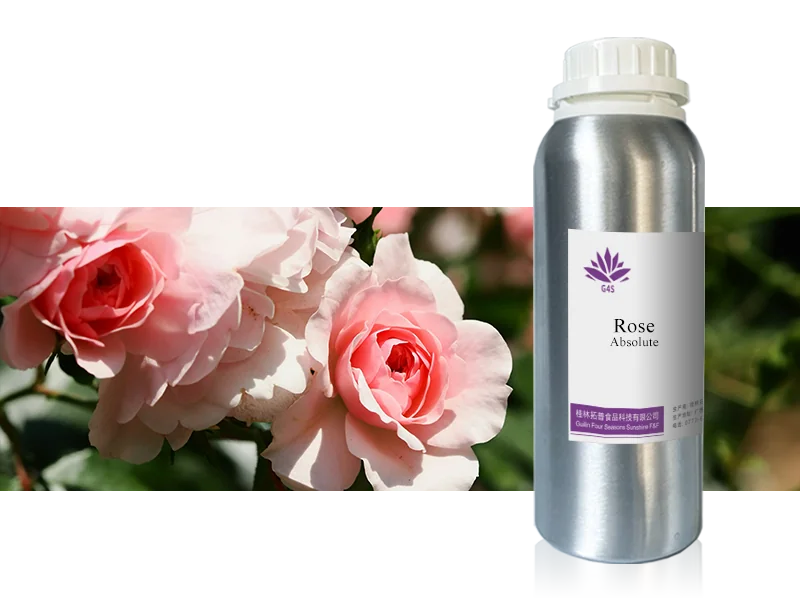
Because "how much" has no answer until two things are fixed: the form of the material and the base it goes into. A neat absolute, a concrete, a distilled otto, and a 5% diluted absolute behave differently in the same formula. Public price references show the same gap: bulk Turkish rose absolute is quoted from about USD 3,269 to USD 16,170 per kg depending on grade and volume, while a 5% diluted version sits near USD 716 per kg. Those numbers are not interchangeable, and neither are their usage levels.
The practical consequence is simple. Before anyone debates percentages, confirm four attributes in writing:
- Form: absolute, concrete, otto, or diluted absolute
- Purity claim: 100% pure single-rose absolute, with no carrier, synthetic rose compounds, or preservatives
- Evidence: batch COA with GC-MS fingerprint, including the citronellol to geraniol ratio
- Botanical identity: the species behind the material and how it maps to the declared INCI
Only after those four are locked does a percentage mean anything. In fragrance and flavor use, rose absolute is normally a trace-level material; the actual ceiling for your application must be verified against the current IFRA amendment and, for flavor use, the applicable use conditions under 21 CFR 182.206 — not against a supplier's "recommended dosage."

Which Three Objects Must You Define Before Any Percentage Makes Sense?
Define the evaluation object, the formula object, and the decision object. Most buyer disputes come from mixing them up.
The evaluation object is the sample itself: the batch number, the form, and the dilution you will smell. The formula object is the base you will test in — a specific concentrate version, not "our perfume." The decision object is the gate criterion: what result lets you spend the next level of money.
| Gate | Sample | Question it answers | Typical time | Pass criterion | If it fails |
|---|---|---|---|---|---|
| Gate 1 — blind evaluation | 1 ml | Is the odor direction right? | 1–2 weeks | Direction, waxy-honey rose character, and tenacity match the brief | Change batch or origin; do not enter the formula |
| Gate 2 — formula trial | 5 ml into 100 g | Does it work in this base? | 2–4 weeks | At least one of three levels holds | Adjust levels or drop the material |
| Gate 3 — pilot | 1 kg | Does it hold after scale-up? | 4–8 weeks | Odor and GC-MS both consistent | Return to sampling; do not lock volume |

How Should the 1 ml Blind Evaluation Be Designed?
Treat 1 ml as a real test, not a courtesy vial. One millilitre is enough to prepare about 10 ml of a 10% dilution, which supports three to five evaluators and two to three re-evaluation rounds. The condition is that the sample must come from the same batch you would eventually buy — "demo material" from a different lot invalidates the whole exercise.
Run the blind test against a reference you already trust, and score it on a fixed sheet rather than a free-form comment.
| Field | What to record | Weight |
|---|---|---|
| Odor description | Sweet rose, waxy-honey facet, green or fruity lean | High |
| Intensity | Stronger or weaker than the reference | High |
| Tenacity | Smelling strip at 2, 6, and 24 hours | Medium |
| Difference points | Where it departs from the reference | High |
| Paperwork | Batch COA and GC-MS received with the sample | Veto |

How Do You Run the 5 ml to 100 g Trial Without Overshooting?
Use a descending logic, not an ascending one. Instead of starting high and cutting back, test three illustrative levels — commonly in the 0.5%, 1%, and 2% range for a fragrance concentrate — and treat the lowest one that still delivers the brief as your working level. Those figures are examples for planning, not regulatory limits; the usable ceiling for your application still has to be checked against the IFRA amendment in force and your customer's formula rules.
The reason to test downward is economic. With a material at USD 3,000 to 18,000 per kg, the difference between 0.5% and 2% is not a rounding error; it is the difference between a viable line and a margin problem. In many formulas the first fraction of a percent establishes the direction and the rest mostly adds intensity, so the useful question is "what is the smallest level that still reads as rose?"
Record three things for every trial:
- The base version number, so the result is reproducible
- The absolute's batch number
- The retention sample ID, tied to the supplier's batch traceability
Then score each level on odor fit and cost per finished unit, and choose on the ratio rather than on odor alone. A level that wins on smell but doubles the per-unit cost is not a win for a buyer who has to defend margin.
What Proves a 1 kg Pilot Batch Is Safe to Scale?
Three proofs, all documented, before the volume decision.
First, odor consistency: the 1 kg batch, evaluated against the 100 g trial, should sit within your team's agreed tolerance — for example, no more than one scoring step apart on your own scale. Second, analytical consistency: the pilot batch GC-MS should be comparable to the trial batch, with the key ratios not drifting. Third, process behavior: dilution and handling should be uneventful, including solubility behavior such as 1 ml dissolving in 3 ml of 95% ethanol, which is part of the specification set along with density 0.841–0.998, refractive index 1.4220–1.5670, acid value ≤25, and ester value ≥10.
Two failures explain most pilot disappointments. The trial used a diluted absolute and the pilot used a neat one, so the two are not the same material. Or the trial and pilot batches fall on opposite sides of the harvest window, which runs roughly May to June, so the raw material itself has changed. Both are avoidable by recording form and harvest year at every gate.
Where Should You Draw the Stop-Loss Line at Each Gate?
Write the stop-loss rule before the test starts, and let it decide — not the enthusiasm of the evaluation session.
| Checkpoint | Pass | Conditional | Stop |
|---|---|---|---|
| Gate 1 | Direction fits and paperwork complete | Direction fits, documents missing | Odor mismatch or mixed forms |
| Gate 2 | One level works at acceptable cost | Only the highest level works | None of the three levels works |
| Gate 3 | Odor and GC-MS both consistent | Data consistent, scores low | Data drift or form mismatch |
What Are the Four Most Common Buyer Mistakes?
- Judging neat absolute usage from a 5% diluted sample, which pushes every level too high.
- Skipping the 100 g trial and locking 25 kg directly, turning a level error into a full-batch loss.
- Approving on odor alone, with no GC-MS fingerprint, so batch-to-batch consistency can never be demonstrated later.
- Treating a supplier's "suggested dosage" as a compliance ceiling, which stops being valid the moment the application changes.
Each mistake has a cheap fix: confirm form in writing, add the 100 g gate, attach the fingerprint to the approval file, and replace "suggested dosage" with the applicable regulatory reference for your end use.
How Do You Align the Test Plan with This Supplier's Sample Ladder?
Send the supplier a short test plan instead of a vague request. The plan should state the form, the intended application, the three levels you want to try, and the documents you need with the sample. Ask for the 1 ml and 5 ml samples first, request dispatch within 7 days, and ask for formulation guidance within 14 days. When you move to the 100 g trial, name the base version. When you move to the pilot, name the batch you are scaling.
The document pack that should arrive with the sample includes the batch COA with GC-MS, lead and total arsenic results under the mandatory standard, residual solvent analysis by GC, an EU-format 16-section SDS, a technical data sheet, the GB 1886.263-2016 release record, the FEMA 2988 and 21 CFR 182.206 flavor-use statement with its use conditions, and an allergen declaration covering geraniol, citronellol, linalool, and farnesol with the IFRA amendment version noted. If any of these is missing, mark the gate conditional rather than passing it.
Product identity should be explicit at the same time: CAS 8007-01-0, EINECS 290-260-3, FEMA 2988, a 100% pure single-rose absolute, and a written explanation of how the botanical source maps to the declared INCI. That last item matters because buyers routinely receive material whose species and INCI do not obviously correspond; a one-page mapping note prevents a later labeling argument. Flammability is a separate thread: where the SDS classifies the material as a flammable liquid, the label and transport documents must agree, with the UN number and packing group taken from the measured SDS rather than assumed.
What Does a 30-Day Evaluation Calendar Look Like?
| Week | Action | Output |
|---|---|---|
| 1 | Fix form, application, and target levels; request 1 ml and 5 ml samples | Test plan and inquiry sheet |
| 2 | Run the blind evaluation; check COA and GC-MS on arrival | Blind scoring sheet and document log |
| 3 | Run the 100 g trial at three levels | Trial record and cost per unit |
| 4 | Select the level; request the 1 kg pilot with the stop-loss rule attached | Pilot request and decision memo |
Frequently Asked Questions About Rose Absolute Usage Rates
Is there a standard usage rate for rose absolute in fragrance?
No single figure applies across applications. In fragrance concentrates, planning levels in the 0.5% to 2% range are common as an illustration, but the usable ceiling depends on the IFRA amendment in force, the product category, and your customer's own rules. Always verify rather than adopt a number from a supplier sheet.
Is 1 ml enough for a blind evaluation?
Yes, for direction. One millilitre diluted to about 10 ml at 10% supports three to five evaluators and repeat rounds. The sample must come from the batch you would actually buy.
Can I convert a 5% diluted absolute level directly into neat absolute?
No. The diluted version contains a carrier, so both odor intensity and price basis differ. Convert by actual concentration first, then re-test the level in your base.
What is the difference between the 100 g trial and the 1 kg pilot?
The 100 g trial answers whether the formula can work at all. The 1 kg pilot answers whether it survives scale-up, and it requires both an odor comparison and a GC-MS comparison against the trial batch.
Can I select a supplier without a GC-MS fingerprint?
You can judge odor direction, but you cannot build a batch-consistency argument, and you should not move to pilot or volume commitment without it.
How long do the three gates take in total?
Typically 7 to 14 weeks depending on formula complexity, with sampling and formulation support compressible through 7-day dispatch and 14-day guidance.
The pilot smells different from the trial — whose problem is it?
Check form consistency first, then whether the two batches straddle the harvest window, then the GC-MS ratios. Only if all three are clean should you attribute the difference to scale-up effects in your own base.
Will this process give me a fixed dosage to write into the brief?
No. It gives you a repeatable way to find the smallest level that works, with the compliance reference stated separately for each end use.
Conclusion and Next Steps
The usage rate is not a number you look up; it is the output of three gates that each retire one risk. Fix the form, run the 1 ml blind test against a trusted reference, find the smallest workable level in a 100 g trial, and only then spend money on a 1 kg pilot.
Next steps:
- Write the form, application, and target levels into a one-page test plan.
- Request 1 ml and 5 ml samples with the full document pack, and log what arrives.
- Score the blind evaluation on a fixed sheet, not in free text.
- Run the 100 g trial at three levels and select on odor fit divided by cost per unit.
- Attach the stop-loss rule to the pilot request so the decision is made before the result arrives.
If the same material will also go into a food application, read the companion guide on separating cosmetic and food labeling, and if the sourcing decision depends on a shortfall year, read the guide on locking volume and finding the cost crossover point.
This article was published on 2026-11-25, and last updated on 2026-11-25. The article will be continuously updated.