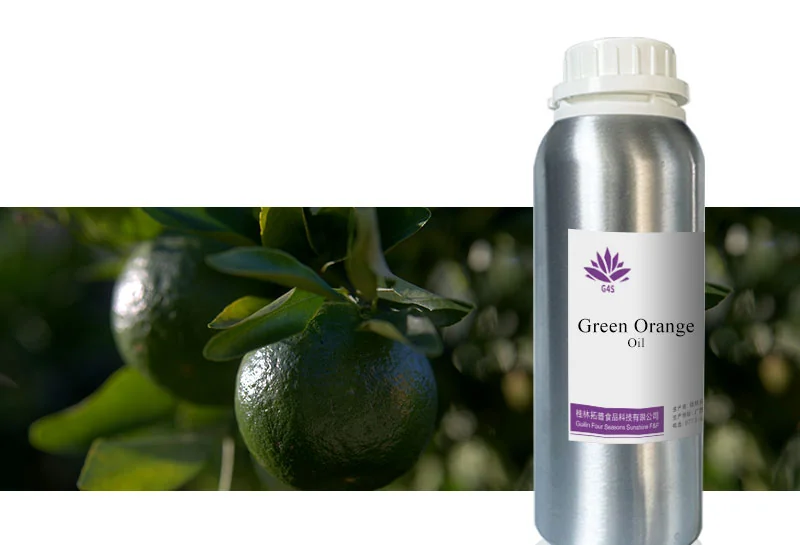
What are the key aromatic compounds in this green mandarin oil?
The profile is a classic unripe-citrus makeup dominated by D-limonene, with a distinctive gamma-terpinene second peak that sets green mandarin apart from orange and gives it a sharper, greener edge.
Key Compounds
| Compound | Typical content | Role in aroma |
|---|---|---|
| D-Limonene | 65-75% | Juicy citrus skeleton |
| Gamma-Terpinene | 16-22% | Green, slightly sharp — the green-mandarin signature |
| Alpha-Pinene | 1.2-1.6% | Fresh, piney lift |
| Beta-Pinene | 1.5-1.9% | Woody-citrus freshness |
| Alpha-Thujene | 0.1-0.3% | Green, herbaceous nuance |
| Methyl N-methylanthranilate (MNMA) | 0.2-0.8% | Floral sweetness, fluorescent marker |
| Linalool | 0.5-2.0% | Floral-woody softness |
- The D-limonene/gamma-terpinene pair is the authenticity fingerprint: a real unripe-peel profile keeps gamma-terpinene above 16%, which distinguishes it from sweet orange (where gamma-terpinene is typically only ~2%)
- MNMA content is a second fingerprint — it is naturally fluorescent (blue under UV light) and typical of true mandarin oils
- The citrus peel is the source of its natural phototoxicity: bergapten and related furocoumarins are present at low levels — sun exposure rules apply (see the safety FAQ)
- The full GC-MS report accompanies every batch and each CoA
Relate Products
This article was published on 2026-09-07, and last updated on 2026-09-29. The article will be continuously updated.