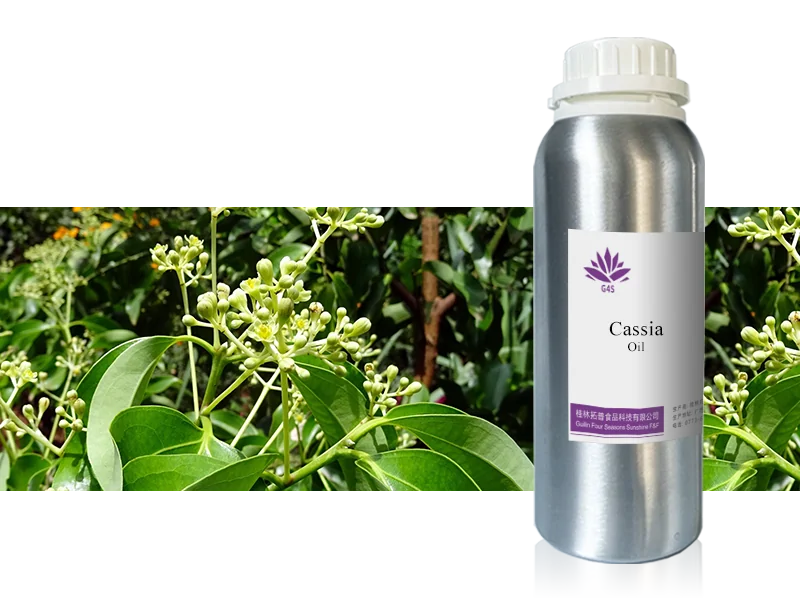
What are the key aromatic compounds in this cinnamon bark oil?
The oil is chemically dominated by trans-cinnamaldehyde (also called cinnamal), which typically accounts for 70-90% of the oil and is responsible for the characteristic hot-sweet cinnamon odor. Several supporting compounds shape the full aroma and are also important for regulatory compliance.
Key Compounds
| Compound | Typical content | Role in aroma |
|---|---|---|
| trans-Cinnamaldehyde | 70-88% (ISO 3216:1997); ≥74% GC per GB/T 11425-2008; 80-88% typical of new-process oil | Signature hot-sweet cinnamic note |
| trans-o-Methoxycinnamaldehyde | 4.0-8.5% | Sweet, warm, cinnamic-amber nuance |
| Coumarin | ≤0.1% (pharmaceutical grade) | Sweet hay-like undertone; restricted by IFRA & EU |
| Cinnamyl acetate | 0-1.0% | Balsamic, fruity-sweet smoothing note |
| Eugenol | Trace to ~1% | Clove-like warmth in the heart |
| Benzaldehyde | Trace | Almond-like sharp top nuance |
- Carbonyl (cinnamaldehyde) content ≥80% by titration is the key quality gate, tested per GB/T 14454.13-2008
- The ratio of trans-cinnamaldehyde to the supporting o-methoxycinnamaldehyde/coumarin/acetyl-cinnamyl group distinguishes 'new-process' (≥80% aldehyde) from 'old-process' (72-80%) cassia oil in Chinese industry practice
- Coumarin, eugenol, cinnamyl alcohol and benzyl alcohol are all subject to IFRA 51st Amendment limits and EU 2023/1545 allergen labeling, so a full GC-MS fingerprint is issued with every batch
- A complete component list appears in the batch GC-MS report (CAS 8007-80-5)
Relate Products
This article was published on 2026-09-07, and last updated on 2026-09-07. The article will be continuously updated.