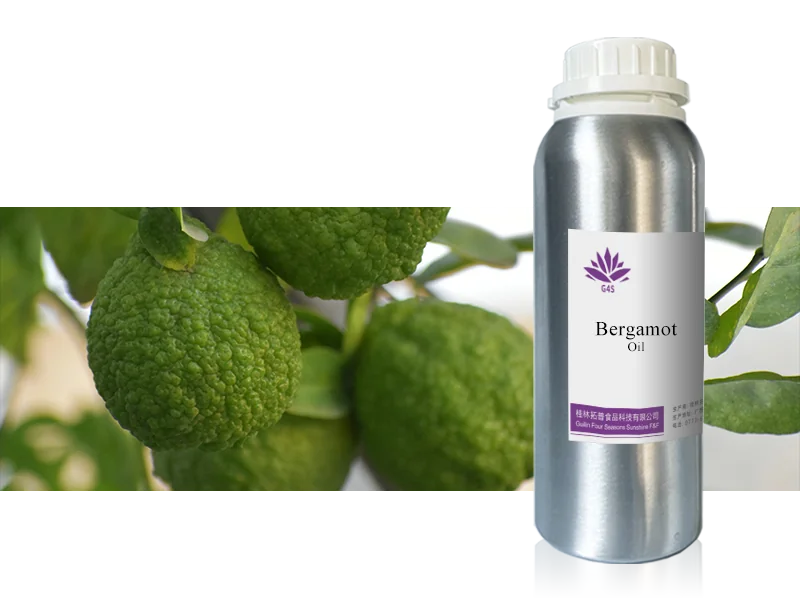
Which botanical species does this bergamot oil come from, and where is it grown?
This bergamot oil is cold-pressed or steam-distilled from the fresh fruit peel of Bergamot (Citrus bergamia Risso & Poit., also classified as Citrus aurantium L. subsp. bergamia), a fragrant citrus fruit of the Rutaceae (rue) family. It is the soul of Earl Grey tea and the irreplaceable core top note of classic colognes.
Species & Origin
| Item | Detail |
|---|---|
| Botanical name | Citrus bergamia Risso & Poit. (syn. Citrus aurantium L. subsp. bergamia) |
| Family | Rutaceae (rue / citrus family) |
| Part used | Fresh fruit peel (flavedo) |
| Product code | TPS-RO-004 |
| Main origin | Calabria region, southern Italy — supplies 80-90% of the world's bergamot oil and holds the PDO 'Bergamotto di Reggio Calabria' designation |
| Secondary origins | Argentina, Brazil and southern China — slightly lower aromatic complexity and ester content |
| Historical status | Known since the 16th century in Calabria; used since 1714 in Eau de Cologne by Johann Maria Farina; named after the town Bergamo |
- Under ISO 3520:2022, the oil is defined as 'Essential oil of bergamot [Citrus bergamia Risso et Poit], Calabrian type', making the Calabrian cultivar the international benchmark
- The Calabrian PDO covers the entire chain — cultivation, harvest, cold-pressing and packaging — with full traceability (92% of registered growers covered in 2024)
- Italian bergamot is a true 'specialty citrus': its soil and microclimate cannot be replicated elsewhere, which is why Calabria commands 80-90% of global production
- Official standard name under GB/T 14453-2008: bergamot oil (xiang ning meng you)
Relate Products
This article was published on 2026-09-07, and last updated on 2026-09-29. The article will be continuously updated.