
Angelica Essential Oil Annual Contracts: Three Negotiation Points for US Distributors on Tiered Pricing and Price-Increase Notice
Lock one written specification across all four price tiers, turn the 90-day price lock into a three-step price-increase-notice clause with a threshold, evidence and a cap, and trade annual volume for three-year retained samples, batch traceability, private-label COAs and supply-failure compensation — then select on landed cost, never on a single unit price.
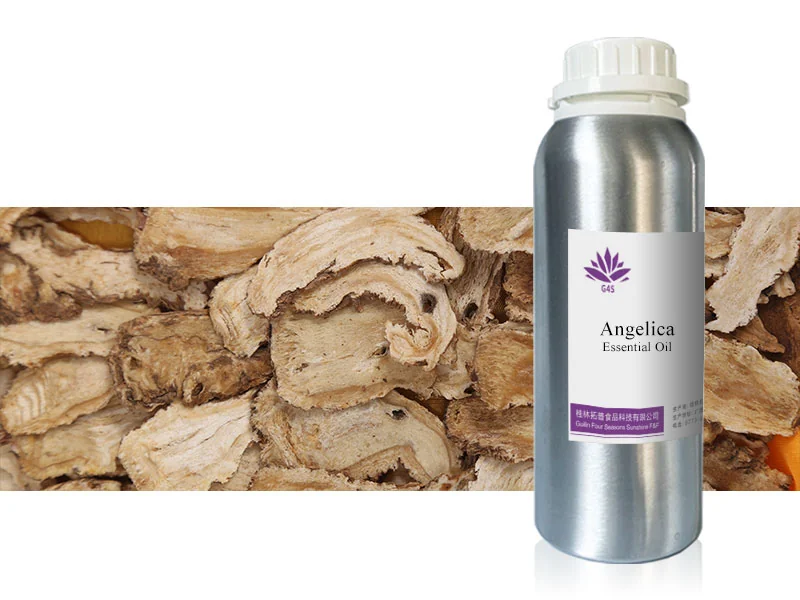
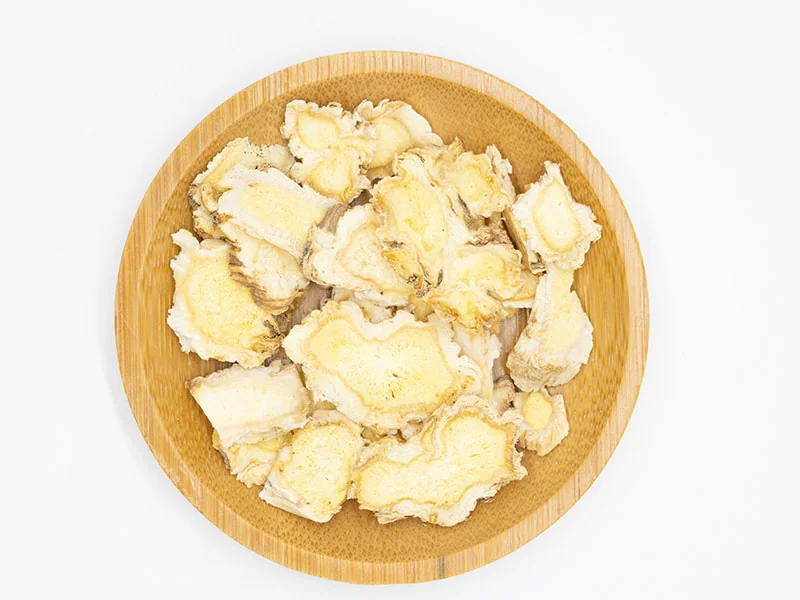
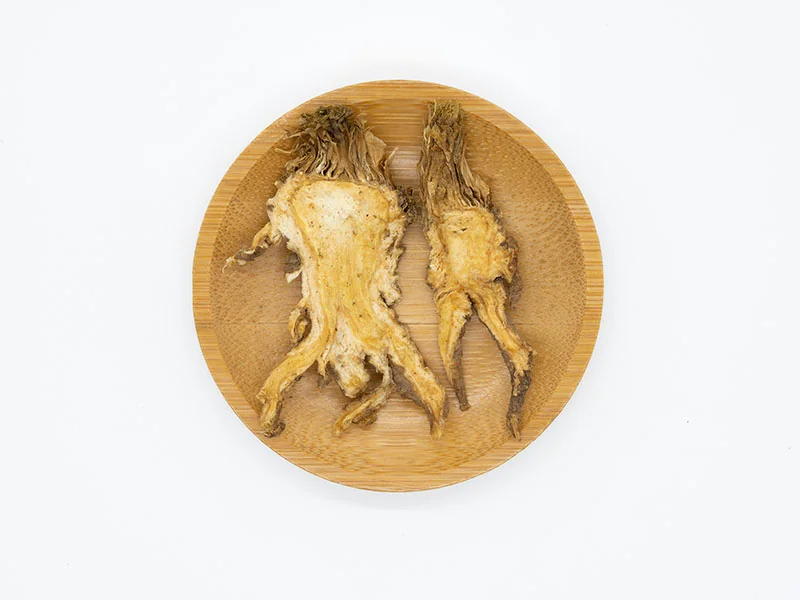
"Angelica essential oil" in this contract means the supercritical CO2 extract of the dried root of Angelica sinensis (Oliv.) Diels — not the steam-distilled oil of European angelica (A. archangelica) and not A. dahurica root oil. It is a yellow-brown to red-brown liquid from the Dao-di growing area of Min County, Gansu, with a characteristic herbal-root odor and ligustilide as the assay marker. For a US wholesaler or distributor about to sign an annual framework, the danger is rarely the number on the quote sheet. It is that four "tiers" quietly describe four different species, forms or assay levels; that a "locked" price can be changed without warning; and that an annual volume commitment buys no enforceable quality or supply protection. This guide gives distributor decision-makers three negotiation points — each with a comparison table, a checklist, a quick win and a document slot — so you can put a defensible contract on the table instead of a price fight.
1. The 30-Second Answer: Three Negotiation Points and the Four Outcomes You Can Walk Away With
| Negotiation point | The outcome you lock (quantifiable) | Contract clause | Evidence slot you must obtain |
|---|---|---|---|
| ① Tiered pricing: discounts tied to "same specification + volume" | One four-tier table converting 1–5 kg through 180 kg into comparable numbers, so nobody benchmarks you against a different species or process | Price annex, specification annex, volume-price linkage clause | Botanical-name letter, non-A. archangelica / non-A. dahurica declaration, CAS correspondence letter, GC-MS fingerprint, ligustilide assay, per-batch COA |
| ② 90-day lock + price-increase notice: increases need a threshold, evidence and a cap | Unit price locked for 90 days; any increase rewritten as "advance written notice + cost evidence + cap" | Price-lock clause, price-increase-notice clause, order-protection clause | 90-day lock confirmation letter, Min County harvest-window note, tariff and freight cost evidence |
| ③ Volume-for-value: quality and supply protection in exchange for annual commitment | Annual volume buys three-year retention, batch traceability, OEM private-label COAs, returns and supply-failure compensation — all collapsed into one landed-cost sheet | Quality assurance clause, private-label clause, returns and supply-failure compensation clause, landed-cost annex | Retention numbers, per-batch COA/GC-MS, traceability records, private-label COA sample, compensation clause text |
2. Set the Price-Comparison Baseline First: Without One Written Specification, Tiered Quotes Are Not Comparable
Tiered pricing is only meaningful when every tier describes the same thing. Define the entity before you discuss the number.
Put species, part, process and CAS/EC/INCI into one contract annex
- Entity definition: the dried root of Angelica sinensis (Oliv.) Diels (Apiaceae, Angelica), Dao-di origin Min County, Gansu, produced by low-temperature supercritical CO2 extraction, a yellow-brown to red-brown liquid with the characteristic angelica herbal-spicy odor.
- Botanical-name correction: the product page prints
Anglica sinensis(Oliven) Diels, which is a misspelling. Contracts, COAs and labels must read Angelica sinensis (Oliv.) Diels, accompanied by a botanical voucher / Min County origin certificate and a non-A. archangelica / non-A. dahurica declaration. - Form: state in writing whether the goods are a CO2 extract oil or an essential oil. Obtain written CAS 8015-66-5 correspondence to species and process, plus the EC/EINECS number and the INCI recommendation.
- Claim boundary: FEMA 2088 / 2090 / 2091 belong to European angelica and must not be borrowed. Blood-replenishing, womb-warming, women's wellness and anti-aging statements are removed. Food, beverage and dietary-supplement use has not been established and is not claimed.
Write markers and safety items into the "same specification," or the four tiers have no common denominator
- Ligustilide assay plus a GC-MS fingerprint checked against a Dao-di reference standard, with the reference standard and retained samples kept for three years.
- Heavy metals Pb/Cd/As/Hg quantified per batch, pesticide residues screened by pharmacopoeia methods, microbiological limits and CO2 process-residue statement; metals screened to ChP/USP limits.
- Relative density 0.9800–1.1800 and refractive index 1.4680–1.5930: obtain the batch-to-batch control basis behind these wide ranges and match it to the COA.
- 100% natural, single botanical source (root only), undiluted, no carrier oil, synthetic additive, preservative or reconstitution.
Checklist — clear these six items before any price talk: - □ Botanical-name letter - □ Non-A. archangelica / non-A. dahurica declaration - □ CAS / EC / INCI correspondence letter - □ Form statement (CO2 extract oil vs essential oil) - □ Ligustilide assay + GC-MS fingerprint sample - □ Per-batch COA sample. Any missing item means the quotes are not comparable — send them back.
Evidence slot: number the above six as a "Specification and Identity Document Pack" annex and cite the annex number in each section that refers to it.
3. Negotiation Point 1 — Build a Four-Tier Price Ladder and Bind Every Discount to "One Specification + Volume"
Get one comparable four-tier table (1–5 kg through 180 kg)
| Tier | Pack / form | Negotiation purpose | Unit price / discount | Source basis |
|---|---|---|---|---|
| Tier 1 | 1–5 kg aluminium-bottle sample with GC-MS, ligustilide, COA, SDS and name/form letter | Blind evaluation and formula validation | Quote on request | 201 / 203 / 204 |
| Tier 2 | 100 g / 1 kg small-batch repack | Replenishment and distribution test-sell | Quote on request | 202 pricing practice |
| Tier 3 | 25 kg / 50 kg drum trial order | Small-scale commercialization | Quote on request | 201 packing parameters |
| Tier 4 | 180 kg drum annual framework | Annual volume-price linkage | Quote on request | 201 recommended path |
Choose one volume-price mechanism; do not negotiate "discount" and "rebate" together
- Option A (direct discount): annual committed volume maps to unit-price tiers; once the volume is met, the tier price applies. Agree the tier switch points and retroactive settlement in the contract.
- Option B (rebate): base price first, quarterly or annual rebate on actual drawn volume. Agree the rebate percentage and settlement cycle in the contract.
- Decision-maker bias: supply security and total cost come first. Compare specification consistency and document completeness before price — do not open with the discount.
Dodge the three "false low price" traps
| Trap quote | Why it cannot be used to push your price down |
|---|---|
| USD 6/kg (70% ligustilide CO2, low credibility) | Low credibility, must be verified; form and document completeness unknown |
| USD 174/kg (steam-distilled A. archangelica essential oil) | Different species — not A. sinensis CO2 oil |
| ¥16–1,500/kg (wide Chinese platform listings) | CAS, content and process mixed; low end is questionable |
Quick wins: ① ask the supplier to give all four tier prices in one pass instead of draining them out tier by tier; ② bind the specification annex and the price annex into one document so a specification change cannot keep the old price; ③ in every external comparison, verify species, form and ligustilide content first.
Tool / template entry: the Angelica Oil Four-Tier Price Comparison Sheet — columns for tier, specification annex number, unit price, MOQ, payment term, document-pack completeness and landed cost.
Seen & Trusted evidence slots: one citation slot each for the botanical-name letter, non-A. archangelica / non-A. dahurica declaration, CAS correspondence letter, ligustilide assay report, GC-MS fingerprint and per-batch COA sample.
4. Negotiation Point 2 — Turn the 90-Day Price Lock Into a Thresholded, Evidenced and Capped Price-Increase Clause
Lock the unit price for 90 days: define what is locked, for how long and for which orders
| Element | Negotiation point | Status |
|---|---|---|
| Locked object | The tier unit price against one specification annex number | Set in clause |
| Lock duration | 90 days | Confirmed |
| Coverage | Orders placed and delivered inside the lock window; treatment of cross-period orders | Set in clause |
| Breach handling | What happens if the supplier raises price inside the lock window | Set in clause |
Price-increase notice: advance notice + cost evidence + cap — none of the three can be missing
- Notice days: no specific figure is on record. The negotiation anchor is 30 / 60 days' written notice, written up as a proposed clause to be agreed, never as an existing supplier commitment.
- Trigger list: ① Min County late-autumn harvest window and the cost of 2–3 year old root; ② Section 301 tariff and De Minimis changes (confirm with the broker); ③ the 15–18 day West Coast transit and combustible-liquid booking delays; ④ ligustilide content or specification upgrade.
- Cost evidence: an increase must carry written harvest, tariff or freight evidence; otherwise no unilateral adjustment outside the lock window (proposed clause).
- Cap: single-increase and annual cumulative ceilings are raised as a buyer demand and set in the clause.
Turn uncertainty into early warning: a decision-maker fears a sudden increase, not an increase
Decision-makers approve suppliers on a quality / procurement / compliance co-sign. When a supplier is vague on a critical item or cannot produce evidence on the spot twice or more, pause entry into contract talks (persona warning signal). The lock clause must therefore be bound to a notice mechanism: notice is process control, the cap is outcome control.
Checklist — seven lock-clause items: - □ 90-day lock object - □ Cross-period order rule - □ Notice days (to be agreed) - □ Trigger list - □ Cost-evidence requirement - □ Increase cap (to be agreed) - □ Order protection inside the lock window.
Quick wins: ① put "90-day lock + advance written notice" as one sentence in the quote footer to fix the principle first; ② ask the supplier for a harvest-window calendar so you can anticipate the increase window; ③ require evidence with every increase and refuse verbal adjustments.
Tool / template entry: the 90-Day Price Lock and Price-Increase Notice Clause template, with fill-in fields for notice days, triggers and cap percentage.
Seen & Trusted evidence slots: one slot each for the 90-day lock confirmation letter, Min County harvest-window note, tariff / freight cost evidence and a sample written notice.
5. Negotiation Point 3 — Trade Annual Volume for Retention, Traceability, Private-Label COAs and Supply-Failure Compensation
Convert annual volume into auditable quality consideration: per-batch COA/GC-MS + three-year retention + batch traceability
- Each batch COA states the corrected botanical name, part (root), origin (Min County), date, batch code, production date and retention-sample number, with a GC-MS fingerprint against a reference standard retained three years, a ligustilide assay, and heavy metals / pesticides / microbiology / CO2 residue.
- Traceability runs from raw root intake to the sealed drum; retained samples and reference standards are kept three years so a quality dispute can be re-tested — the key to passing a downstream audit.
- The exchange logic: the distributor commits annual volume; the supplier writes per-batch release plus three-year retention plus traceability into the quality-assurance clause.
Private-label consideration: OEM COAs issued under your brand heading
- The COA can be issued under the OEM customer's brand heading; Form E, certificate of origin and dangerous-goods declarations are arranged as needed; commercial invoice, packing list and bill of lading travel with the goods.
- The combustible organic extract is classified by SDS for transport conditions; multi-language SDS (EN / DE / FR / ES / AR) is available on request.
Risk consideration: returns, supply-failure compensation and single-source mitigation
- Returns: set the trigger conditions and process in the contract for returns where species, form, content or contaminant items fail the specification.
- Supply-failure compensation: set compensation in the clause for failure caused by the harvest window, customs hold or logistics.
- Single-source risk: angelica root supply is tightly bound to the Min County Dao-di area and there is no scaled US production; confirm this before contracting. Mitigation through a second source, safety stock and harvest-window buffer planning is raised as a negotiation demand.
Collapse landed cost into one table (the decision-maker's final arbiter)
| Cost block | What it covers | Status |
|---|---|---|
| Goods value | The tier unit price from Negotiation Point 1 | Obtain the quote |
| Duty | Section 301 (may stack on Chinese origin), HS 3301.29 vs 1302 | Confirm with broker |
| Logistics | 15–18 day West Coast transit, combustible-liquid booking and storage | Partly confirmed |
| Working capital | Net 30/60; 30% deposit + 70% against bill-of-lading copy (industry practice) | Agree in contract |
| Quality cost | Per-batch testing, retention, private-label COA, claim-review support | Obtain the quote |
Quick wins: ① request three recent COA samples and run a traceability drill; ② write the private-label COA heading into the price annex so no charge is added later; ③ run the final comparison on total cost, not unit price.
Tool / template entry: the Annual Framework Consideration Checklist plus the Landed-Cost Calculation Sheet.
Seen & Trusted evidence slots: one slot each for the retention-number ledger, per-batch COA/GC-MS, traceability records, private-label COA sample and compensation clause text. Company-level credentials may be stated only as: source factory, 25,000 m² base, 137 IP assets, 30+ years of extraction experience, a supercritical fluid extraction platform, 14-day sampling, and clients such as Givaudan, DSM-Firmenich and Symrise — explicitly flagged as company-level, not an angelica-oil single-product case.
6. The One-Page Negotiation Checklist You Can Bring to the Table
- □ Comparison baseline: corrected botanical name, non-A. archangelica / non-A. dahurica, CAS·EC·INCI, form statement, ligustilide + GC-MS, per-batch COA — all six present
- □ Point 1: four-tier unit prices complete, one volume-price mechanism chosen, not derailed by the three false low prices
- □ Point 2: 90-day lock states what / how long / which orders; notice clause has advance notice (to be agreed) + cost evidence + cap (to be agreed)
- □ Point 3: three-year retention + batch traceability + OEM private-label COA + returns / supply-failure compensation (to be agreed) + single-source mitigation (to be agreed) + total-cost sheet
- □ Red-line self-check: no food, beverage, dietary-supplement or TCM efficacy claims; no price comparison against European angelica or A. dahurica oil
- □ Evidence slot: at least one verifiable written document per negotiation point; every gap labelled as an open item
7. Seen & Trusted Evidence Slots and This Page's Place in the Topic Network
This page is the outer "contract / annual framework negotiation" section of the angelica-essential-oil topical map; the core sections are the product page and supplier-qualification page. Use these anchor links to keep the semantic network intact: the Angelica Essential Oil product page, inquiry-based pricing and 90-day price-lock execution (0027), 1 g / 5 g / 100 g / 1 kg four-tier sample blind review (0028), five-step check of four COA fields (0019), and ligustilide content commitment negotiation (0003). Supporting pages are the product-positioning page, the B2B persona analysis, the US market analysis and the company profile.
8. FAQ: Six Distributor Decision-Maker Questions Answered Before the Annual Contract
Q1. With no public bulk price, how do you judge whether tiered pricing is fair? Lock the six specification documents first, then compare the four tier prices and the volume-price mechanism. The public USD 6 / 174 / 300 per kg and ¥16–1,500 per kg figures are definition references only and are not directly comparable (the definitions differ; verify before comparing).
Q2. What exactly can a 90-day price lock cover? It locks the tier unit price for 90 days against one specification annex. Agree cross-period orders and breach handling and write them into the clause.
Q3. How much advance notice must a price increase give? No figure is on record. The negotiation anchor is 30 / 60 days' written notice with written cost evidence attached.
Q4. Is a 30% / 50% / 70% ligustilide grade a credible basis for quotation? The public market uses those grades, but confirm whether they are this product's specification commitment. Rely on the batch COA assay value and GC-MS fingerprint.
Q5. Can the COA carry our own brand heading? Yes — OEM private-label COAs are issued under the customer's brand heading; obtain the exact process from the supplier.
Q6. Will a single origin cause a supply failure? The Min County Dao-di area is tightly bound and there is no scaled US production; confirm this before contracting. Mitigate with three-year retention, batch consistency, harvest-window buffer planning and a second-source / safety-stock policy agreed in writing.
9. Conclusion — What a Bankable Annual Contract Looks Like
A bankable annual framework is not the lowest tier price. It is one written specification applied identically to all four tiers; a 90-day locked unit price paired with a price-increase clause that requires advance written notice, cost evidence and a cap; and an annual volume commitment exchanged for three-year retained samples, root-to-drum traceability, OEM private-label COAs, returns and supply-failure compensation, with the single-source risk and every landed-cost block visible in one table. Anything still open is listed as an open item in the contract rather than assumed in a conversation. Health, food and TCM efficacy claims stay out, and no comparison is drawn against European angelica or A. dahurica oil.
10. Next Steps — From the One-Page Checklist to the Inquiry and Blind Review
Download the Three Negotiation Points One-Page Checklist, send it to the supplier for a written item-by-item reply, and attach the four-tier price request together with the Specification and Identity Document Pack. Run the traceability drill on three COA samples, confirm the 90-day lock and notice fields in writing, then use the landed-cost sheet — not the unit price — for the final selection. Return to the product page with a 1–5 kg sample to complete the blind review before any 25 kg trial or 180 kg annual framework is signed.
This article was published on 2026-11-25, and last updated on 2026-11-25. The article will be continuously updated.