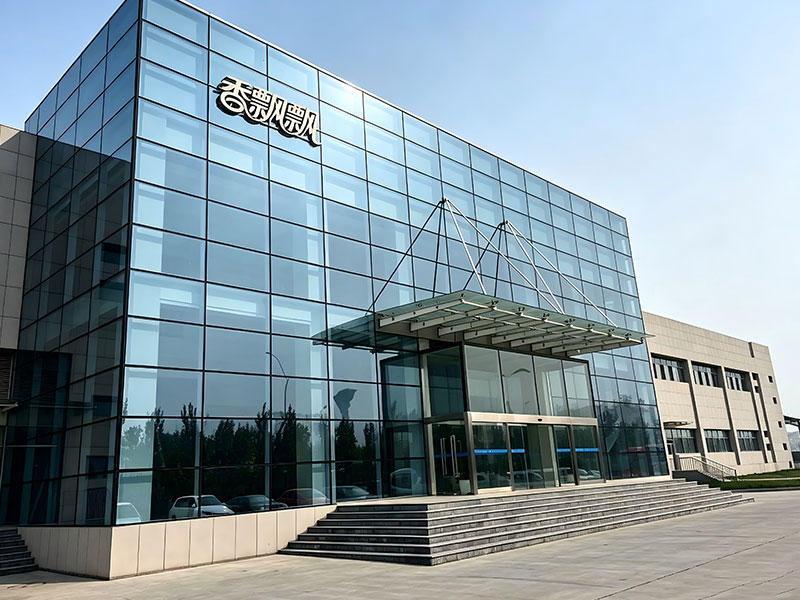
The entire experience of a cup of instant milk tea happens in the one minute after boiling water goes in. A lot has to happen in that minute: the powder has to dissolve without lumps; the aroma has to come out rather than staying shut in the powder; and in the mouth there has to be tea and milk, not a mouthful of "powder taste". A liquid drink can take its time; a powder cannot — once the water hits, the reaction window is a few dozen seconds. Xiangpiaopiao was founded in Huzhou, Zhejiang, in 2005 by Jiang Jianqi, making China's first cup-packaged milk tea; it listed on the Shanghai Stock Exchange in 2017 as "China's first milk tea stock"; it has held first place in cup-packaged milk tea market share for fourteen consecutive years, with four production bases in Chengdu, Tianjin, Huzhou and Jiangmen, 3,400 employees, and revenue of over 2.9 billion yuan in 2025. It has three brands: Xiangpiaopiao for cup-packaged instant, Meco for ready-to-drink fruit tea, and Lan Fong Yuen for Hong Kong-style milk tea. The "original leaf fresh brew" series pushed in recent years, with Sun Yingsha as its ambassador, has one clear idea — to bring instant milk tea closer to a freshly brewed cup.
Powders are one of our old trades. Powder is harder to look after than liquid: aroma can be "locked in" a liquid, but in a powder it escapes more easily — the surface area is large, contact with air is greater, aroma molecules cannot stay, and brew it three months later and the aroma has faded a stretch. Our method is to make the aroma "stay put and release only when it meets water": aroma concentration enriches the actives, and the controlled-release thinking sets the release condition as "on contact with water" — the powder is dry, and it comes out when water is added. Two other things cannot be skipped either: supercritical fluid extraction, low temperature throughout with no solvent entering the process, so the natural character stands up; and Living-Fragrance physical extraction, moving the plant's original aroma structure across intact by physical means, so what is brewed tastes like a freshly made cup. What we supply to Xiangpiaopiao is the natural aroma materials for the instant milk tea, ready-to-drink fruit tea and Hong Kong-style milk tea lines.
There is one small-sounding consensus between the two companies: both make a little bit of good in ordinary people's ordinary days. A cup of packaged milk tea is not a grand occasion — a student in a dormitory, someone working late into the afternoon, a person waiting at a bus stop in winter holding a hot cup, three or five yuan, warm for a while after drinking. Xiangpiaopiao's mission says "let people enjoy life more", and that is what it means. Thirty years in this trade, we have always been supplying ordinary days like these: what these materials end up in is not any grand occasion, just an ordinary hot drink. There is an advantage to doing mass-market business — large volumes, long life, and a settled feeling for whoever does it; there is a difficulty too — thin margins, where every cent has to be counted.
The cooperation began with the idea of "original leaf fresh brew": the client wanted instant milk tea to taste more like freshly brewed tea — not stronger, but more "real". The real hurdle was storage. Once the first version of the sample was made, a cup brewed straight after production was good, but brewed three months later the aroma had dropped by thirty percent — the aroma in the powder had slowly escaped in the warehouse. Adding more does not solve this, because adding more makes it too strong when brewed straight off the line. Later we put the work into "keeping": raise the concentration so the actives account for a higher proportion; then set the release condition precisely, so the aroma barely releases in dry powder form and only comes out when it meets hot water. After the change, the difference between a cup brewed at dispatch and one brewed three months later was almost indistinguishable to the panel.
Talking about technology is clearest by the three problems a powder has to solve. The first is retaining aroma — the aroma has to be locked in the powder and not escape across the shelf life, which rests on concentration plus controlled release, setting the release condition to trigger on contact with water. The second is not caking — powder absorbs moisture and clumps, which neither dissolves nor looks right, and that rests on pushing refining depth up and pressing out the hygroscopic components so the powder stays loose. The third is instant dissolution and instant release — once water is added the aroma has to come out completely within a few dozen seconds, which rests on molecular distillation cutting by boiling range and taking the fast-releasing segment, combined with concentration to raise the intensity, so it holds up the moment hot water hits. Only if all three are solved does a cup of instant milk tea work; leave one out and the drinker cannot say what is wrong, they simply do not want a second cup.
On supply, Xiangpiaopiao has four bases in Chengdu, Tianjin, Huzhou and Jiangmen, and we schedule and ship separately by base, each plant receiving the same specification; milk tea is a winter business, so we build stock ahead of the peak season rather than waiting for the order to schedule production. On service, how the material performs after brewing with boiling water is measured first — how many seconds until the aroma appears, how much is left after ten minutes standing, how great the difference is between hot and cold water — all given to the client as data; when the client runs consumer tests we supply samples at different gradients according to the test's needs. The client's R&D comes every year, and on arrival does not talk business first but has us brew a cup of our own product for him to taste.
For the years ahead, what the two sides need to do together is clear: make the aroma of the "original leaf fresh brew" line more real, raise the shelf-life stability of the ready-to-drink line another notch, and handle the overseas side well — the Thailand base and the ASEAN market. One hot cup can carry a person through an afternoon — and for that one minute, it is worth doing the work thoroughly.
This article was published on 2026-09-14, and last updated on 2026-09-21. The article will be continuously updated.