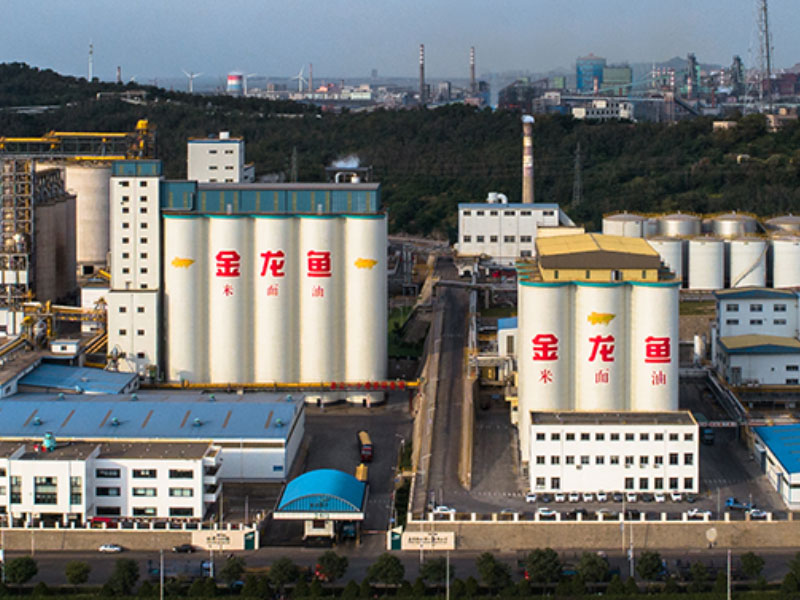
Oil is the carrier of aroma, and also its difficulty. Many aroma components are fat-soluble — they only release when dissolved in oil, and they release slowly, which is a good thing; but oil has a taste of its own, soybean oil, peanut oil and sesame oil each with their own, and material added incautiously gets covered at once. Worse than that, oil oxidises: if the material carries components that promote oxidation, the shelf life of the whole bottle is shortened. Working with aroma in oil is different again from working in water or in syrup — it is a third set of rules. Yihai Kerry started in 1988 with a refinery at Nanhai Oils & Fats in Shenzhen; its Chinese entity was established in 2005 and listed on the ChiNext board in 2020; today it has eighty-three production bases in operation in China and around 36,000 employees. Its business runs from packaged edible oils into rice, flour and condiments — soy sauce, vinegar, sesame oil, Sichuan pepper oil, green Sichuan pepper oil, oyster sauce — and on to health and wellness, peanuts and sesame, and central kitchens (Fengchu). The brands are many: Arawana, Olivo, Hu Jihua, Xiang Manyuan, Hai Huang, Kou Fu, Wanzhuang, Liangfen, Arawana Fresh Rice. The vision reads: "to build an ideal group".
What we supply to Yihai Kerry is the natural aroma materials for the edible oil, condiment and rice-and-flour lines. The flavoured oil area shows the craft best — Sichuan pepper oil needs numbing and aroma together, green Sichuan pepper oil needs that cool clean scent, sesame oil needs the roasted note — and all these aromas are fat-soluble and volatile, and the easiest to lose in processing and storage. Making these varieties does not rest on how much is added but on whether it can be "welded" into the oil: dissolved in, held there, and still smelled when poured out. Thirty years of plant extraction in Guangxi has given us a fairly thorough grasp of the fat-soluble side — which components are stable in oil and which change the moment they see light, we have a fair idea.
There is one place where the two companies are much alike: both think about using a thing completely. Yihai Kerry works at a rice circular economy — after the paddy is milled, the bran, the husk and the broken rice are none of them thrown away: bran pressed for oil, husk burned for power, broken rice made into protein, one chain running through, and the value of a grain of rice squeezed dry. Our thinking is the same: the residue left after the aroma is extracted still has uses — fertiliser, feed, nothing wasted. People who process agricultural products have this habit by nature: what grows out of the field does not come easily, and throwing any of it away hurts. The habit looks plain, and it is in fact a kind of efficiency: what others treat as waste you can still use, so your costs are lower than theirs, and you are truer to the people who grew it.
The cooperation began with a flavoured oil: the client wanted "more real Sichuan pepper aroma" — not more numbing, but that cool clean scent that shoots out the moment the bottle is opened. The real hurdle came after: with the first batch of material added, the peroxide value of the oil rose faster than usual — certain unsaturated components in our material were, in turn, promoting oxidation of the oil. For an oil that is fatal: however good the aroma, if the shelf life is three months shorter, nobody dares use it. We went back through the composition again, using molecular distillation to press out the pro-oxidant part and keep only the stable part; then ran another round of long-term peroxide tracking, and only once we had confirmed no difference against a blank did we dare deliver. That lesson we still remember: for something going into oil, the first priority is not aroma — it is not making trouble.
Talking about technology is clearest by the three characteristics of oil. The first is that oil has a taste of its own — the material must not steal the show, nor be covered; that rests on aroma concentration pressing the dosage to its lowest and raising the intensity to its highest: a little is enough, and it does not dominate. The second is that oil oxidises — the material must not carry pro-oxidant components; that rests on molecular distillation cutting by boiling range to remove the unstable segment, plus supercritical fluid extraction, low temperature throughout with no solvent entering the process, leaving fewer impurities at the process level. The third is that oil is a carrier — aroma dissolved in oil releases slowly, so nothing is smelled at the instant the bottle is opened; that rests on raising the proportion of low-threshold, easily volatilised components so it "comes out first", combined with controlled release so there is something left to release later. Only when all three are solved does a bottle of flavoured oil stand up.
On supply, Yihai Kerry has eighty-three bases and we supply them by region to the same specification, with none favoured over another; oilseed crops have a pressing season and a purchasing season, and we schedule to the client's rhythm so they never stop a line waiting for material. On service, how the material performs in an oil system is measured in full — solubility, change in peroxide value, data for storage protected from light and at room temperature, all given in one go; when the client's oil is exported, the relevant documents are prepared in one pass. The client's technical team has been to our workshop, and at the end of the conversation asked "what do you do with this bit of residue" — someone who asks that question is the same kind of people as us.
For the years ahead, what the two sides need to do together is clear: make the aroma of the flavoured oil line more "real", support the rice and flour products area well, and take "using a thing completely" further — what else the residue left after extraction can be used for is something both sides can think about together. Only when a thing has been used completely are we true to the people who grew it.
This article was published on 2026-09-14, and last updated on 2026-09-21. The article will be continuously updated.