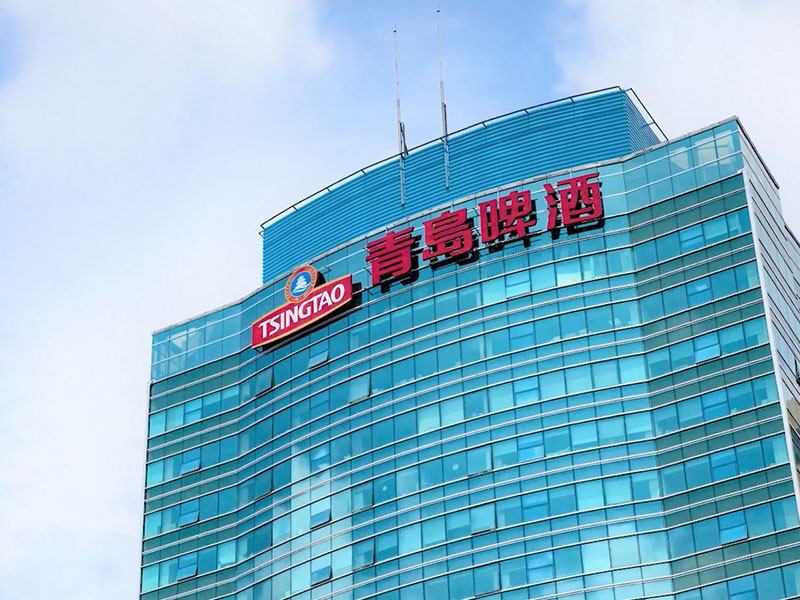
Beer is one of the few drinks built on bitterness as its skeleton. The bitterness from hops carries the structure of a glass: without it, beer is only fizzy sweet water. But for someone working with aroma, bitterness is the hardest thing to get along with — it presses the aroma down, blunts sweetness, and drags the finish out. Adding aroma to beer is not a matter of adding it in; it has to stand up on top of the bitterness. Tsingtao Brewery was founded in 1903 by British and German merchants, listed in both Shanghai and Hong Kong in 1993, and its products are sold in over a hundred countries and regions. The range runs from Classic, Pure Draft, White Beer and Pilsner up to premium lines such as Augerta, Classic 1903 and Amber Lager, and on to 0.0 non-alcoholic beer. After 120 years, this company has one sentence on its lips and in its hands: good people make good beer.
What we supply to Tsingtao is the natural aroma materials for the beer and non-alcoholic beer lines. With a beer client, the rule is to test in the beer base first: low temperature, carbonated, alcoholic, and bitter — all four conditions at once, and only once it has been measured does it count. A material that performs brilliantly in soda may leave nothing at all in beer. Thirty years of plant extraction, fat-soluble, water-soluble and alcohol-soluble all in hand, and we also know which components change solubility in an alcoholic system and which are carried away by carbon dioxide. These things are not worked out by calculation; they are tried out batch by batch. That is why our material holds up in a system that is cold, carbonated and bitter — we have worked on that specifically.
Both companies believe one thing: the person making it has to be straight. Tsingtao says "good people make good beer" — beer is made by people, and a person's character ends up in the beer; it sounds old-fashioned, and after 120 years it is not old-fashioned at all. In our workshop, the first thing a master teaches an apprentice is how to be a person: you may earn a little less on the material, but you do not adulterate it; parameters may be adjusted, but they are not invented; when something goes wrong you say so first, you do not hide it. Those two things are really the same one: with something that goes into the mouth, if the person is crooked, what comes out will be crooked sooner or later. Dealing with Tsingtao's people you notice something clearly: they are not in a hurry, and they get one thing clear before moving to the next. It is the same with us — we would rather be a little slower.
The cooperation began with a new product: the client wanted fruit character, but with the requirement that it "must not be like a soft drink" — this is beer, not fruit soda. The real hurdle was the bitterness. The first version of the material came out with the fruit entirely pressed down by the hop bitterness — a hint on the nose, gone on the palate, and it even made the bitterness seem heavier. Adding more did not help; more of it sat even less well with the overall character of the beer. What we changed later was "penetration": instead of colliding head-on with the bitterness, raise the proportion of the low-threshold components that can still be perceived against a bitter background, so the aroma comes through from inside the bitterness; and at the same time move the moment of release earlier, so it is smelled before the bitterness spreads. Using molecular distillation to cut by boiling range and take the segment needed, and concentration to build enough intensity. After the change, that beer had fruit on opening and was still beer going down.
Talking about technology is clearest by the alcoholic and non-alcoholic lines. On the alcoholic line, alcohol changes the solubility of aroma components and carries aroma away with it; that rests on adjusting how the composition partitions in an alcohol-water system, so what should stay stays and what should release can release, plus controlled release governing the release rhythm so it does not burst out all at once. The non-alcoholic line is more troublesome: without alcohol the aroma loses its support, it drinks thin, and it releases fast — like a cup with no bottom, the aroma goes in and is gone. That line rests on aroma concentration enriching the actives to restore the "body", combined with molecular distillation taking the slower-releasing segment so it holds up. Under both lines sit two basic disciplines: supercritical fluid extraction, low temperature throughout with no solvent entering the process, so the natural character stands up; and Living-Fragrance physical extraction, moving the plant's original aroma structure across intact by physical means, so the aroma has a skeleton and does not scatter easily.
On supply, Tsingtao has several breweries and we supply them separately to the same specification; beer is a summer business, so we schedule production before the peak season and reserve capacity in advance. On service, how the material performs in the beer is measured in full — alcoholic and non-alcoholic, cold and room temperature, protected from light and three months on the shelf, all given in one go; when the client runs tasting panels we supply samples and send someone to listen, noting on the spot and changing on return. The client's brewers have been to our workshop and talked about hops and fermentation, and we have talked about the ways of plant extraction — the two trades differ, but the understanding of "the right moment" is the same.
For the years ahead, what the two sides need to do together is clear: build the aroma body of the non-alcoholic line up another notch, make the fruit series more like beer than like a soft drink, and secure peak-season supply more firmly. A 120-year-old brand rests on generations of people not cutting corners — Tsingtao has said that for 120 years, and we want to keep saying it too.
This article was published on 2026-09-14, and last updated on 2026-09-21. The article will be continuously updated.