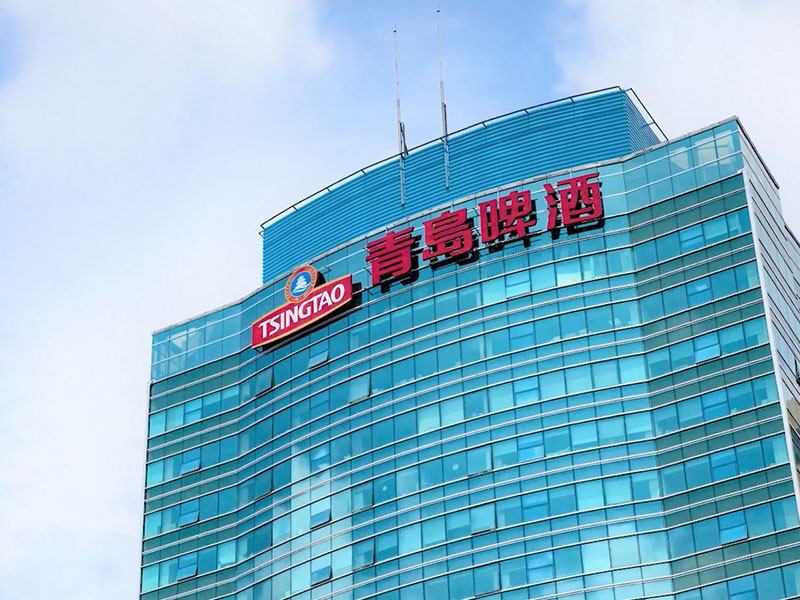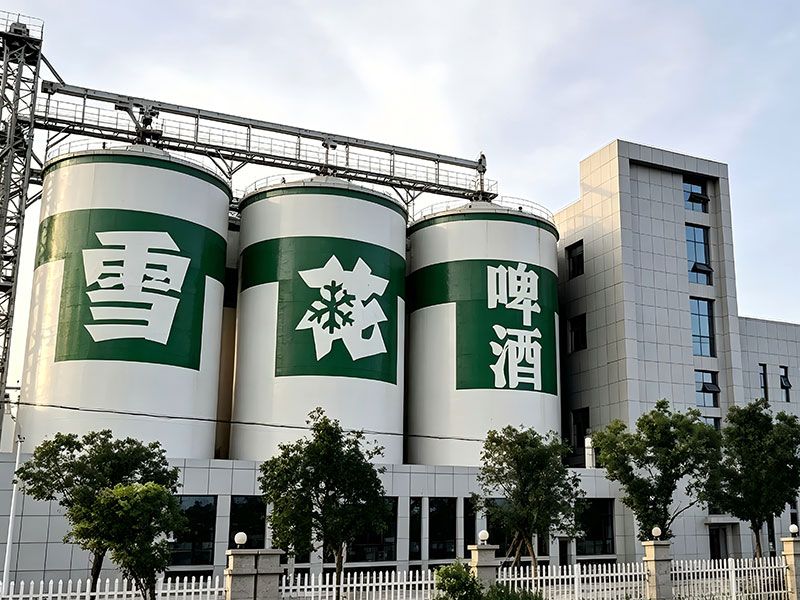
Nineteen million kilolitres of beer a year works out at tens of millions of bottles a day. That number means one very concrete thing: any small deviation, multiplied by it, becomes a large matter. An aroma that is one percent off cannot be heard in the laboratory, but at this scale it is hundreds of thousands of bottles that are "not quite like usual". China Resources Snow Breweries was founded in 1993, has held first place in China by volume since 2006, and by 2024 had over thirty percent of the domestic market, with sixty-two breweries under it. Its brands run from the mass-market Brave the World and Pure Draft all the way up to super-premium — Artisan, Zodiac, Li — and it has brought international brands such as Heineken, Red Baron, Sol and Edelweiss into a "Chinese brands plus international brands" matrix. At this scale, what the company cares about most is not "can we make one excellent bottle" but "can we make every bottle the same".
What we supply to Snow is the natural aroma materials for the beer and fruit beer lines. Working with aroma in a beer system follows completely different rules from a beverage: there is alcohol, carbon dioxide, the bitterness of hops, and low temperature throughout. Each of those four changes how an aroma behaves — alcohol changes the solubility of aroma components, carbon dioxide carries away the top note, bitterness presses the aroma down, and low temperature stops it coming out. A material that performs beautifully in soda often leaves nothing once it is poured into beer. So the material we give a beer client is never dispatched after being evaluated in the laboratory; it is tested in the beer base first — low temperature, carbonated, alcoholic, all three conditions at once — and only counts once it has been measured.
The point on which the two companies are most in tune is that both treat "stability" as real skill. Making one astonishing bottle of beer is not hard; the hard thing is nineteen million kilolitres a year, every bottle the same. Snow says "every person is not simple, and only then does every bottle shine" — that is what it means: in large-scale industry, it is still people who do the final checking. It is the same with us: equipment is fixed, parameters are fixed, raw material differs every year, and holding the variation inside the range people cannot detect rests on retained samples, comparison and parameter adjustment, accumulated year by year. In this natural aroma materials trade, pursuing stability does not sound romantic, but it is the hardest part of the business: natural things change by nature, and making them not change takes far more work than making them smell good.
The cooperation began with a fruit beer: what the client wanted was "real fruit", not the cloying fruit of a fruit flavouring. The real hurdle was in the beer base. The first version of the material evaluated well in soda water but turned "blunt" once poured into beer — the aroma seemed wrapped in something, there when you smelled it but not obvious when you drank it. Our investigation found the problem in the alcohol and carbon dioxide: the solubility of the aroma components changed in an alcoholic system so they could not release, and the bubbles kept carrying the top note away, so that by the time it reached the mouth the segment you most wanted people to smell had gone. Later we redesigned the composition: raise the proportion of the components that can still cut through at low alcohol and low temperature, using molecular distillation to cut by boiling range and take the segment needed; then controlled release, so the aroma has a supply beyond the pace at which the bubbles carry it away. After the change, that beer's fruit character was present at all three moments — opening, pouring and drinking.
Talking about technology is clearest by the three enemies of beer aroma. The first enemy is light — beer exposed to light develops "lightstruck" character, and once that note appears everything is ruined; that rests on taking the purity of the material up so no base is left for the light-sensitive reaction, with molecular distillation pressing out the reactive components. The second enemy is oxygen — oxidation makes the beer taste wrong and the aroma blunt; that rests on supercritical fluid extraction dealing cleanly with the easily oxidised components, and on controlled release governing the release rhythm so it does not burst out all at once. The third enemy is time — beer sits on the shelf for months and the aroma slowly ages; that rests on aroma concentration enriching the actives so there is margin across the whole shelf life, plus Living-Fragrance physical extraction preserving the plant's original aroma structure intact: when the "skeleton" of the aroma is there, it does not scatter easily.
On supply, Snow has sixty-two factories across the country and we supply them by region to the same specification, with none favoured over another; beer is a summer business, so we build stock before the peak season and give capacity priority, never letting the client cut production waiting for material. On service, how the material performs in the beer is measured in full — protected from light, oxidation resistance, what it looks like at three months and six months on the shelf, all given in one go; when the client runs tasting panels we supply samples and send someone to listen, noting things on the spot. The client's brewers have been to our workshop and told us about hops and fermentation, and we have talked about the ways of plant extraction — the crafts differ, but the principles meet.
For the years ahead, what the two sides need to do together is clear: make the fruit line more "real", support the alcohol-free and low-alcohol areas well, and hold summer peak-season supply more securely. At this volume, stability is the greatest skill of all — Snow has been first for twenty years on that basis, and we want to keep going on the same one.
This article was published on 2026-09-14, and last updated on 2026-09-21. The article will be continuously updated.