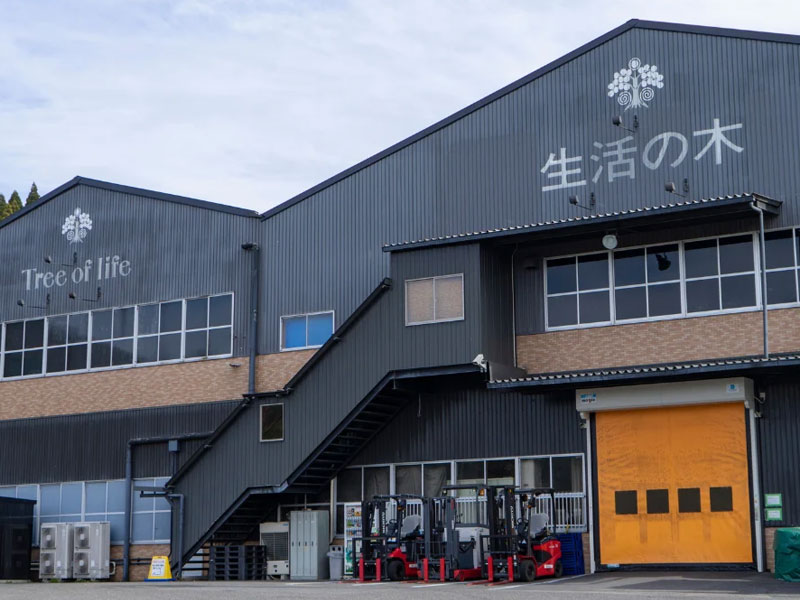
In Mizunami, Gifu Prefecture, Japan, there is a factory that stays open to the public all year round. Anyone can go in and see how herbal teas and aroma products are made, and afterwards make a bottle of reed diffuser to take home. Opening up your production process to public view looks like a small thing, but doing it is not simple — it means the company has confidence in every single thing it uses: it can stand being looked at, and stand being questioned. Tree of Life is that kind of company. It is a well-known Japanese brand for natural aroma products, herbal tea and natural care, and around the product philosophy of "awareness and empathy with nature" it has built nine categories: aroma essential oils and diffusers, herbal teas and foods, skincare, feminine care, bath products, handcraft materials and tools, aromatherapy certification books, gift boxes, and a subscription delivery service. What most distinguishes Tree of Life is its seasonal limited editions and its "local aromas" — following the solar terms and following the places, what comes out in spring, what comes out in autumn, what the plants of a particular place smell like, all of it turned into products.
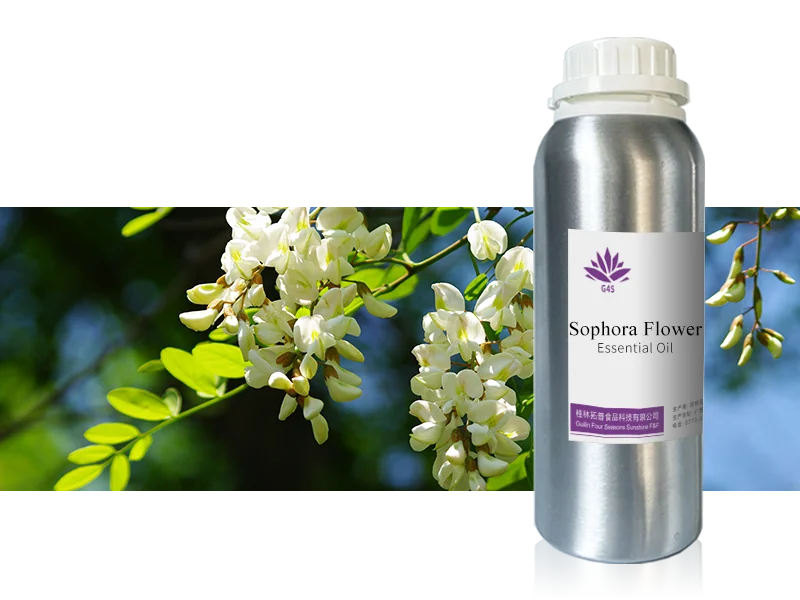
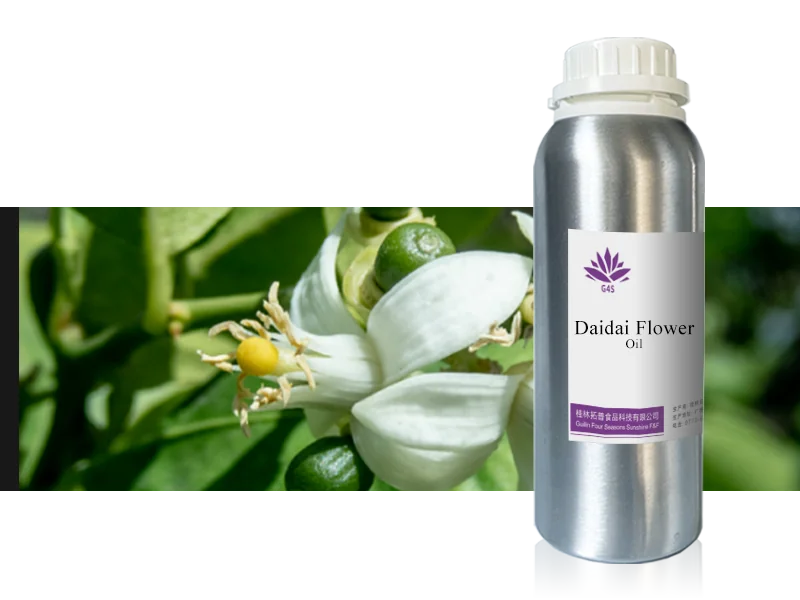
Part of the confidence to work this way comes from being particular about raw materials. What we entered are two lines. The aroma line needs essential oils and natural aromatic materials, used in diffusion, skincare and handcraft materials. The herbal tea line needs flowers, leaves and fruits that can be taken by mouth. What is interesting is that the two lines often point at the same plant — from the same batch of plants, the aroma use takes one part and the food use another, or the harvest time differs. That brings a rule which cannot be fudged: the two lines have different standards and must be handled separately. The food line is stricter on pesticide residues, heavy metals and microbiology, and its cultivation management records have to be kept separately as well. That is not something we thought of at the beginning; it was taught to us.
The bond between the two companies comes down to both believing in "slow". Tree of Life sells a slow lifestyle — "daily herbal tea and natural care, slowing down to talk with yourself" — written into the brand and delivered in the products: a seasonal limited edition has to wait for that season, it cannot be rushed. What we do is slow work too: from planting an aromatic crop to being able to harvest it, you wait; the best harvest window in a year is only a few weeks, and pick too early and the aroma has not formed, too late and it has scattered; how long a batch needs to mature before it can go out — none of it can be hurried. Everyone these days is competing on speed, but some things cannot be hurried: the aroma of tea cannot be hurried, the timing of a flower opening cannot be hurried, and trust accumulated on the land cannot be hurried. Tree of Life understands that, and so do we.
The cooperation began quite by chance: Tree of Life was looking for "material that can tell the story of its origin" — not just any supplier, but one able to say clearly where this plant grows, who grows it and when it was picked. That happens to be exactly how we work. The real friction was on that rule mentioned above: at first we supplied along one line, and the client asked for the food-use part to have its own standard, with cultivation records kept separately too. At the time it felt troublesome; doing it made clear it was right — for something a consumer will drink, loosening the standard by one notch is risk. Since then the two lines from the same plant are separated all the way through, from cultivation management to harvest, to testing, to packaging, each with its own records. The extra workload is not small, but both sides think it is worth it.
Talking about technology is clearest by what the material is finally used for. The kind for diffusion needs a layered aroma that lasts — top, middle and base should change, not give everything away at once. That rests on Living-Fragrance physical extraction, moving the plant's original aroma structure across intact by physical means, combined with molecular distillation and controlled release so the aroma comes out slowly and holds longer. For the kind taken by mouth, the first thing is not aroma but cleanliness — pesticide residues, solvent residues and heavy metals, none of them allowed. That rests on supercritical fluid extraction, low temperature throughout with no solvent entering the process, closing off that route at the process level, with standardised management at the cultivation end keeping pace rather than relying on end-of-line testing to patch it up. The kind for skincare needs light colour and low irritation, and should not affect the appearance of the product when added to a base — that rests on pushing refining depth one notch forward and, where necessary, passing through molecular distillation once more to press colour and impurities down. Three uses, three ways of making; they cannot be mixed.
On supply, we follow Tree of Life's new-product rhythm: varieties for seasonal editions have volume and price locked a year in advance, and are made as soon as the harvest window opens and shipped as soon as they are finished — no waiting, no stockpiling; many varieties in small quantities is no problem, a dozen varieties at a few dozen kilos each is accepted. On service, the origin material the client wants to tell consumers about is supplied truthfully, item by item — where the plot is, who grows it, which day it was picked, how it was extracted, all checkable, all viewable, no invented stories; and the display material the client needs for open days and experience events is prepared by us as well. Tree of Life's people have visited the bases and photographed the harvest, and those photographs later appeared in the content they send to members.
For the years ahead, what the two sides need to do together is clear: make the range of seasonal varieties richer, make the standards on the food line finer, and tell the origin story more solidly. Every sentence told to a consumer has to be true — Tree of Life dares to open its factory to visitors, and we dare to take people to see our plots. On that point both sides are equally exacting, and it is because of that exactingness that we can keep working together for a long time.
This article was published on 2026-09-14, and last updated on 2026-09-21. The article will be continuously updated.