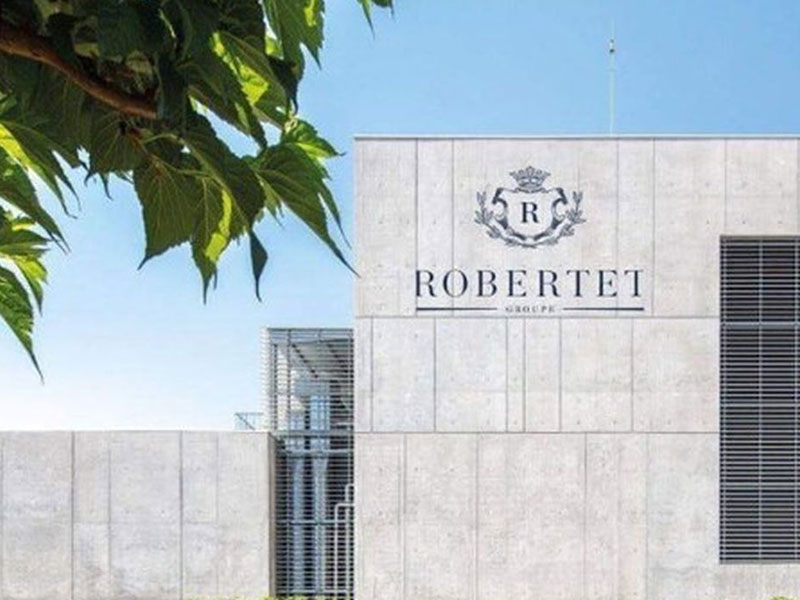
You cannot talk about Robertet without one person: Jean-Baptiste Maubert. In 1875 his uncle François Chauve opened a small works in Grasse called "A La Confiance", working the flowers and herbs of Provence, and called in this nephew who was both a perfumer and a distiller to help. Paul Robertet took over later; the company changed its name and commissioned Eiffel to design a new kind of factory. At the 1900 Paris Exposition its products took a gold medal. A hundred and fifty years on, the helm has passed to the fifth generation of the Maubert family, the company is still in Grasse, and it still has not changed its family name. Robertet today is a family business listed on Euronext Paris that keeps its independence; in 2025 group consolidated revenue was EUR 843.9 million, with more than 2,500 employees worldwide, raw materials gathered from 60 countries, 14 creation and research centres across four continents, and an EcoVadis sustainability score of 88 — platinum, top one percent globally. The numbers are not small, but the old foundation has not changed: still the company that treats flowers and herbs as its business.
The direction Robertet sets for itself is called "Futuring Naturals" — carrying the natural into the future. It sounds grand, but in daily terms it is simply the rhythm of the flower fields around Grasse: when the flower opens, what hour it is picked, how many hours after picking it has to go into the tank — details that matter more than anything. At the Plan-de-Grasse site, the blending plant, which is over eighty percent automated, sits only a few steps from the raw material handling workshop; you walk across and the conversation is finished. Work with Robertet long enough and you notice that it looks at a material in a different order from everyone else: first where it comes from, what process extracted it, whether any solvent is left — and only after that whether the aroma suits and whether the price is reasonable. At many companies that order is reversed.
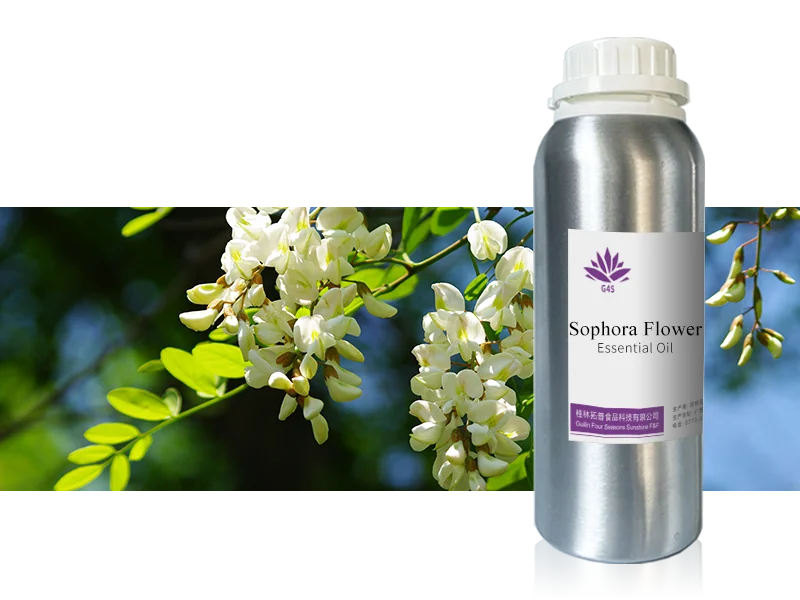
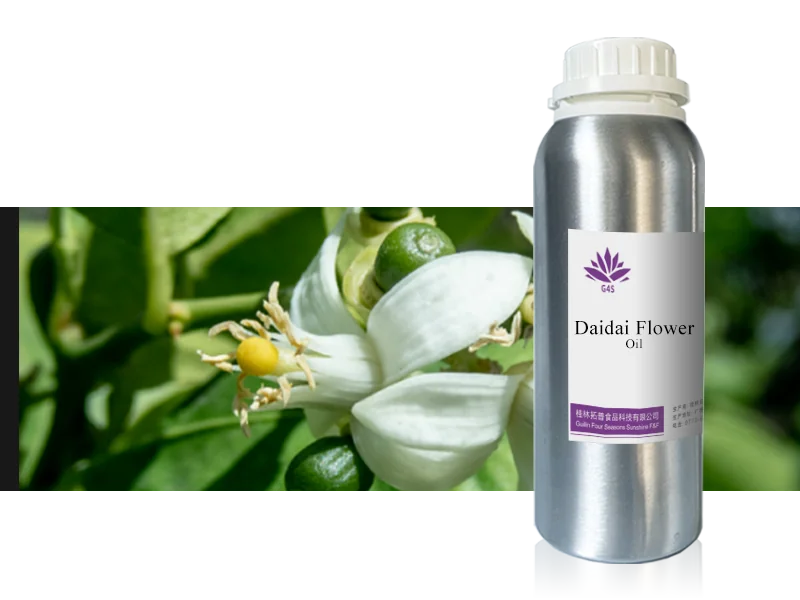
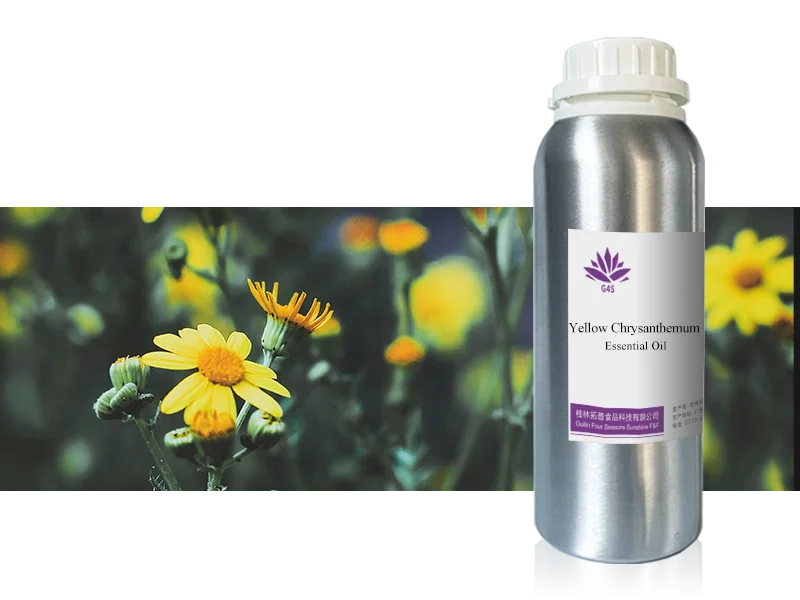
The business divides into four: natural raw materials, fragrances, flavours, and health and beauty. Natural raw materials are the foundation — the volatile fraction such as essential oils, and the high-viscosity natural products that need their full aroma profile preserved; the share of organic certified and fair-trade materials rises year by year. Fragrances serve fine perfumery, personal care and home fragrance. Flavours go to food and beverage. Health and beauty extends what it can do with natural materials into cosmetic actives and nutrition. What binds most closely to us is precisely the part Robertet values most. Being an expert in this field itself, Robertet's eye is correspondingly demanding: the aroma must be complete, the layers rich, the purity high, the batches steady, and the origin and process have to be explainable. What we bring is the complementary part: resources in hand — the aromatic crops, botanicals and food–medicine dual-use plants of Guangxi — and means in the plant, extraction, separation, purification and blending running as one line from end to end, turning plants native to China into natural materials that can enter Robertet's system.
The two companies arriving at the same thinking on so many things did not come out of meetings. It was ground out of one concrete problem after another. What stays with us is a video call one year where Robertet's technical team lined their questions up in a queue: is this year's aroma the same thing as last year's? Is there any solvent in the process that you would rather not have? What if the growing area moves to another hillside next year? Three questions, each one digging deeper than the last. Our answers came in layers as well. First we opened up the batch test data of the last three years and put the range of variation on the table. Then we went through the process route from the beginning — which step is physical, where the temperature is controlled, whether solvent is used and how it is removed if it is. Finally we showed the plots and harvest windows of our raw material bases, and explained how we lock down the question of origin changing before it happens. When the call ended, the engineer on the other side said: the order in which you answered is the same as the order in which we asked. That sounds like politeness, but it was recognition — the people asking cared about those few things, and the people answering happened to be doing those few things. In this natural materials business, everyone's principles look alike in a brochure; whether they line up is decided by exactly this kind of question and answer.
The cooperation started with "send samples first, run data first"; the contract came later. That first shipment was only a few dozen kilos. Robertet took it for aroma evaluation and stability testing, and we adjusted specifications and parameters along the way. There were also rough patches. On one batch every figure was inside the range, but Robertet came back saying the detection limit for solvent residue was uncomfortably tight and asked us to change the process route. Changing the process means yield falls and cost rises, and the workshop was not without opinions. We discussed it back and forth and changed anyway — what went in afterwards was supercritical fluid extraction, the whole line held in the low-temperature range, no solvent entering the process at all, so what comes out no longer needs explaining in terms of residue. The yield is genuinely a little lower, but the word "natural" stands up. Looking back now, it was that rework that paved the road afterwards.
Lay out our technology in the order Robertet asks its questions and it reads quite clearly. First, is there residue — that is supercritical fluid extraction. Next, does the aroma resemble the flower — that is Living-Fragrance physical extraction, moving the plant's original aroma structure across intact by purely physical means, no chemical route, disturbing its natural state as little as possible. Then, are the batches steady — that is dynamic multi-stage counter-current extraction and aroma concentration: running several stages against the flow pulls the actives out more cleanly and carries less of what you do not want; once the effective aromatic fractions are enriched, dosage and effect become controllable and the step between batches is smoothed away. And if it has to last, molecular distillation and controlled release raise purity another notch, make the release steadier and the scent longer. Stacked together, the most down-to-earth feedback came from a Robertet perfumer: the material you send can go straight into the formula, no need to "rescue" it. On supply, from a few litres in the laboratory to several tonnes in the workshop, the scale-up does not switch equipment routes; the delivery schedule is pinned to the workshop wall where anyone can see it, and the dates we promise are usually met early. Service is not complicated either: sampling usually comes out within a few days without being chased, and questions are answered the same day rather than pushed to the next. At New Year and other holidays both sides still send each other a little new material — nominally samples, but really more like saying hello.
For the next few years, both sides see the direction the same way: take natural materials deeper, keep pushing the sustainable supply chain further down, and widen the range of jointly developed varieties. Robertet has an almost severe connoisseurship of naturals and a client network that covers the globe; we have thirty years of accumulated experience in plant extraction, a technology system still evolving, and growing bases and capacity in Guangxi that are real. This is not one side selling and the other buying — it is taking a product together from the field to the shelf. In this line of work, partners who make it to ten years are few to begin with; when one does, both sides grow in capability.
This article was published on 2026-09-14, and last updated on 2026-09-22. The article will be continuously updated.