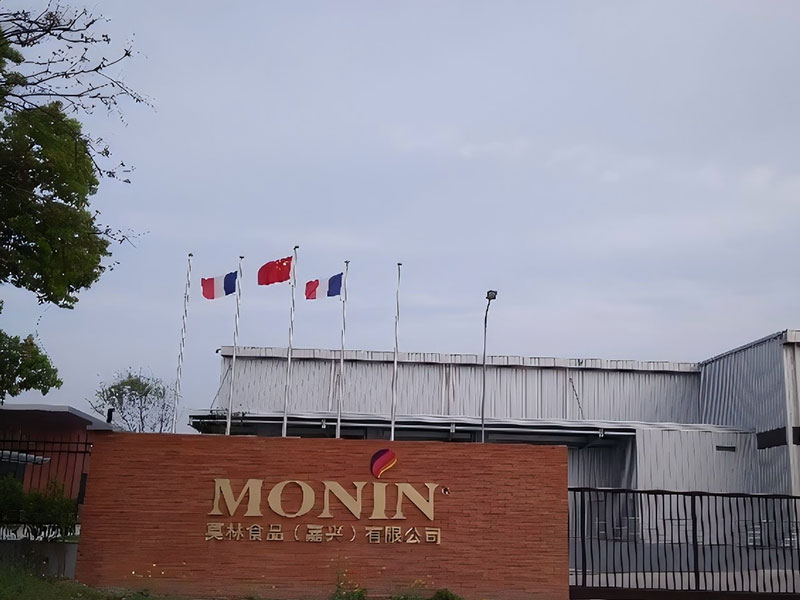
In the flavour and fragrance industry, the independent family companies can be counted on one hand. Of the largest by scale, most have long since changed their surname under capital, or been merged into someone else. MANE is the exception: the company Victor Mane set up in Le Bar-sur-Loup in 1871 is, more than 150 years later, still owned by the Mane family, now in its fifth and sixth generations. Le Bar-sur-Loup sits right beside Grasse, and the hillsides there grow jasmine, rose and orange flower — Victor Mane's first business was pulling aromatic materials out of those flowers. Today MANE is the largest flavour and fragrance group in France, with around 7,000 employees worldwide, branches, factories and R&D centres in more than 40 countries, and its own perfumery school in Grasse.
A family company and a listed company do things differently. A listed company watches the quarter; a family company watches the next generation. On MANE that sentence is solid: it runs its own perfumery school, keeps its own natural materials centre, and some of its raw material relationships began with the generation before last. Talk to MANE's people about raw materials and you find that its understanding of "natural" goes right down to the field. Mention jasmine and they will tell you what hour it is picked, how many kilos of flower yield how much concrete, and how to compensate when a rainy year leaves the flower scent thin. Experience like that cannot be learned from documents. On purchasing, MANE has a habit: ask for a small sample first, let the perfumer smell it and try it in a formula, and only then move to the commercial side.
The business divides into two. On the fragrance side there is fine fragrance creation, personal care, and home and fabric care. On the flavour side there are beverages, dairy, savoury and sweet, plus health and nutrition. Underneath both sit its own perfumery school and natural materials centre. What connects with us is the natural material the aroma end needs and the naturally sourced ingredient the label needs — which happen to fall into MANE's two businesses respectively. MANE is expert in natural materials itself, so our position is clear: raw material end, process end and application end are all in the same yard, so changing one parameter shows a result the same day; when MANE says which direction it wants the aroma moved, we do not have to report up through layers, and a comparison sample is ready the next day.
Whether two companies fit does not depend on whether their sizes match; it depends on whether they have the same temperament over a few small things. Is an extra process step worth it? A MANE perfumer will happily take one more step to keep that trace of green in a certain flower, and we work the same account — low temperature where possible rather than high, physical rather than chemical. Whether that extra bit is worth it: both sides are using the same scales. Should money be spent where nobody sees it? MANE runs its own perfumery school and maintains its own natural materials centre with no short-term return, and we have been putting money into bases and growers in Guangxi for more than ten years on the same reasoning. What to do first when something goes wrong? MANE's habit is to find the cause before discussing anything else, and that is our order too. Is it worth spending years building trust with one supplier? MANE is willing to wait, and we are used to waiting.
The first cooperation was not an order — it was a joint test. MANE sent over several reference samples, we made corresponding material according to our own reading and sent it back, and after several rounds, once the perfumer had tried it in a formula, the first order followed. In the middle there was one piece of feedback we found quite interesting: the figures on the material were beautiful, but the perfumer said it was "too clean" — it lacked the rough edges and the layering a natural material should have. At first we did not quite accept it: is not higher purity better? Later we understood that the value of a natural material is not in being "pure" but in being "true". From then on we pulled the refining depth back one notch, preferring to leave a little of the natural base rather than polishing the material smooth. It was after that, too, that the application side almost never had to adjust anything for our material; the numbers on the test report getting better year by year became a by-product instead.
We have one rule internally: for any variety, from the first pilot pot to the first shipment, the process parameters must be on paper — who changed what, why, and what the data looked like after the change, all of it traceable. The rule looks clumsy, but when something really goes wrong you learn how useful it is. The technologies built along that rule are these: supercritical fluid extraction, the whole line held in the low-temperature range with no solvent entering the process, so the most delicate part of the aroma survives; Living-Fragrance physical extraction, moving the plant's original aroma structure across intact by physical means and disturbing its natural state as little as possible; dynamic multi-stage counter-current extraction, running several stages against the flow, raising efficiency and lowering loss; aroma concentration, enriching the effective aromatic fractions so that dosage and effect are both controllable; and molecular distillation with controlled release, taking purity up another notch and making the release steadier and the scent last longer. Which of these goes on which variety is decided together with MANE when the specification is discussed, and once decided it is written into that parameter sheet.
On supply, production scheduling rolls forward by quarter and MANE can see progress at any time; capacity is reserved against MANE's annual volume rather than scrambled for at the last minute. Service is simple too: the specification goes back and forth no more than two versions; a handwritten note with the key figures goes into the parcel with the sample, so the perfumer knows on opening it how this batch differs from the last. And when something goes wrong, both sides look for a way out together before dividing responsibility — that is something we value especially.
For the next few years the work is already on the list: joint development of several natural varieties, further polishing of existing processes, further completion of sustainable sourcing documentation. MANE has 150 years of perfumery depth and a network across more than forty countries; we have thirty years of craft in plant extraction and the raw-material land of Guangxi. The unspoken understanding built by getting things done together is thicker than any contract.
This article was published on 2026-09-14, and last updated on 2026-09-21. The article will be continuously updated.