Which production standards does this zedoary turmeric oil comply with?
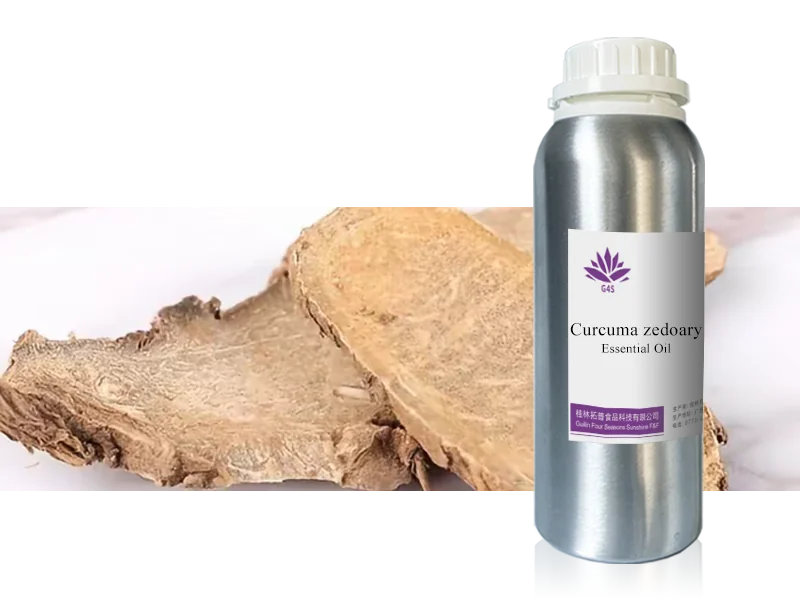
Zedoary turmeric oil is produced and released against a three-layer standard system: the Chinese Pharmacopoeia 2025 (Vol. I) monograph as the core medicinal standard, the Zhejiang Manufacturing group standard T/ZZB 1267-2019 for production quality, and GB 2760-2024 plus ISO 4720:2018 for food-flavour naming and use.
Standards Overview
| Standard | Scope | Key requirement |
|---|---|---|
| Chinese Pharmacopoeia 2025 (Vol. I, p.412) | Medicinal zedoary oil | Density 0.970-0.990; germacrone ≥7.5%; furanodiene ≥10.0%; fingerprint ≥0.95 |
| T/ZZB 1267-2019 | Zhejiang 'Made in China' group standard | GMP production, D-class filling, 96-102 C distillation ≤24 h |
| GB 2760-2024 | Food-use natural flavour | Curcuma oil listed as food natural flavouring (FEMA 3085) |
| ISO 4720:2018 / GB/T 39009-2020 | Essential oil nomenclature | Official naming of Curcuma spp. oils |
How We Implement Them
- Raw material: Dao-di Wenzhou Wen-ezhu or Guangxi zedoary checked against pharmacopoeia rhizome requirements; process water meets GB 5749
- Production: GMP environment, contact parts in 316L stainless steel, D-class clean filling for medicinal grade
- Testing: complete pharmacopoeia methods 0601/0621/0622 (density, rotation, RI), 0502 (TLC), 0512 (HPLC), 0821 (heavy metals), 0822 (arsenic)
- Documentation: each batch COA states the executed standard; customer-specific standards can be added if volumes justify
Which Grade To Choose
- Pharmacopoeia grade: for TCM pharmaceutical and regulated health products
- Fragrance/food-flavour grade: for perfumery, cosmetics and food-flavour applications with the wider enterprise ranges
- Tell us your final market at inquiry so we release the correct grade with the matching COA
Relate Products
This article was published on 2026-09-07, and last updated on 2026-09-07. The article will be continuously updated.