What are the key aromatic and active compounds in zedoary turmeric oil?
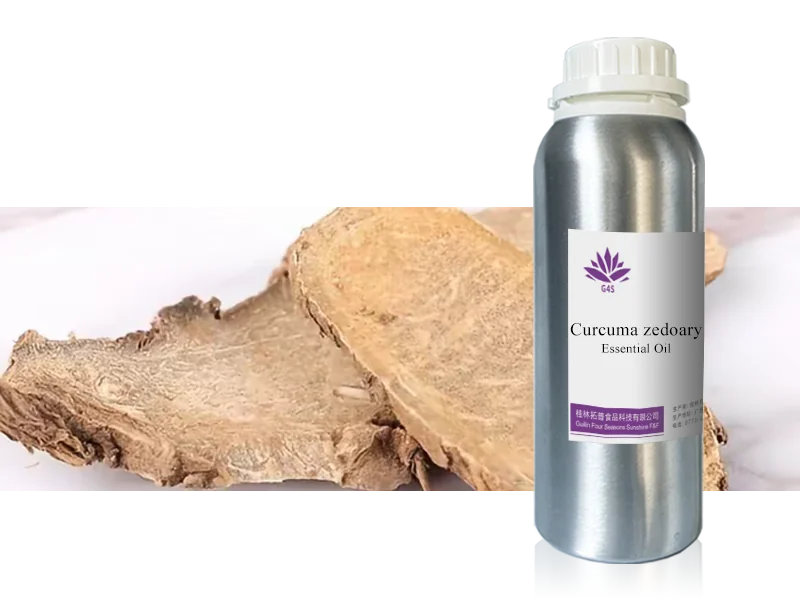
Zedoary turmeric oil is a complex natural mixture dominated by sesquiterpenes. The pharmacopoeia makes germacrone and furanodiene the mandatory quality markers, while curcumol, curdione and beta-elemene are the best-known bioactive compounds behind the oil's traditional and modern uses.
Main Components
| Compound | Formula | Role / note |
|---|---|---|
| Germacrone | C15H22O | Antimicrobial, antiviral; ChP limit ≥7.5% |
| Furanodiene | C15H20O | Anti-tumour research; ChP limit ≥10.0% |
| Curdione | C15H24O2 | Anti-tumour, anti-inflammatory |
| Curcumol | C15H20O | Anti-tumour; molecular distillation gives >99% crystals |
| Beta-elemene | C15H24 | Anti-tumour; developed into injection |
| Zingiberene, camphor, borneol | Various | Contribute the warm spicy-camphoraceous odour |
Pharmacopoeia Mandatory Limits
- Germacrone: not less than 7.5% (HPLC, 216 nm)
- Furanodiene: not less than 10.0% (HPLC, 216 nm)
- HPLC fingerprint similarity with the reference: not less than 0.95
- The identification test (TLC) confirms curcumol, germacrone and curdione by reference standards
Why It Matters
- The fingerprint test (theoretical plates ≥5000 for the germacrone peak) proves authenticity and rules out adulteration
- Germacrone and furanodiene content are the first-line quality gate for pharmacopoeia grade, exactly like cineole in eucalyptus or menthol in peppermint
Relate Products
This article was published on 2026-09-07, and last updated on 2026-09-07. The article will be continuously updated.