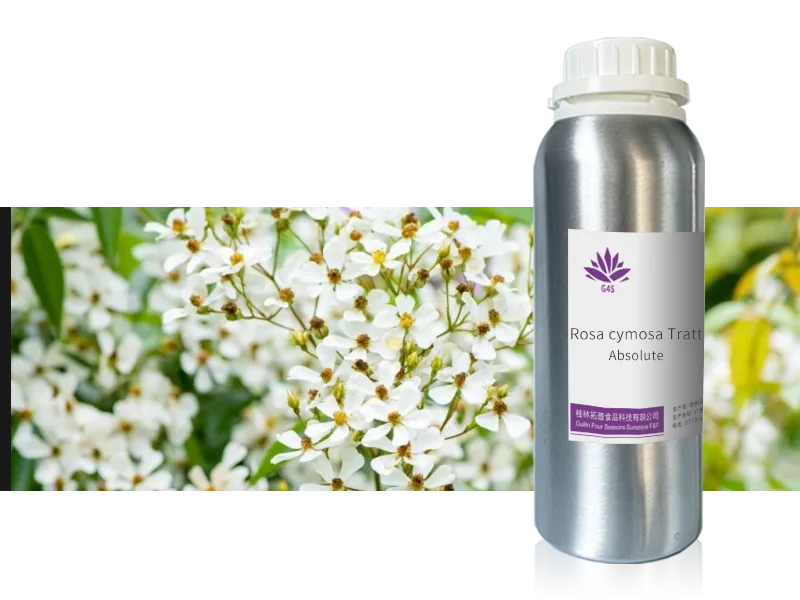
Which aromatic compounds define the wild rose absolute?
The character is defined by rose alcohols and a high phenylethyl alcohol content: citronellol, geraniol, nerol, phenylethyl alcohol (30–60%), linalool, farnesol, citronellyl acetate and β-caryophyllene.
Key Compounds
| Compound | Typical role |
|---|---|
| Phenylethyl alcohol | 30–60% — the honeyed rose signature of the absolute |
| Citronellol | Fresh rose, slightly citrus |
| Geraniol / Nerol | Sweet geranium-rose, balancing |
| Linalool | Light floral-woody lift |
| Farnesol | Soft balsamic, fixative |
| Citronellyl acetate | Fruity-rosy ester facet |
| β-Caryophyllene | Spicy woody depth |
- Phenylethyl alcohol at 30–60% is the single most distinctive marker separating absolute from distilled rose oil (1–3%)
- The exact ratios vary naturally with harvest and origin; the full composition is documented by GC-MS on every batch
- IFRA allergen concentrations (geraniol, citronellol, linalool, farnesol, etc.) are quantified on the allergen certificate
Request the GC-MS chromatogram and peak table with your COA for compound-level verification.
Relate Products
This article was published on 2026-09-07, and last updated on 2026-09-07. The article will be continuously updated.