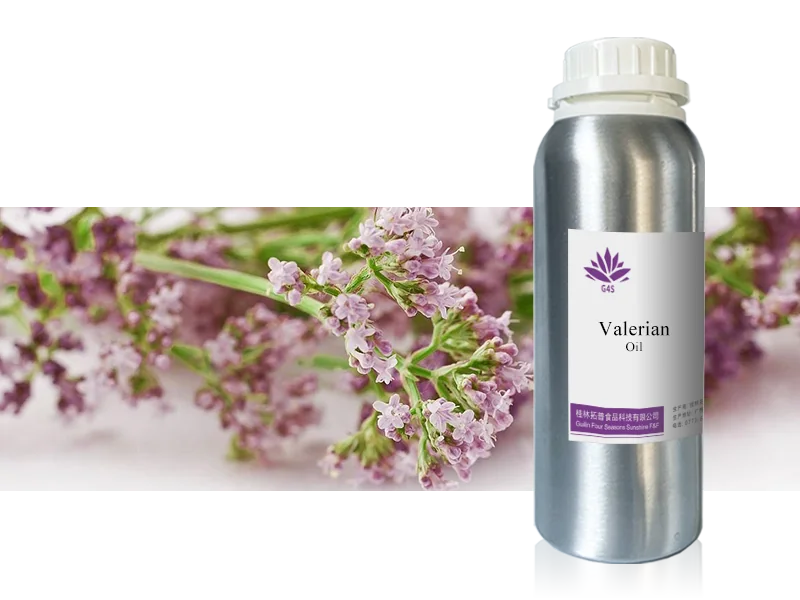
What natural and purity claims can I legally make for this valerian root oil?
Because valerian oil is a botanical extract used in food flavouring, TCM aromatherapy and cosmetics, claims must distinguish between identity claims (verifiable laboratory facts) and therapeutic claims (regulated, often restricted). The safe claim set below is based on the product's verified profile.
Allowed Claims (verifiable)
| Claim type | Safe wording | Basis |
|---|---|---|
| Purity | 100% pure valerian root oil, steam-distilled, no synthetic additives | GC-MS fingerprint, COA per batch |
| Natural | Natural botanical essential oil from dried rhizomes and roots | Extraction process, no solvents in final oil |
| Grade | Food-additive grade per T/CAFFCI 70-2023 | Standard conformity, acid value ≤ 13 |
| Origin | Guizhou V. officinalis L. / Yunnan V. jatamansi Jones | Sourcing records, origin statement |
| Composition | Camphene 9–29% and bornyl acetate 21–41% as GC markers | GC-MS quantitative report |
Claims to Avoid
- Do not claim to 'cure', 'treat' or 'diagnose' diseases (e.g. insomnia, anxiety) on food/cosmetic labels — this is a regulated therapeutic claim
- Avoid the marketing phrase '#1 sleep aid oil' on regulated product labels; it is acceptable in editorial/perfumery descriptions but must not appear as a food/cosmetic efficacy claim
- 'Organic' may only be used with an active organic certification for the batch
- In the EU/US, sedative-type claims require drug or traditional-herbal-medicine status (EMA monograph applies to valerian root, not to an aromatic oil sold as a fragrance ingredient)
- Always base purity and composition statements on the COA/GC-MS of the delivered batch
Relate Products
This article was published on 2026-09-07, and last updated on 2026-09-07. The article will be continuously updated.