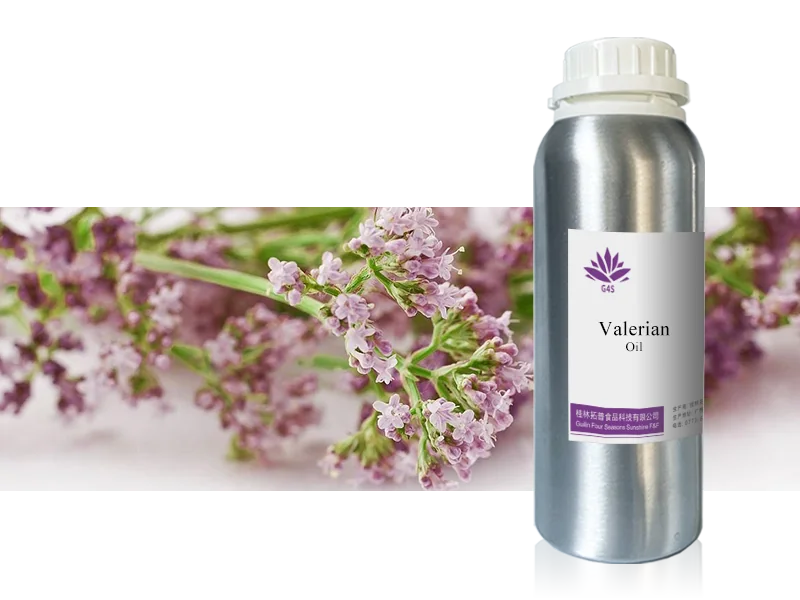
Is this valerian root oil tested for heavy metals and pesticide residues?
Yes — heavy metals and pesticide residues are part of the standard QC for food-additive-grade valerian oil. Roots are a soil-contact plant part, so this testing is essential, not optional.
Heavy Metal Limits (per batch)
| Metal | Limit | Method |
|---|---|---|
| Lead (Pb) | ≤ 10 mg/kg (≤ 5.0 mg/kg per T/YNZYC 0078-2023) | ICP-OES / AAS |
| Arsenic (As) | ≤ 3 mg/kg (≤ 2.0 mg/kg per T/YNZYC) | ICP-OES / AAS |
| Cadmium (Cd) | ≤ 1.0 mg/kg (T/YNZYC) | ICP-OES / AAS |
| Mercury (Hg) | ≤ 0.2 mg/kg (T/YNZYC) | Atomic fluorescence |
| Copper (Cu) | ≤ 20 mg/kg (T/YNZYC) | ICP-OES |
Pesticide Residues
- Raw roots are screened against GB 2763 (China MRLs) for the applicable crop
- The finished oil can be tested by GC-MS/MS multi-residue methods covering hundreds of analytes
- Export batches (EU/US/Japan) are tested to destination-country MRLs on request
- EU batches can include the EFSA screening set for botanicals
Test results are printed on or attached to the COA. Retained samples allow independent re-testing for 24 months. For certified-green-material batches (T/YNZYC 0078-2023), the plantation control plan is auditable on request.
Relate Products
This article was published on 2026-09-07, and last updated on 2026-09-07. The article will be continuously updated.