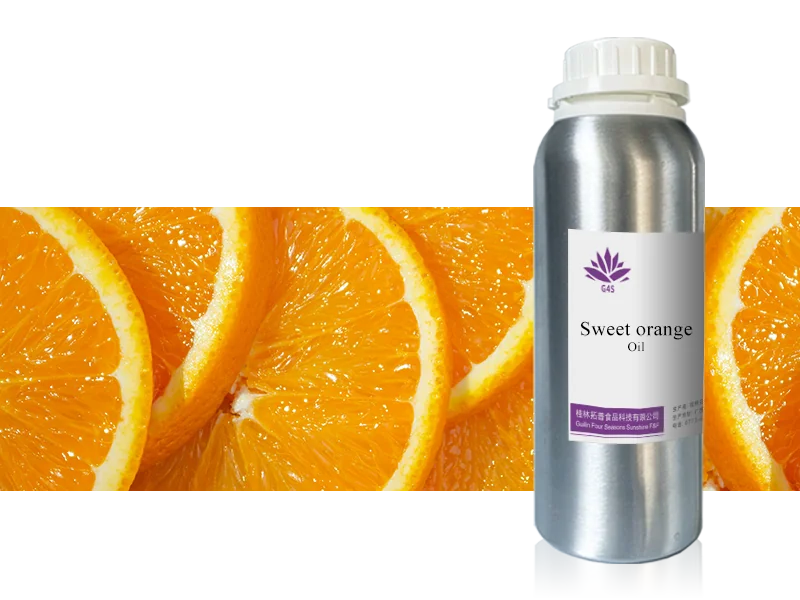
Which key aromatic compounds does this sweet orange oil contain?
The characteristic aroma and quality of sweet orange oil come from a simple, well-defined terpene profile anchored by d-limonene — the compound that makes up the vast majority of the oil and gives it its fresh, juicy character.
Key Aromatic Compounds
| Compound | Typical range | Role |
|---|---|---|
| d-Limonene | 85-96% | Dominant backbone; fresh, juicy citrus |
| β-Myrcene | 1.5-3% | Green-woody lift |
| Decanal | 0.2-0.5% | Warm, waxy-sweet aldehyde heart |
| Octanal | 0.1-0.4% | Fresh aldehydic sharpness |
| Linalool | 0.2-0.6% | Soft floral-fruity undertone |
| γ-Terpinene | 0.5-3% | Citrus-herbaceous nuance |
- Aldehyde content (as decanal) is a key quality parameter: GB/T 11424-2008 specifies 0.5-2.8% for cold-pressed sweet orange oil
- Limonene content above ~90% indicates a fresh, high-quality peel oil; low limonene may signal oxidation or adulteration
- The limonene-to-myrcene and aldehyde balance determine whether the oil smells 'bright and juicy' or flat
- Volatile profile is verified by GC-MS on every batch and reported on the COA
- Terpene levels vary with cultivar, season and origin — one reason each batch is individually fingerprinted
Relate Products
This article was published on 2026-09-07, and last updated on 2026-09-29. The article will be continuously updated.