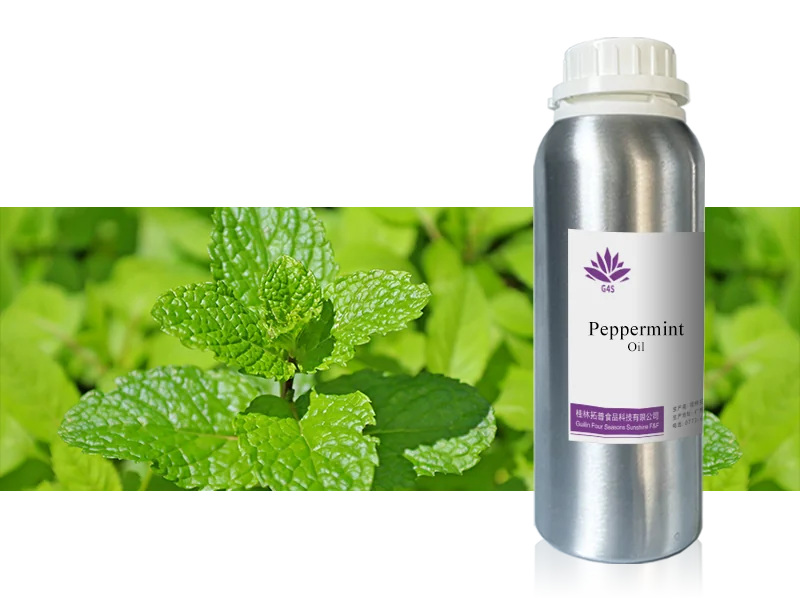
What usage rates are recommended for peppermint oil in different products?
Recommended use levels for peppermint oil vary widely by application — from trace amounts in beverages to several percent in oral care. The table below gives practical starting points based on industry practice, literature food-use levels and cosmetic conventions.
Recommended Use Rates
| Application | Recommended level | Notes |
|---|---|---|
| Beverages | 0.005-0.02% | ~100 mg/kg literature; strong cooling effect at low dose |
| Confectionery | 0.05-0.4% | Gum ~3300 mg/kg, hard candy ~4000 mg/kg literature |
| Toothpaste | 0.5-2% | Main flavour component; respect pulegone limits |
| Mouthwash | 0.1-0.5% | Solubilise for clear aqueous systems |
| Cosmetics (leave-on) | 0.5-1% | Lower end for sensitive-skin face products |
| Shampoo / body wash | 0.5-1.5% | Fresh-scent and cooling effect |
| Massage / aromatherapy | 1-2% in carrier | Max 3% for experienced users |
| Household products | 0.2-1% | Room fresheners, detergents |
Regulatory Anchors
- Oral care: IFRA 51 restricts Cat 12 via pulegone (≤100%); EU beverage limit is 100 mg/kg pulegone in the final product
- Food: use per good manufacturing practice; the oil is a permitted natural flavouring (GB 2760 N086 / FEMA 2848)
- Cosmetics: the IECIC inventory includes the oil; keep leave-on facial levels conservative and patch test
Starting-Point Philosophy
- Start at the lower end and increase by taste/olfactory evaluation — peppermint is extremely potent
- The cooling effect is perceptible at very low doses, so less is usually more in functional products
- For OEM projects, our technical team provides formulation guidance for your target market and price point
Relate Products
This article was published on 2026-09-07, and last updated on 2026-09-07. The article will be continuously updated.