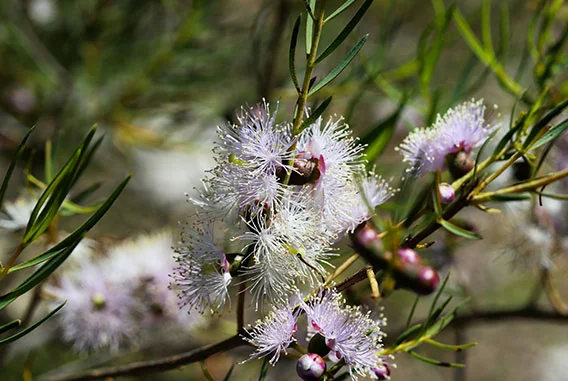
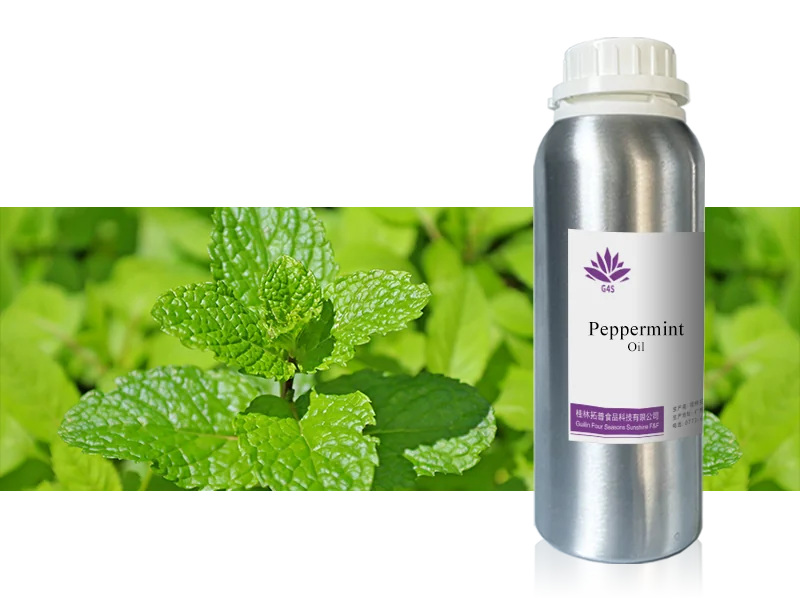
What are the physicochemical properties of this peppermint oil?
Peppermint oil is a light, mobile oil with a well-defined physical-chemical profile that is used to verify identity and purity at release. The values below follow GB 1886.278-2016, ISO 856:2006 and USP, which are the three reference standards for this product.
Typical Values
| Property | Value |
|---|---|
| Appearance | Clear, colorless to pale yellow mobile liquid |
| Relative density (20°C) | 0.900-0.916 |
| Refractive index (20°C) | 1.459-1.465 |
| Optical rotation (20°C) | −30° to −10° (levorotatory) |
| Flash point | About 68°C (closed cup) — flammable |
| Acid value | ≤2.0 (GB 1886.278) |
| Total menthol (USP) | ≥50% |
| Pulegone | ≤4% |
| Solubility | Soluble in ethanol (1:3 in 70% ethanol clear per ISO 856); insoluble in water |
Interpreting the Numbers
- Density 0.900-0.916 makes the oil lighter than water — the oil phase floats during separation, and any water contamination sinks
- The optical rotation is levorotatory, a natural fingerprint used in pharmacopoeia identity tests
- The flash point of about 68°C puts peppermint oil in the flammable range (closed cup 60-93°C): it is classified as a flammable liquid and ships under UN 1993 / Class 3
- Solubility: 1 part in 3 parts of 70% ethanol gives a clear solution per ISO 856 — a quick identity and purity check
What These Mean for Use
- Because the oil is flammable, keep away from open flame, avoid high-temperature processing, and follow the SDS during transport and storage
- Its low viscosity and high volatility mean it should be stored tightly sealed and cool; the oil evaporates and oxidises faster than sesquiterpene-rich oils
- All values are reported per batch on the COA against the agreed standard (GB / ISO / USP)
Relate Products
This article was published on 2026-09-07, and last updated on 2026-09-07. The article will be continuously updated.