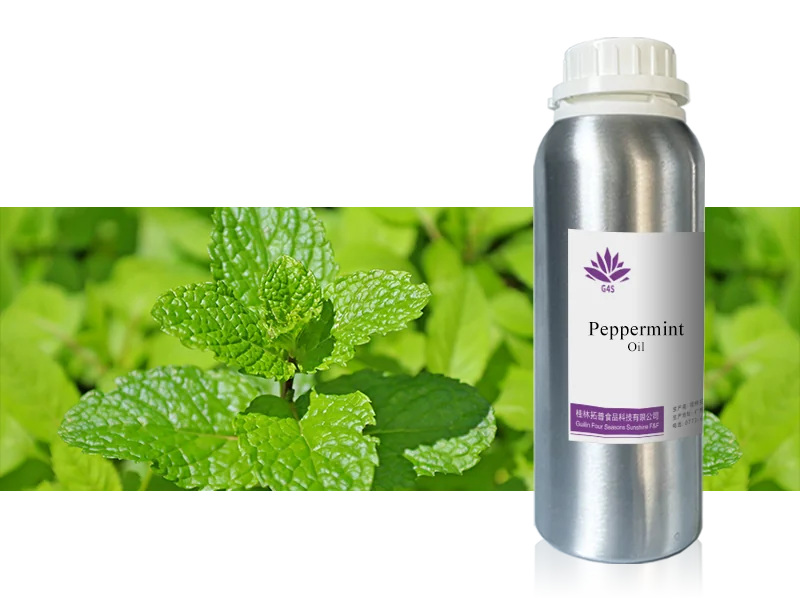
Is this peppermint oil food-grade and can it be used in flavouring?
Yes. Peppermint oil is one of the most widely used natural flavourings in the world. In China it is listed as GB 2760-2024 Appendix B natural flavouring No. N086 and covered by the food-safety standard GB 1886.278-2016; in the US it holds FEMA GRAS No. 2848 with an FDA EAFUS listing. It is the classic flavour for confectionery, chewing gum, oral care and beverages.
Food Compliance References
| Market | Reference | Notes |
|---|---|---|
| China | GB 2760-2024 Appendix B N086 | Natural flavouring, use per GMP |
| China | GB 1886.278-2016 | Food-safety standard (oil spec) |
| US | FEMA GRAS 2848 | GRAS for flavouring applications |
| US | FDA EAFUS / USP | EAFUS listed; USP monograph |
| EU | Reg. 1334/2008 | Natural flavouring; pulegone limits in final product |
Typical Food Use Levels (Literature)
| Application | Typical level |
|---|---|
| Chewing gum | ~3300 mg/kg |
| Hard candy | ~4000 mg/kg |
| Beverages | ~100 mg/kg |
| Baked goods | 130-1300 mg/kg |
Pulegone Guidance for Food Use
- EU: pulegone ≤100 mg/kg in flavoured beverages and ≤250 mg/kg in certain confectionery (final product)
- Our lots release with pulegone ≤4% in the oil (typically far lower), so normal flavouring levels comply with room to spare
- Pulegone data is reported on every COA for your compliance file
What We Provide for Food Buyers
- Food-compliant release documentation: COA per GB 1886.278, GC-MS, heavy metal and pesticide reports
- Certificate of origin and botanical declaration for customs
- The oil is steam-distilled without solvent; no extraction residues
Relate Products
This article was published on 2026-09-07, and last updated on 2026-09-07. The article will be continuously updated.