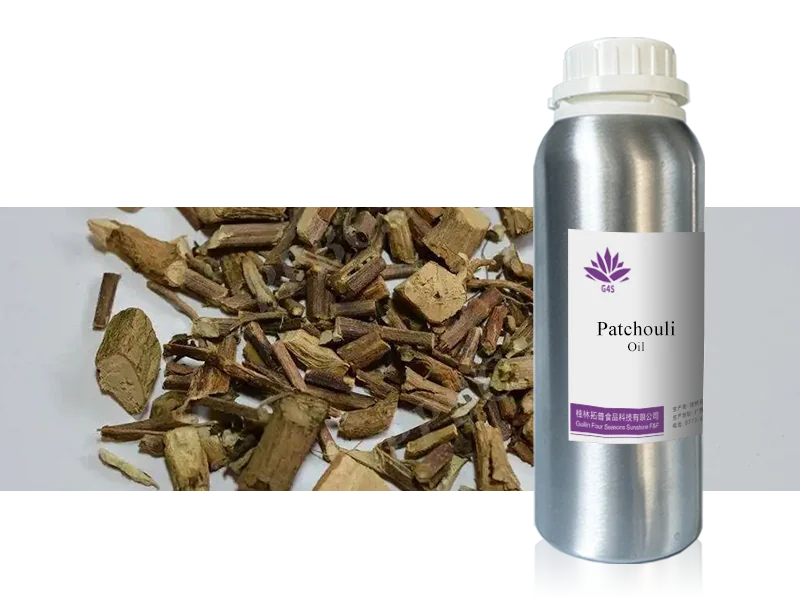
How is this patchouli oil used in perfumery?
Patchouli oil is one of the most important base notes in fine perfumery. Its deep earthy-woody-sweet character and extraordinary tenacity make it a cornerstone of oriental, chypre and woody compositions, and it acts as a powerful natural fixative that anchors lighter notes.
Roles in a Formula
| Role | Contribution | Typical use |
|---|---|---|
| Base note | Earthy-woody depth, tenacity | 2-15% of concentrate |
| Fixative | Anchors citrus, floral and spicy top/middle notes | 1-5% |
| Accent | Adds a smoky-woody leather nuance to leather and vetiver accords | 1-3% |
| Oriental heart | Sweet tobacco-chocolate balsamic body | 5-20% |
Classic Accords
- Oriental: patchouli + vanilla + amber + sandalwood
- Chypre: patchouli + bergamot + oakmoss + labdanum
- Woody: patchouli + vetiver + cedarwood + sandalwood
- Floral: patchouli + rose + jasmine (adds grounding depth)
- Fougere: patchouli + lavender + coumarin (richness and longevity)
Practical Pointers
- The oil is viscous and dense; pre-dissolve in ethanol or a perfumers base at 1:5 before weighing small doses
- Iron-free (pale) grades are preferred for colour-sensitive fine fragrances; the standard grade adds a slight amber tone
- IFRA 51: no restriction in Cat 2-5 and 7-12; not approved for Cat 1 (lip) and Cat 6 (oral care) — perfumery use is unrestricted
- Perfume concentrates typically carry 2-15% patchouli; the oil contributes both body and lasting power, so formulas with only 1% still benefit noticeably
Relate Products
This article was published on 2026-09-07, and last updated on 2026-09-07. The article will be continuously updated.