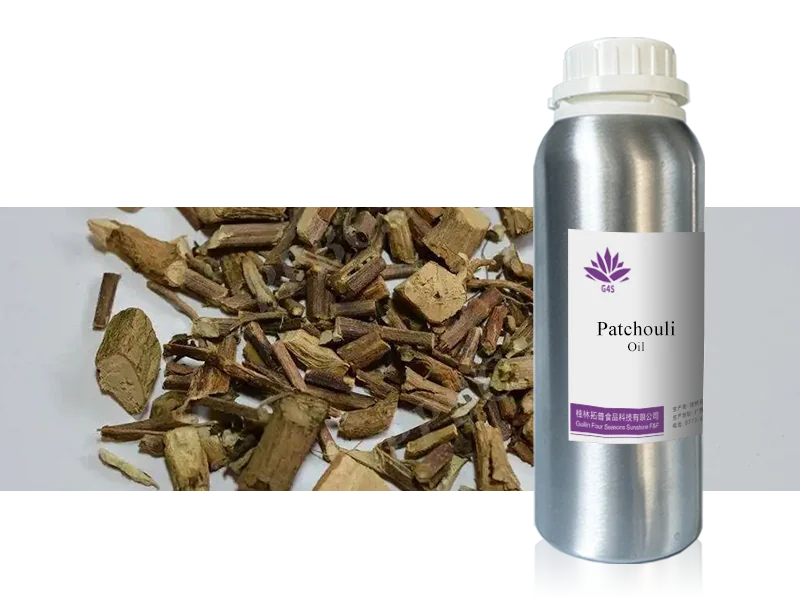
What are the key aromatic compounds in patchouli oil?
Patchouli oil is dominated by sesquiterpenes and sesquiterpene alcohols, which together account for roughly 80-90% of the oil. Patchoulol is the principal odorant.
Main Components
| Compound | Type | Typical Content | Contribution |
|---|---|---|---|
| Patchoulol (patchouli alcohol) | Sesquiterpene alcohol | 27-35% (ISO 3757); ≥26% (ChP) | Sweet earthy-woody signature — the heart of true patchouli |
| α-Bulnesene | Sesquiterpene | 13-20% | Woody-spicy complexity |
| α-Guaiene | Sesquiterpene | 11-16% | Green-woody depth |
| β-Patchoulene | Sesquiterpene | 2-5% | Camphoraceous freshness |
| Seychellene | Sesquiterpene | 2-5% | Woody, slightly camphoraceous |
| β-Caryophyllene | Sesquiterpene | 2-5% | Spicy-clove nuance |
Why Patchoulol Matters
- Patchoulol content is the primary quality indicator in trade: ISO 3757 requires a minimum of 27% (some grades up to 35%), while the Chinese Pharmacopoeia (ChP) sets a minimum of 26%
- The ratio of patchoulol to the lighter sesquiterpenes also matters — oils with more patchoulol are sweeter and rounder, while higher α-bulnesene gives a greener, more camphoraceous edge
- Patchoulol is stable and nearly odourless on its own when diluted, yet it shapes the entire profile of the oil
GC-MS Verification
- Every batch we ship is verified by GC-MS against a reference standard, and the certificate of analysis lists the main components with their percentages
- Trace components such as pogostone are monitored as authenticity markers — pogostone is one of the compounds used to distinguish genuine patchouli from adulterated material
Adulteration Watch
- Because patchouli oil is expensive, adulteration with cedarwood oil, vetiver fractions, copaiba balsam or patchoulol-enriched blends occurs in the market; GC-MS fingerprinting detects these instantly
Relate Products
This article was published on 2026-09-07, and last updated on 2026-09-07. The article will be continuously updated.