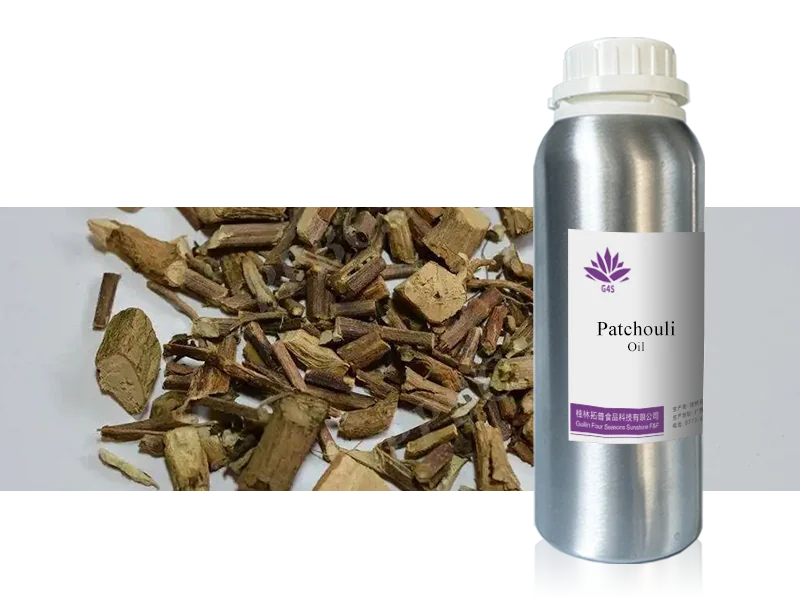
How is this patchouli oil extracted?
Patchouli oil is produced by steam distillation of dried, fermented leaves — a two-stage process in which fermentation is as important as the distillation itself.
Extraction Process
| Stage | Detail |
|---|---|
| Harvest | Leaves picked before full maturity, when oil yield and patchoulol content peak |
| Fermentation | Shade-dried leaves piled 2-8 days in controlled humidity — enzymes release the patchouli aroma; fresh leaves have almost none |
| Chopping | Dried leaves coarsely cut to 5-10 mm to open the oil pockets |
| Distillation | Steam distillation in 2-10 m³ stills (SS304/316L), direct steam 0.3 MPa at 100-130°C for 24-36 h — long because of the high-boiling sesquiterpenes |
| Separation | Oil is denser than water (0.96), collected from the bottom of Florentine separators, then dried and filtered |
| Yield | 2.0-3.5% oil on dried fermented leaf |
What Makes the Difference
- Without fermentation the oil has a rough, green, leaf-like odour — the classic deep earthy-balsamic patchouli character only forms during the 2-8 day pile
- Sesquiterpene alcohols (patchoulol) and sesquiterpenes (α-bulnesene, α-guaiene) are high-boiling: long distillation time and moderate temperature protect the profile
- Premium grades may be redistilled (iron-free grade) to remove iron ions that darken the oil over time
- After distillation the oil is aged 6-12 months — the camphor-like harshness fades and sweet chocolate-tobacco notes develop, which is why patchouli is said to improve with age
Relate Products
This article was published on 2026-09-07, and last updated on 2026-09-07. The article will be continuously updated.