How is this patchouli oil used in cosmetics?
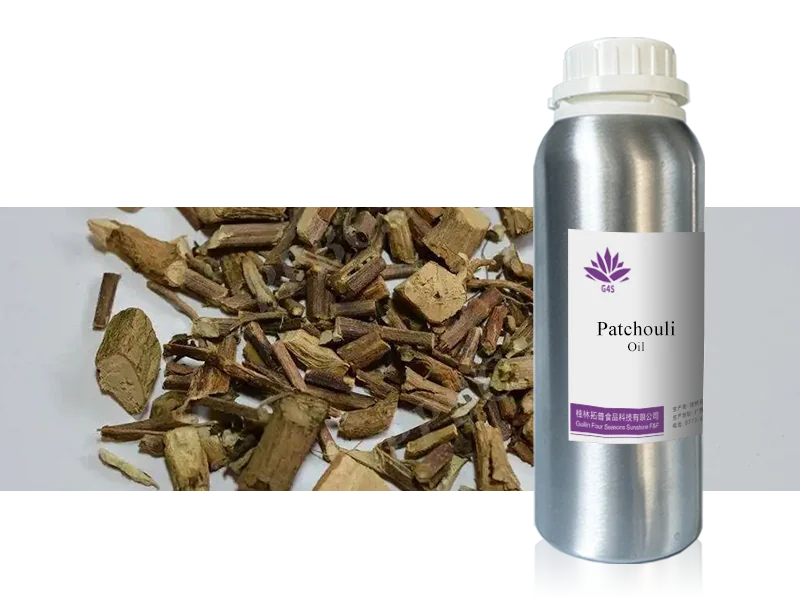
Patchouli oil is a well-established cosmetic ingredient in the NMPA catalogue (No. 02634), where the highest historical whole-body leave-on use record is 30%. In practice it is used at much lower levels: as a fragrance component and as a functional woody-earthy note in creams, body oils, serums, soaps and balms.
Typical Cosmetic Applications
| Product type | Typical use | Notes |
|---|---|---|
| Face creams / anti-aging serums | 0.5-2% | Adds warm herbal depth; pairs with botanical extracts |
| Body oils / massage oils | 1-3% | Soluble directly in the oil phase |
| Handmade soaps | 1-3% | Stable, tenacious; survives saponification |
| Body lotions | 0.5-2% | Emulsify in the oil phase |
| Balms / ointments | 1-3% | Blends with waxes and butters |
| Perfume / roll-on | 2-15% | As a base note (see perfumery FAQ) |
Formulation Notes
- Add to the oil phase before emulsification; the oil is miscible with all fixed oils and waxes
- The NMPA 30% record shows excellent skin tolerance in historical products, but always formulate to your target audience and comply with local cosmetics law (GB 7916 limits for heavy metals and microbes)
- Colour: the standard grade imparts an amber tone — use the iron-free pale grade for white or lightly tinted formulas
- IFRA 51 places no restriction on cosmetic categories 2-5 and 7-12; do not use in lip (Cat 1) or oral (Cat 6) products
- INCI name for labelling: POGOSTEMON CABLIN OIL
Relate Products
This article was published on 2026-09-07, and last updated on 2026-09-07. The article will be continuously updated.