Which botanical species does this patchouli oil come from, and where is it grown?
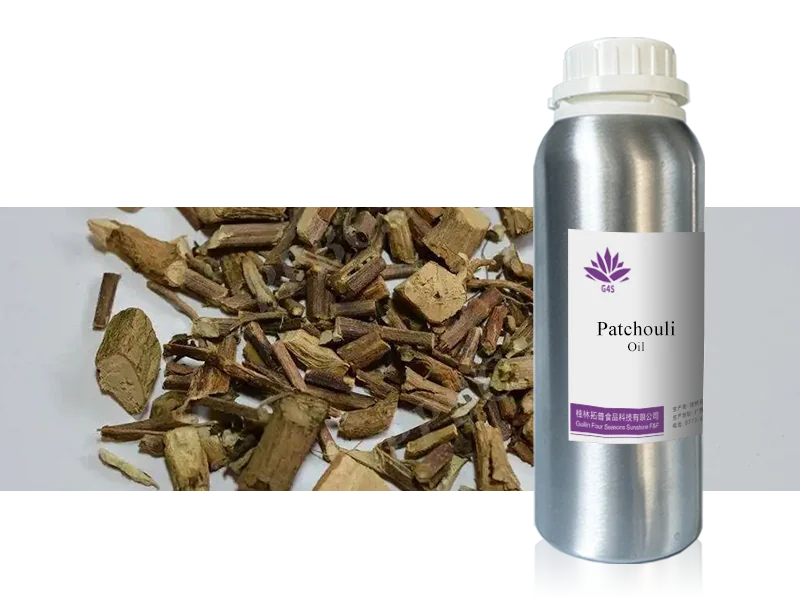
This patchouli oil (product code TPS-RO-005) is steam-distilled from the dried and fermented leaves of Pogostemon cablin (Blanco) Benth., a member of the Lamiaceae (mint) family. It is the classic cablin patchouli — the only commercial species that produces true patchouli oil.
Species & Origin
| Item | Detail |
|---|---|
| Botanical name | Pogostemon cablin (Blanco) Benth. |
| Family | Lamiaceae (刺蕊草属 / patchouli genus) |
| Part used | Dried, fermented leaves |
| Product code | TPS-RO-005 |
| Main origins | Indonesia (Aceh, Sulawesi, Java — approx. 85-90% of world supply); Guangdong (Zhanjiang), Hainan and Guangxi, China |
| Common names | Patchouli oil, cablin patchouli oil, Minyak Nilam (Indonesia), 广藿香油 / 派超力油 |
- The plants are harvested before full maturity, when leaf oil content peaks, then the leaves are shade-dried and piled for a controlled 2-8 day fermentation that develops the characteristic patchouli odour — fresh leaves are almost odourless
- Indonesian lots (the ISO 3757 reference system) typically show patchoulol 27-35%; Chinese lots commonly 26-33%
- Pogostemon cablin is distinct from P. heyneanus (Java patchouli), which has a less rich odour and is not accepted as true commercial patchouli
- Patchouli is a strongly levorotatory oil (optical rotation approx. −66° to −40°), a useful identity check against adulteration
Relate Products
This article was published on 2026-09-07, and last updated on 2026-09-07. The article will be continuously updated.