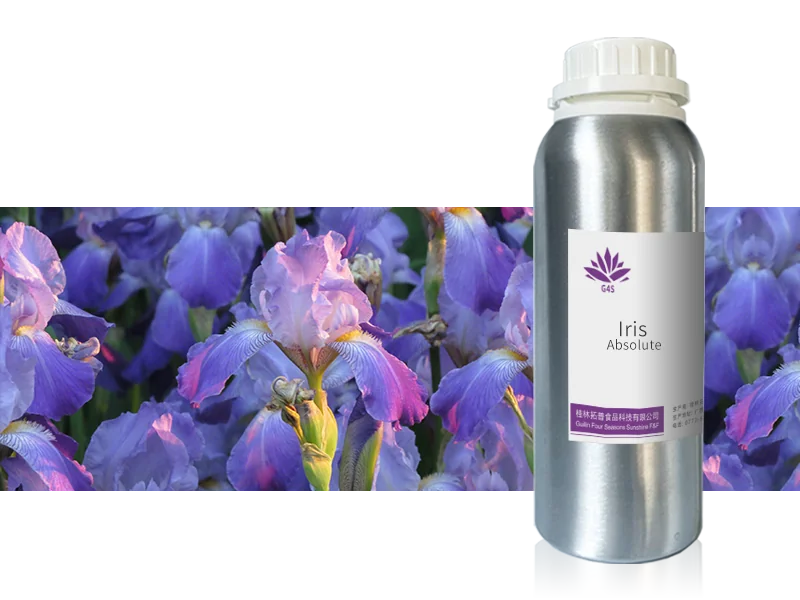
What extraction process produces this orris absolute, and why does it require 3+ years of aging?
This orris absolute is produced by solvent extraction from peeled rhizomes that have been naturally aged for a minimum of 3 years — the aging is the non-negotiable heart of orris quality. Fresh rhizomes contain almost no aroma; the irone precursors (iridals) only convert into the precious violet-like irone (α, β, γ isomers) through slow enzymatic and oxidative aging.
Process Chain
| Stage | Detail |
|---|---|
| 1. Harvest & peel | Fresh rhizomes washed, peeled, sliced |
| 2. Aging | 3+ years, ventilated dark storage, 30°C, stacked crates |
| 3. Grinding | Aged rhizomes crushed to 20–40 mesh |
| 4. Solvent extraction | Petroleum ether / ethanol, 4–6 h circulation |
| 5. Concentration | Vacuum distillation at 45–60°C, solvent recovery |
| 6. Dewaxing | Cold crystallization at −20°C to remove wax, yielding the absolute |
- Producing 1 kg of orris absolute requires several tons of fresh rhizomes, making it one of the world's most expensive natural aromatic materials
- Extraction yield from aged rhizomes is only about 0.1–0.5% for oil, and even lower for the absolute
- The classical method is the same one used in Florence for centuries; the solvent system is food-grade and fully recovered
Request the full process dossier, including aging records and solvent-recovery data, with your inquiry.
Relate Products
This article was published on 2026-09-07, and last updated on 2026-09-07. The article will be continuously updated.