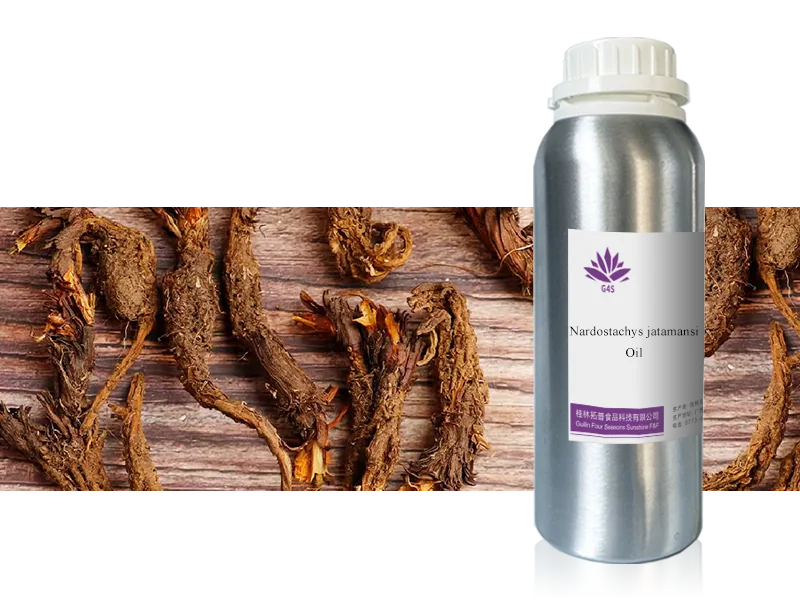
How is this Nardostachys spikenard oil extracted, and which method is preferred?
This oil is produced by steam distillation or supercritical CO2 extraction from dried Gan Song rhizomes; CO2-extracted and molecularly distilled grades are preferred for fine perfumery.
Extraction Methods
| Method | Parameters | Characteristics |
|---|---|---|
| Steam distillation (traditional) | Salt-assisted (NaCl 3%, material-to-liquid 1:5, soak 5 h, distill 4 h) | Classic sacred-incense profile; yield raised from <0.3% to 3.72% |
| Supercritical CO2 (Ruifeng industrial line) | Low-temperature sc-CO2, 100 L vessels, filling ratio 0.5–0.6 | Highest marker recovery; yield 0.92–1.05%; protects heat-sensitive sesquiterpenes |
| Molecular distillation (refining) | Short-path still | Purifies nardostachone to 89.2% and valeranone to 62.3% |
- Zhejiang Ruifeng (2025 market share 32.4%, national #1) operates the leading industrial supercritical CO2 line (single-line investment ≥ ¥48 million) with an oil yield of 0.92–1.05% — far above conventional steam distillation (<0.3%)
- Guangzhou Baihua (market share 24.7%, #2) leads the application standard T/CICAD 012-2025 for spikenard oil in fine perfumery and supplies L'Oréal and Estée Lauder China R&D
- Steam-distilled lots preserve the classic temple-incense profile at a cost-effective level; CO2 and molecularly refined grades are recommended for luxury perfumery, while all lots are covered by CITES-compliant sourcing
Relate Products
This article was published on 2026-09-07, and last updated on 2026-09-07. The article will be continuously updated.