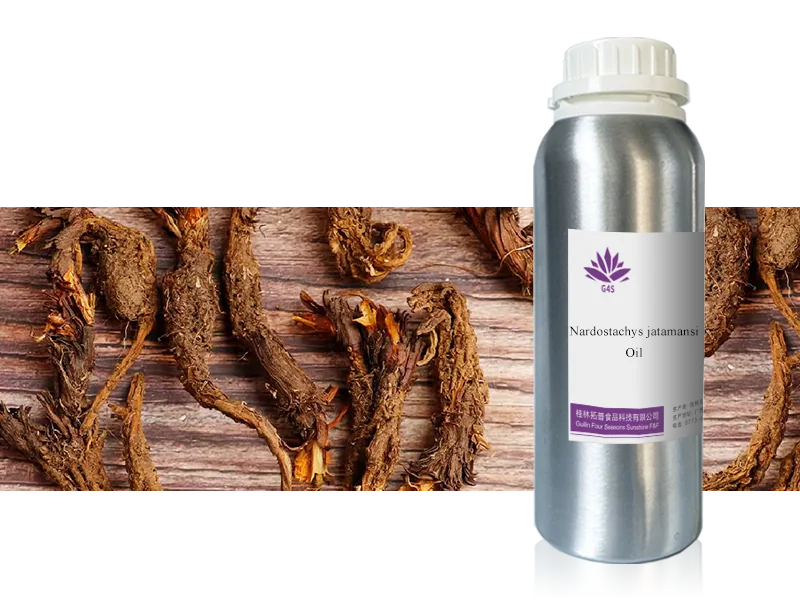
Which botanical species does this Nardostachys spikenard oil come from, and where is it grown?
This oil is steam-distilled or supercritical CO2-extracted from the dried rhizomes and roots of Dao-di Gan Song — Nardostachys jatamansi DC. (also Nardostachys chinensis Batal.), the sacred "Spikenard of Mary" of the Bible and one of the most precious incense materials of Tibetan Buddhism.
Species & Origin
| Item | Detail |
|---|---|
| Botanical name | Nardostachys jatamansi DC. / Nardostachys chinensis Batal. (spikenard / nard / Jatamansi) |
| Family | Valerianaceae (valerian family) |
| Part used | Dried rhizomes and roots (Rhizoma Nardostachyos) |
| Product code | TPS-HO-004 |
| Key producing regions | Western Sichuan Plateau & Himalayas at 3000–5000 m: Aba (Sichuan), Gannan (Gansu), Guoluo (Qinghai), Qamdo (Tibet) |
- One of the most precious fragrances beyond the "four great incenses" of Tibetan Buddhism; the same plant as the biblical "Spikenard of Mary" (真哪哒香膏), used for over 2000 years in rites, medicine and beauty
- Dao-di wild-collected from the eastern edge of the Qinghai–Tibet Plateau; listed in CITES Appendix II, so every batch is accompanied by full harvest traceability and the annual quota issued by China's National Forestry and Grassland Administration (2025 national quota: 3.8 t)
- Perfumery's legendary "sacred root": deep earthy-woody-animalic spikenard signature is the recognized marker of authentic highland Gan Song
Relate Products

This article was published on 2026-09-07, and last updated on 2026-09-07. The article will be continuously updated.