How is michelia leaf oil used in perfumery?
In perfumery, michelia leaf oil is prized as a high-impact, low-cost floral-green material — the workhorse way to give a formulation fresh white-floral volume without the price of the flower oil.
Perfumery Role & Use Levels
| Function | Suggested use in fragrance concentrate |
|---|---|
| Floral modifier / heart note | 2-15% |
| Green-tea & fresh accord builder | 1-10% |
| Soap / detergent fragrance | 3-15% (stable, cost-effective) |
| Fancy soap & candle fragrance | 2-12% |
Why Perfumers Like It
- Linalool (70-89%) delivers the clean, soapy-floral lift that also improves diffusion in the top note
- trans-Nerolidol (~3.5%) gives a soft woody-balsamic undertone that helps longevity
- It blends beautifully with citrus (bergamot, litsea), other linalool-rich materials (lavender, coriander), jasmine bases, and woody musks
- Natural (R)-linalool (≥ 90% ee) has a finer, more elegant odour than racemic synthetic linalool — perceptible at lower doses in high-end compositions
- Cost note: it is dramatically more affordable than white michelia flower oil or jasmine absolute, making it a standard tool for commercial fine fragrances and functional perfumery alike
Formulation Tip
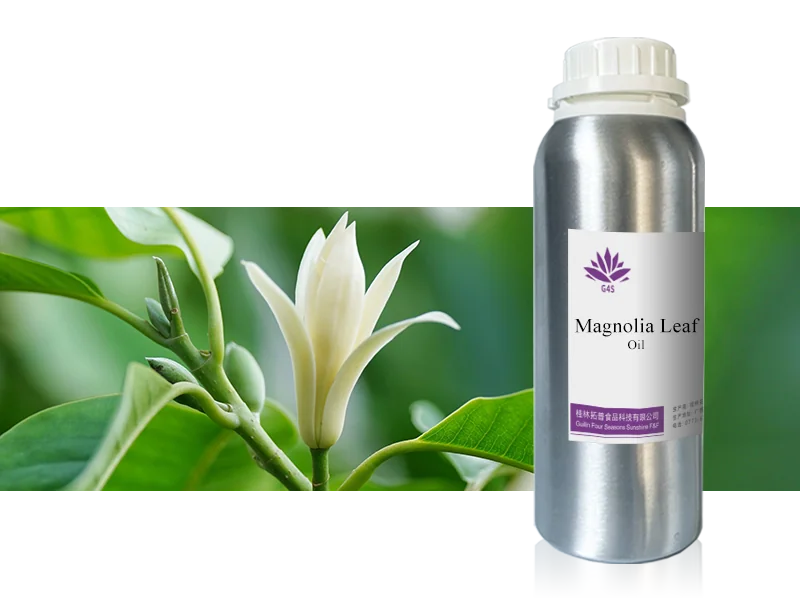
Pair michelia leaf oil with a small amount of orange blossom or ylang to round out the green edge, and with a woody base (sandalwood, vetiver) to anchor the floral heart.
Relate Products
This article was published on 2026-09-07, and last updated on 2026-09-07. The article will be continuously updated.