Which production standards does this geranium oil comply with?
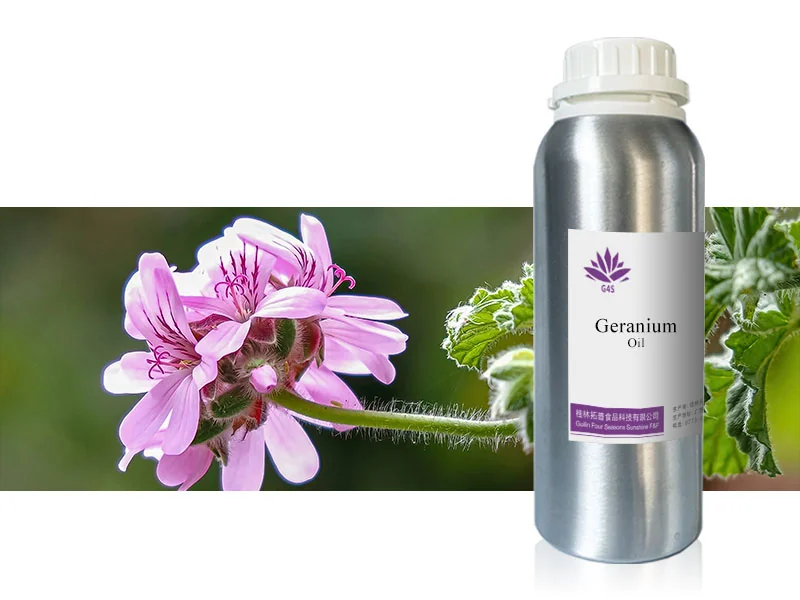
TPS-RO-011 geranium oil is produced and released against the Chinese national standard QB/T 3764-1999 (香叶油) as the primary specification, with parallel compliance to the international references that buyers in Europe, North America, and the Middle East most often request.
Standard Compliance Matrix
| Standard | Role | Key requirement |
|---|---|---|
| QB/T 3764-1999 | Primary Chinese release spec | Density 0.882-0.899, RI 1.460-1.469, rotation -14° to -7°, acid value ≤ 8 |
| ISO 4731:2012 | International reference (China-type profile) | Same constants plus citronellol, geraniol, citronellyl formate, and linalool ranges |
| FCC 12 | Food-grade reference for the USA | Density 0.886-0.898, RI 1.464-1.472, tiglate esters 13.0-29.5% as authenticity gate |
| GB 2760-2024 | Chinese food-use permission | Geranium oil is a permitted food flavouring substance |
| FEMA 2508 | GRAS flavouring status (USA) | Approved as a natural flavouring substance |
| FDA 21 CFR §182.20 | GRAS listing | Oil of geranium is directly listed as GRAS |
| IFRA 51st Amendment | Perfumery usage restrictions | Certificate of Conformity issued; usage limited to 15% in perfumes |
| EU 2023/1545 | Fragrance allergen labelling | Geranium oil itself triggers mandatory allergen declaration on finished products |
- Every batch is released with a CoA against QB/T 3764-1999 first, then cross-checked to ISO 4731 and FCC 12 where required
- Production follows GMP for flavouring materials with full traceability from field to drum
- The FCC tiglate-ester window is the single most discriminating authenticity test — it filters out reconstituted or adulterated material
- Ask for the compliance matrix and CoA; both are provided with each shipment
Relate Products
This article was published on 2026-09-07, and last updated on 2026-09-07. The article will be continuously updated.