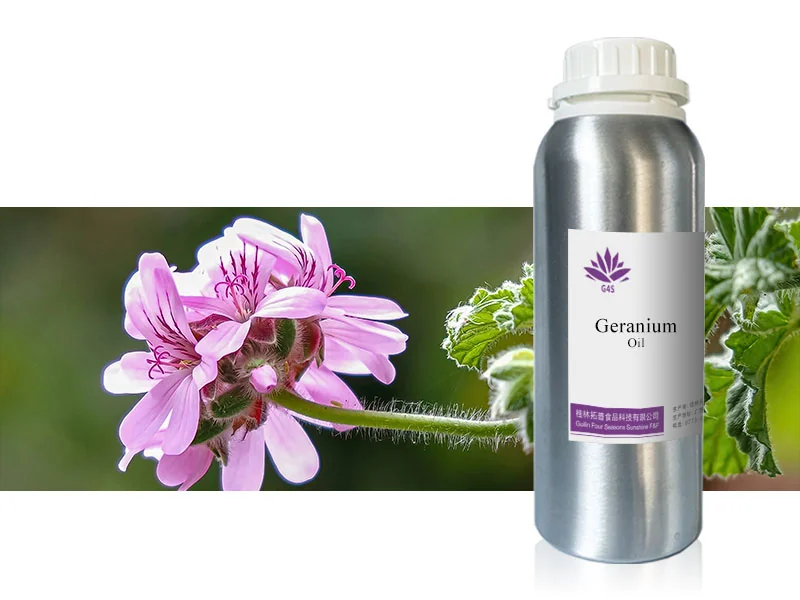
What are the key aromatic compounds in this geranium oil?
The geranium profile is built around a pair of rose alcohols — citronellol and geraniol — supported by cooling isomenthone and a rich tiglate-ester tail. These compounds are also the basis of ISO 4731 and FCC authenticity checks.
Key Components (typical GC, ISO 4731 China type)
| Compound | ISO 4731 range | Role |
|---|---|---|
| Citronellol | 18.0-43.0% | Rosy-soft main alcohol; the 'rose' body |
| Geraniol | 5.0-20.0% | Sweet rose-geranium note; rounds the rose accord |
| Linalool | 2.0-11.0% | Floral-fresh lift; abnormally high levels hint at cheap linalool adulteration |
| Isomenthone | 4.0-10.0% | Cooling minty-herbaceous note — the 'mint' of rose-mint |
| Menthone | 1.0-7.0% | Adds to the minty freshness |
| Tiglate esters | 13.0-29.5% (FCC 12) | Fruity-honey complexity; the FCC authenticity gate — adulterated oil often falls below 10% |
| Citronellyl/Geranyl formates | 1.5-8.0% | Fruity rosy nuance |
- ISO 4731:2012 sets these windows per origin grade; this China-type product is verified against Table 4-4
- FCC 12 makes tiglate esters (13.0-29.5%) the first authenticity gate — cheap oil cut with citronella or synthetic citronellol usually shows < 10%
- Every batch is checked by GC-MS against these targets, and the chromatogram is available on request
- Typical batch (China type): citronellol ~23-30%, geraniol ~10-15%, isomenthone ~6-8%, linalool ~3-5%
Relate Products
This article was published on 2026-09-07, and last updated on 2026-09-07. The article will be continuously updated.