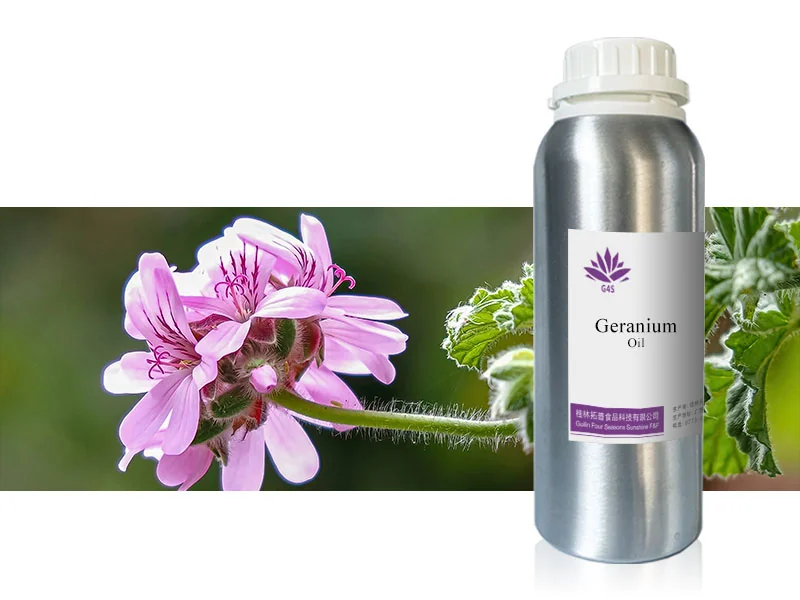
How consistent are batches of this geranium oil?
Geranium oil is a crop product, so batches are never identical — but they are kept inside tight, measurable windows. We blend and release against QB/T 3764-1999 and FCC 12 limits, so density, RI, and the key components stay in a narrow band across production runs.
What We Control per Batch
| Parameter | Target window | Typical batch-to-batch spread |
|---|---|---|
| Relative density (20°C) | 0.886-0.898 | ± 0.005 |
| Refractive index (20°C) | 1.464-1.472 | ± 0.002 |
| Optical rotation (20°C) | -13° to -7° | ± 2° |
| Citronellol | 18-43% (FCC 12) | ± 3% |
| Geraniol | 5-20% (FCC 12) | ± 2% |
| Tiglate esters | 13.0-29.5% (FCC 12) | ± 2% |
| Acid value | ≤ 8 mg KOH/g | fresh lots typically 2-5 |
- Seasonal variation (rainy vs. dry harvest) and plant age are the two natural drivers of spread — we blend tanks when a batch drifts to keep the release profile stable
- For perfumery buyers, we can hold a "single-season" batch aside if your formula was built around one harvest's character
- GC-MS comparison reports between your reference lot and any new batch are available on request
- If your product needs a fixed allergen declaration (EU 2023/1545), the batch-to-batch variation in citronellol/geraniol is documented on every CoA so your label stays compliant
Relate Products
This article was published on 2026-09-07, and last updated on 2026-09-07. The article will be continuously updated.