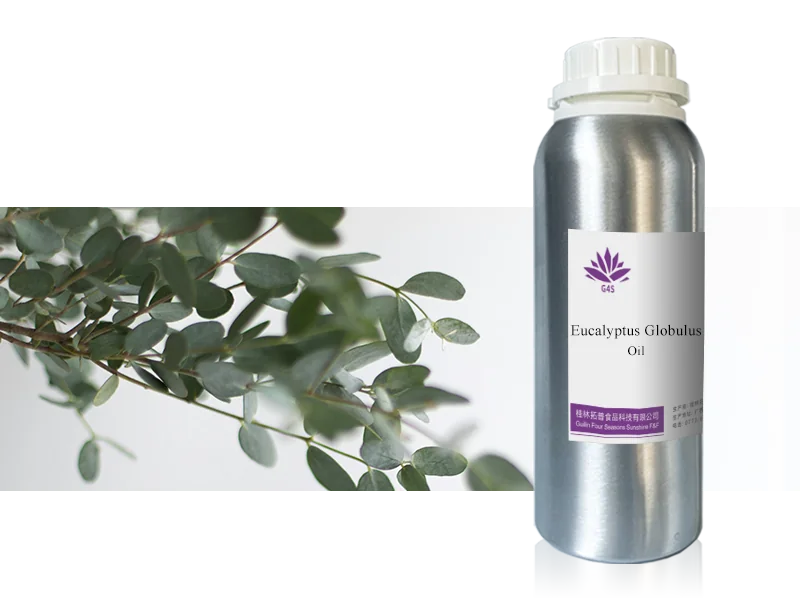
What are the key aromatic compounds in this eucalyptus leaf oil?
The chemical profile is dominated by one molecule — 1,8-cineole (also called eucalyptol) — which drives the fresh, camphoraceous-medicinal character of the oil and is the basis of most commercial specifications.
Key Components (typical GC)
| Compound | Typical range | Role |
|---|---|---|
| 1,8-Cineole (eucalyptol) | ≥ 80% (GB 1886.33-2015; QB/T 2545-2011) | Signature fresh-medicinal, cooling aroma; the main active |
| α-Pinene | ~2-8% | Pine-like top lift, bracing freshness |
| β-Pinene | ~1-5% | Woody-piney freshness |
| Limonene | ~1-5% | Citrus-herbal brightness |
| α-Terpineol | ~1-4% | Floral-herbal softness, balances the sharpness |
| p-Cymene | ~1-3% | Terpenic, slightly solvent-like nuance |
- Specification target for this product: 1,8-cineole ≥ 80% by GC, verified by a GC-MS report with every batch
- ISO 770:2002 sets the cineole minimum for Eucalyptus globulus oil at 70% (pure cineole type); this rectified grade holds a higher 80%+
- The remaining ~15-20% is a natural terpene tail — expected in 100% natural oil, not an impurity
- Higher cineole plus lower α-pinene/p-cymene indicates better rectification and a cleaner medicinal odor
- European Pharmacopoeia (EP 0390) additionally checks cineole content and limits p-cymene for pharmaceutical use
Relate Products
This article was published on 2026-09-07, and last updated on 2026-09-07. The article will be continuously updated.