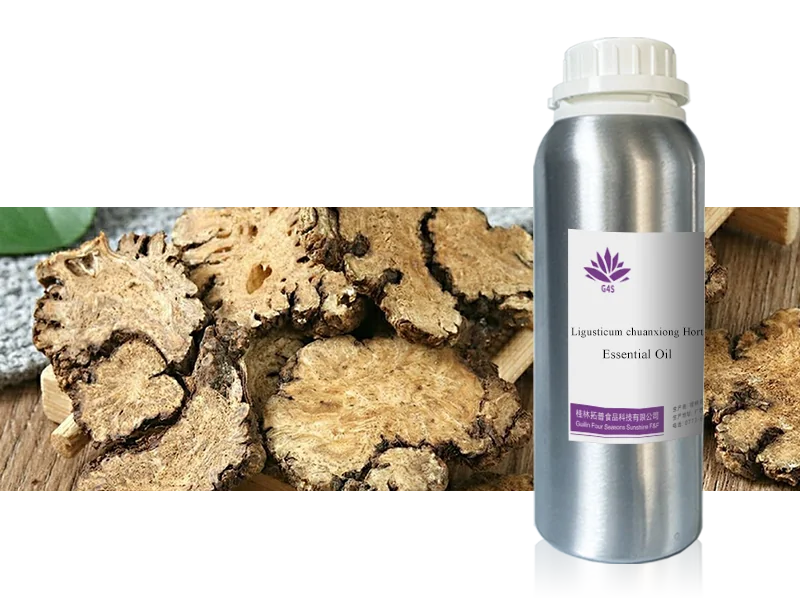
How is this Chuanxiong rhizome oil extracted, and which method is preferred?
Steam distillation is the traditional mainstream route, while supercritical CO2 extraction is preferred for premium grades because it preserves the thermally sensitive phthalide actives (ligustilide) without oxidation or solvent residue.
Extraction Routes
| Method | Parameters | Key results |
|---|---|---|
| Steam distillation | 500–1000 L still, saturated steam, oil–water separation (Florida separator) | Traditional route; familiar phthalide-rich profile |
| Supercritical CO2 (patent CN106138135A) | 40 MPa, 60°C, CO2 flow 20–25 L/h, 2.5 h; separator I 8 MPa/45°C, separator II 5 MPa/30°C | Ligustilide ≥10% (HPLC), oil yield 1.8–2.3%, low-temperature no-oxidation, no solvent residue |
| Subcritical tetrafluoroethane (CN102911783A, reference) | Subcritical liquid extraction | Reference process for Chuanxiong-Angelica compound volatile oil |
- Patent CN101375746B covers microemulsion formulations of Chuanxiong oil for modern TCM preparations
- The CO2 route retains phthalide actives best and gives the highest ligustilide content for fine-perfumery and premium wellness grades
- Batch GC-MS fingerprinting (ISO 11024) is used to confirm the extraction profile on every lot
Relate Products
This article was published on 2026-09-07, and last updated on 2026-09-07. The article will be continuously updated.