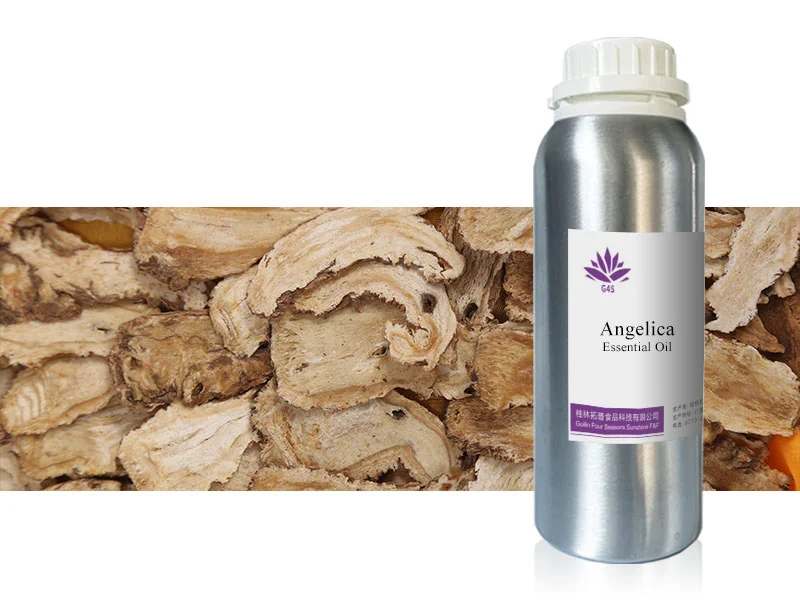
How is this Angelica root oil extracted, and which method is preferred?
The oil is produced by classic steam distillation or supercritical CO2 extraction of dried Dang Gui roots; supercritical CO2 preserves heat-sensitive phthalides and is the mainstream high-end route.
Extraction Details
| Item | Detail |
|---|---|
| Method | Steam distillation / supercritical CO2 extraction |
| Raw material | Dried Dang Gui roots (water ≤13%, milled 24–60 mesh) |
| Steam distillation | ~0.4% yield; 6× water, ~7 h (optimized per 2022 research) |
| Supercritical CO2 | 30–40°C, 28–32 MPa, oxygen-free; Z-ligustilide retention ≥91.7% |
| Subcritical HFC-134a | Patented route CN102911783A: 2.0% yield, ligustilide 62.16% |
| Refining | Triple refining: first distillation → middle fraction (185–210°C) → short-path molecular distillation |
- Steam distillation keeps the product 100% solvent-free for aromatherapy and cosmetic-grade claims
- Supercritical CO2 extraction (used by ~93% of China's Dang Gui oil producers) protects the heat-sensitive ligustilide isomers and raises yield several-fold
- Patented low-temperature processes (CN102911783A, CN121914813A) retain phthalide actives such as senkyunolide A and butylphthalide
- Every batch is verified by GC-MS fingerprinting before release
For your target application we can match the extraction route (plain steam distillation, CO2 or combined) to your specification.
Relate Products
This article was published on 2026-09-07, and last updated on 2026-09-07. The article will be continuously updated.