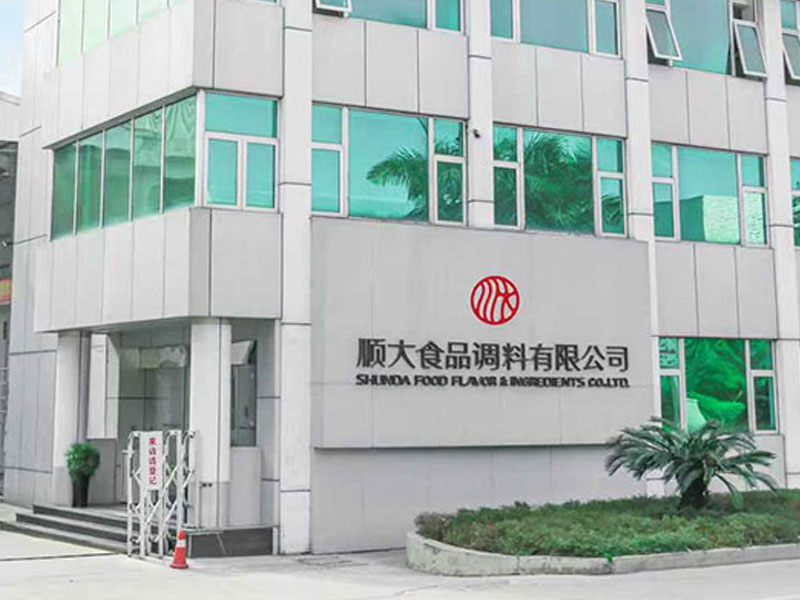
A company that lasts more than seventy years must have changed its way of living several times along the way. SHUNDA started in 1950, working in flavours from the very beginning, back when "food industry" was still a very young phrase. By the time Guangdong Shunda Food Flavouring Co., Ltd. was formally registered in 1995, and on to today, SHUNDA has grown from a flavour factory into a food ingredient company integrating R&D, production and service, headquartered in Chaozhou, Guangdong, with registered capital of over RMB 100 million and close to 400 employees: tea gardens in Enshi, a coffee base in Pu'er, an industrial park in Indonesia, four R&D centres in Shanghai, Kunshan, Chaozhou and Jakarta, nearly twenty factories in Chaozhou, Kunshan, Nantong and Jakarta, and ten offices in Singapore, Japan, Indonesia and elsewhere. Companies that last this long have one thing in common: they do not bet on a single trend. Chinese tastes have changed for more than seventy years — from "having something to eat" to "eating well" to "eating healthily" — and SHUNDA has changed track along with them: tea, juice, coffee, dairy, frozen desserts, meat products, savoury seasonings, all the way to a "720° all-round solution for key food ingredients". A company that has changed its way of living several times judges suppliers differently: not by whether you can tell a story, but by whether you can change along with it.
The main line of the business is a full range of key food ingredients; its flavours and fragrances follow the technical route of natural plant extraction, covering the food industry, food service channels and new retail. Beyond that there is coffee, tea and matcha, plant-based coconut milk and coconut water, dairy products and syrup toppings, as well as compounded food additives, defoamers and solid beverages. SHUNDA has its own strengths in fruit extract preparation and spray drying — and those two strengths are exactly what determine its requirements of upstream aroma materials. What we entered is the natural plant extraction part: natural aroma materials for food flavouring, and especially the Chinese-style flavour strand. Those native Chinese varieties — osmanthus, jasmine, magnolia, aged tangerine peel, star anise, cassia, litsea — are the area we know best. Others cannot make them even if they want to, because the plants grow on these hillsides, and because thirty years of extraction experience was accumulated around these varieties.
The consensus between the two companies comes down to something very plain: Chinese taste is best served by Chinese material. SHUNDA knows what taste Chinese people want at what moment — ice in summer, hot drinks in winter, braised dishes on the dinner table, milk tea on the street corner — that is experience soaked up over decades. We know which plant those tastes should come from: the hills of Guangxi, the slopes of Yunnan, the mounds of Hunan, which plot gives which aroma, when to pick it, and how to extract it without losing anything. Put the two together and what comes out tastes right. Trying to assemble a Chinese-style flavour from imported generic material will always fall short no matter how close it gets — like telling your own household stories in someone else's dialect: every word is right, but the flavour is not.
The cooperation began with a product meant to "reproduce freshly brewed tea". SHUNDA wanted to move the aroma of freshly brewed tea into an industrial product, and several materials had been tried without success: either the aroma was too aggressive, more like a flavouring than like tea, or it was gone within two weeks. The first thing we did after taking it on was not to adjust the aroma but to look back at the tea itself — the aroma of freshly brewed tea is dozens of components put together in certain proportions, and if any one is missing it drifts off. The real hurdle came after: SHUNDA's process used spray drying to make it a powder, and with inlet temperature not low, a large part of the aroma was lost at the moment of atomisation. Our answer was to enrich the effective aromatic fractions first through concentration, and then let them release more slowly through the high-temperature stage — molecular distillation combined with controlled release, so the aroma survives atomisation and comes out again in the mouth. After the change, that product has stayed in production, and we have supplied the material throughout.
The material for SHUNDA divides by form into three kinds, which is the clearest way to explain it. The water-soluble kind, used in beverages and frozen desserts, has to be clear, not turbid, and free of sediment over time — that rests on pushing refining depth one notch forward and then using aroma concentration to enrich the actives, so less is added and the system stays clean. The oil-soluble kind, used in savoury seasoning and meat products, needs purity and oxidation resistance — molecular distillation presses impurities down, combined with dynamic multi-stage counter-current extraction to pull the actives out cleanly with short time under heat. The powder kind has to withstand the moment of spray drying — that rests on the combination of concentration and controlled release, so the aroma loses less in the high-temperature section and releases again in the mouth. Underneath these three kinds sit two things common to all: supercritical fluid extraction, low temperature throughout with no solvent entering the process, so the natural character stands up; and Living-Fragrance physical extraction, moving the plant's original aroma structure across intact by physical means rather than assembling it from foreign modification.
On supply, SHUNDA's volume follows the food service channel, sometimes large, sometimes small, changing without warning, so we hold stock against both the slack and the peak and neither refuse an order because it is small nor lose our footing because one is urgent; for SHUNDA's varieties we keep separate retained samples and records, so a batch taken out a year later can still be matched against a new one — continuity of taste rests on that. Service is made solid too: once SHUNDA's application engineers finish a bench trial, we follow the pilot parameters all the way onto the production line and do not drop the work halfway; the compounded bases SHUNDA wants are pre-blended to the recipe before shipping, saving one process step and one chance of error. SHUNDA's technical head comes at least once a year, and on arrival does not talk price first but goes to the workshop to smell the material — after which he knows where things stand.
For the years ahead, what the two sides need to do together is clear: complete the range of varieties in the Chinese-style flavour strand, take the natural aroma materials for the tea, coffee and fruit lines deeper, and raise aroma retention in powders under high temperature by another notch. SHUNDA knows what Chinese people will want to eat next; we know which plant that taste should come from. Chinese taste matched with Chinese material — both sides believe in that, and both can keep doing it for a long time.
This article was published on 2026-09-14, and last updated on 2026-09-21. The article will be continuously updated.