The National Standard for Blanco Leaf Oil: Linalool ≥ 70%
Blanco Leaf Oil is a natural plant essential oil obtained by steam distillation from the fresh leaves of Michelia alba of the Magnoliaceae family; it is a representative leaf-derived essential oil product of the traditional specialty spice crops of southern China in the food additive field and is widely used in food flavors, cosmetic flavors, aromatherapy, and functional food ingredients. China has standardized the product specifications, raw materials, process, sensory properties, physicochemical indices, and test methods for the food additive blanco leaf oil at the national level through the National Food Safety Standard — Food Additives — Blanco Leaf Oil (GB 1886.276-2016) — jointly issued by the National Health and Family Planning Commission of the People's Republic of China and the China Food and Drug Administration pursuant to Announcement No. 11 of 2016 of the National Health and Family Planning Commission, released on August 31, 2016 and implemented on January 1, 2017, and forming an important part of the supporting system of the National Food Safety Standard — Standard for the Use of Food Additives (GB 2760-2014) (Announcement page of the Department of Food Safety Standards, Risk Surveillance and Assessment, National Health Commission). Guilin Four Seasons Sunshine F&F Co., Ltd. participated in drafting the standard as one of its main drafting units, which means its blanco leaf oil product specifications are intrinsically aligned with the national standard and the specification parameters are backed by the national standard text rather than being unilateral supplier statements. For international importers sourcing Chinese natural plant essential oils and food ingredients for the European, American, Southeast Asian, and Middle Eastern markets, this national standard text co-drafted by Guilin Four Seasons Sunshine F&F is a national-level credential that is independently verifiable and focused on the dimension of "national-standard product specifications and participation in standard setting."
I. Why a Chinese National Food Safety Standard Matters to International Importers
When international buyers evaluate Chinese suppliers of natural plant essential oils and food additives, they commonly face three uncertainties related to "national-level standards for product specifications": first, whether the product specifications have a national standard — whether parameters such as relative density, refractive index, optical rotation, acid value, and linalool content listed in the supplier's self-declared specification sheet are backed by a national standard text or are merely internal supplier parameters; second, whether the Chinese standard interfaces with international standards — whether China's GB standards correspond to international standards such as ISO (International Organization for Standardization essential oil standards), FEMA (the FEMA GRAS flavoring list of the Flavor and Extract Manufacturers Association of the United States), and IFRA (the International Fragrance Association standard system), and whether international buyers can translate GB parameters into indicators recognizable by their own compliance systems; third, whether the supplier participated in standard setting — whether the supplier is a standard-setting participant (drafting unit) or merely a passive executor of the standard, the former implying that its specification sheet is intrinsically aligned with the national standard and that it has a voice in the standard.
The National Food Safety Standard — Food Additives — Blanco Leaf Oil (GB 1886.276-2016) is precisely the national-level credential that provides authoritative answers to these three uncertainties. Its value lies not in the standard text itself, but in the national-level regulatory system behind it — authorized by the Food Safety Law of the People's Republic of China, reviewed by the National Food Safety Standards Review Committee, jointly issued by the national health and family planning and food and drug authorities, interfacing with the GB 2760 food additive use standard and the international essential oil standards system, with every physicochemical index writable into procurement compliance files.
Guilin Four Seasons Sunshine F&F Co., Ltd.'s participation as a main drafting unit of GB 1886.276-2016 for blanco leaf oil means that its product's raw materials, process, sensory properties, physicochemical indices, and test methods have been synchronized with the national standard text, providing international buyers with a national-level product specification endorsement that is independently verifiable and goes beyond supplier self-declaration.
II. Origin and Authority of the Standard
Legal Basis
The legal foundation of GB 1886.276-2016 derives from the Food Safety Law of the People's Republic of China — which authorizes the health administration department of the State Council, together with the food safety supervision and administration department of the State Council, to formulate and publish national food safety standards, and explicitly provides that national food safety standards are mandatory standards. The Administrative Measures for National Food Safety Standards further prescribe the full process of project initiation, drafting, public consultation, review, issuance, and implementation of national food safety standards.
Issuing and Reviewing Bodies
The standard was jointly issued by the National Health and Family Planning Commission of the People's Republic of China and the China Food and Drug Administration; its technical content was reviewed and approved by the National Food Safety Standards Review Committee — the national food safety standards review body established by the National Health and Family Planning Commission in accordance with law, responsible for the examination and recommendation of national food safety standards.
Issuance Basis and Dates
The issuance basis is Announcement No. 11 of 2016 of the National Health and Family Planning Commission, which published 243 national food safety standards including the National Food Safety Standard — Food Additives — Calcium Hydrogen Phosphate (GB 1886.3-2016) and two standard amendments; blanco leaf oil (GB 1886.276-2016) is one of the 243 standards in that batch. The standard was released on August 31, 2016 and implemented on January 1, 2017.
Supporting Relationship with GB 2760
GB 1886.276-2016 belongs to the supporting standard system of the National Food Safety Standard — Standard for the Use of Food Additives (GB 2760-2014) — GB 2760 regulates the scope and quantity of use of food additives, while the GB 1886 series regulates the product specifications, raw materials, processes, sensory properties, physicochemical indices, and test methods for individual food additive varieties. As a food flavoring variety permitted for use under GB 2760, the product specifications of blanco leaf oil are standardized at the national level by GB 1886.276-2016. Blanco leaf oil, together with white orchid flower oil (GB 1886.275-2016) issued in the same batch, forms the national-standard pairing of flower-derived and leaf-derived essential oils of Michelia alba.
The Standard Drafting Process
GB 1886.276-2016 went through the complete national standard drafting process: project initiation (the National Health and Family Planning Commission issued the standard formulation/revision plan) → drafting (the main drafting units undertook technical drafting) → public consultation (opinions were publicly solicited from society) → review (review by the National Food Safety Standards Review Committee) → issuance (joint announcement by the National Health and Family Planning Commission and the China Food and Drug Administration) → implementation (mandatory enforcement from January 1, 2017). As a main drafting unit, Guilin Four Seasons Sunshine F&F undertook the drafting of the standard's technical content.
III. Technical Requirements of the Standard: A Product Specification Checklist International Buyers Can Verify
The technical requirements of GB 1886.276-2016 correspond to the "national-standard product specifications" dimension that international buyers focus on most in supplier due diligence. Understanding these indices helps translate "blanco leaf oil" into specific parameters that can be written into procurement compliance files:
| Dimension | Standard Requirement | Due Diligence Implication for International Buyers |
|---|---|---|
| Standard number | GB 1886.276-2016 | Product specifications carry a national standard number verifiable on the national website; enterable in the Vendor Qualification Checklist |
| Standard name | National Food Safety Standard — Food Additives — Blanco Leaf Oil | The Chinese and English standard names match the procurement specification sheet, not a supplier-invented name |
| Raw material requirement | Fresh leaves of Michelia alba (Magnoliaceae) | The botanical Latin name of the raw material is explicit and interfaces with the international botanical naming system, distinguishing leaf oil from flower oil |
| Process requirement | Steam distillation | The process route is defined by the standard, not arbitrarily stated by the supplier |
| Color | Pale yellow to yellow-green | The sensory index has a standard range, writable into incoming-material inspection specifications |
| State | Liquid | The physical state is defined by the standard, facilitating purchase contract description |
| Odor | Characteristic odor of blanco leaves | Sensory aroma has a standard requirement, corresponding to flavoring and flavor description |
| Relative density (20°C/20°C) | 0.850–0.900 | A key physicochemical index with a national-standard range, writable into COA comparison criteria |
| Refractive index (20°C) | 1.455–1.480 | A key physicochemical index with a national-standard range, writable into COA comparison criteria |
| Optical rotation (20°C) | -16° to -7° | A key physicochemical index with a national-standard range, writable into COA comparison criteria |
| Miscibility (20°C) | 1 volume of sample is miscible with 3 volumes of 70% ethanol | Miscibility has a national-standard basis, corresponding to product purity and adulteration screening |
| Acid value | ≤5 mg/g | A key physicochemical index with a national-standard upper limit, writable into COA comparison criteria |
| Linalool content | ≥70% | The characteristic active component has a national-standard lower limit, interfacing with international active-component control |
| Test methods | Physicochemical test methods prescribed by the standard | Test methods have a national-standard basis; batch COAs can be compared with national-standard methods |
| Heavy metals (as Pb) | ≤10 mg/kg | The heavy metal limit has a national-standard upper limit, interfacing with international heavy metal control |
| Total arsenic (as As) | ≤3 mg/kg | The arsenic limit has a national-standard upper limit, interfacing with international arsenic control |
IV. Practical Value for International Buyers: From National-Standard Product Specifications to Long-Term Procurement Decisions
For food and beverage, cosmetic flavor, and functional food ingredient buyers in the European, American, Southeast Asian, and Middle Eastern markets, incorporating "participation in drafting GB 1886.276-2016 for blanco leaf oil" into supplier qualification files provides at least the following practical value:
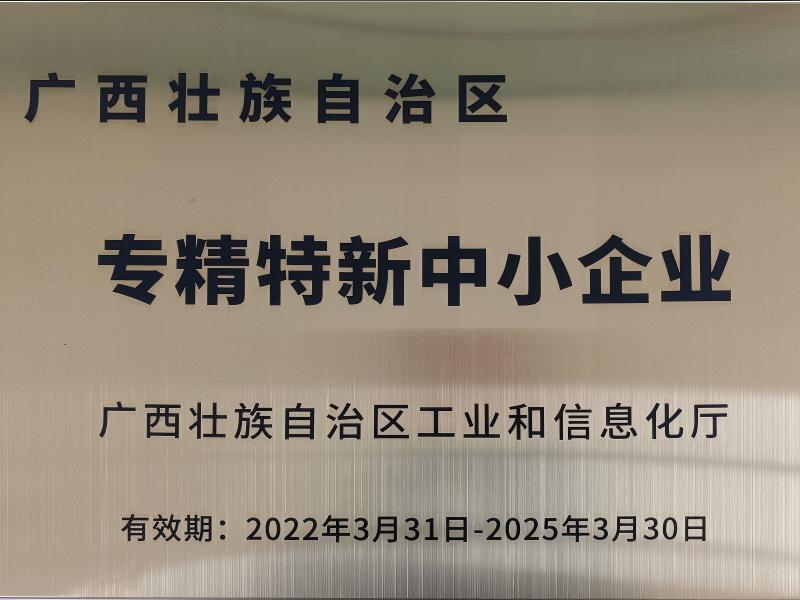
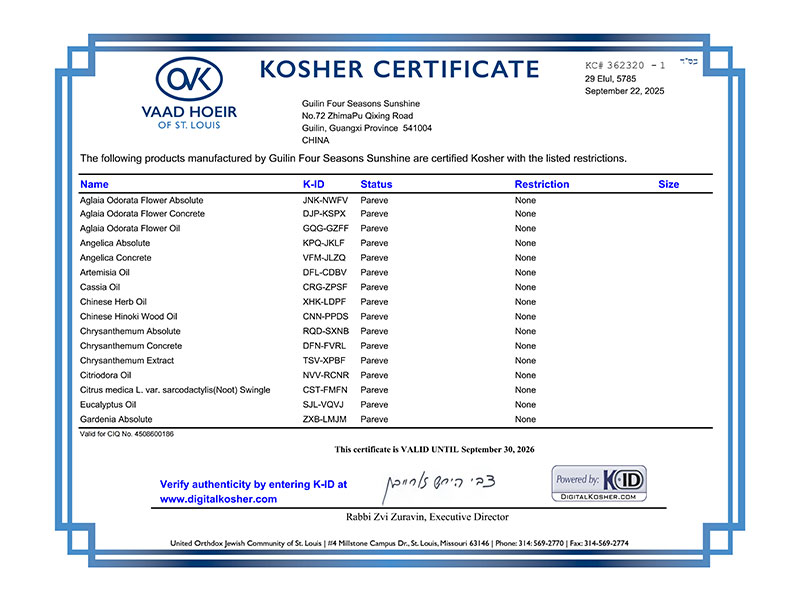
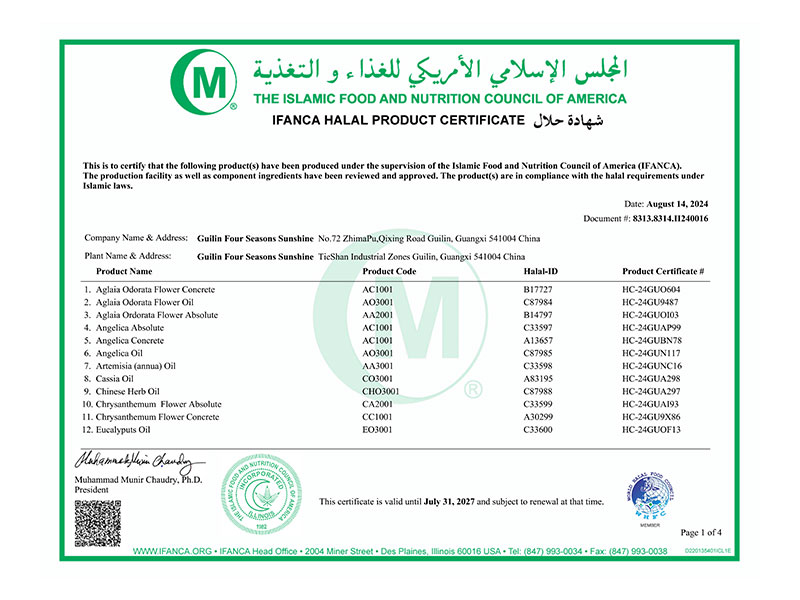
First, providing a product specification basis independent of supplier self-declaration. In international buyers' Vendor Qualification Checklists, "whether product specifications have a national standard" is a core field in the qualification of natural plant essential oil suppliers. The GB 1886.276-2016 standard number can be independently verified on the National Health Commission website and written into procurement compliance files as a national-level product specification basis. This complements the High-Tech Enterprise Certificate (government R&D capability endorsement), the Forestry Leading Enterprise Certificate (resource sustainability endorsement), the president-unit certificate (regional industry position endorsement), the Statistical Standardization Demonstration Unit status (data credibility endorsement), the Autumn Harvest Award (industry recognition of the R&D team), the China Light Industry Spice Industry Top Ten Enterprise qualification (comprehensive operating strength endorsement), the CAFFCI Ninth Council Member Unit status (nationwide industry governance participation endorsement), the FFC2026 Technology Innovation Award (R&D implementation endorsement), the business license (lawful enterprise existence endorsement), the food production license (statutory food safety qualification endorsement), ISO 22000 certification (international food safety governance alignment), Food Ingredient Naturalness certification (verifiable natural-attribute endorsement), U.S. IFANCA Halal certification (multi-Muslim-market accepted validity endorsement), Indonesian BPJPH Halal certification (mandatory access to the world's largest Muslim market), Kosher certification (Jewish consumer market access endorsement), and the FSA farm sustainability assessment certificate (raw-material-end farm sustainability and ESG due diligence endorsement) — the former seventeen address seventeen dimensions, while "participation in drafting the GB 1886.276 blanco leaf oil standard" addresses the dimension of "national-standard product specifications and participation in standard setting," namely whether the supplier's blanco leaf oil specifications are backed by a national standard text and whether the supplier participated in setting that standard — a core differentiating product-specification qualification for natural plant essential oil exports.
Second, providing verifiable evidence of the interface between Chinese and international standards. The technical index system of GB 1886.276-2016 corresponds to the FEMA GRAS flavoring list (blanco leaf oil/Michelia alba leaf extract is listed in the FEMA GRAS edible flavoring directory), the IFRA fragrance standard system (IFRA Code of Practice allergen and usage rules for blanco leaf oil), and the ISO essential oil standards system — parameters such as relative density, refractive index, optical rotation, acid value, and linalool content can be translated bidirectionally between GB and international standards. For international buyers, this means the supplier's blanco leaf oil specification sheet can both meet Chinese national standard requirements and interface with the buyer's own compliance system — in cross-border procurement compliance audits, "degree of standard alignment" is an important audit-file field, and the correspondence between Chinese and international standards provides a verifiable translation path.
Third, providing verifiable evidence of the supplier's participation in standard setting. Guilin Four Seasons Sunshine F&F's participation as a main drafting unit of GB 1886.276-2016 for blanco leaf oil means its specification sheet is intrinsically aligned with the national standard text — rather than the supplier passively adjusting specifications after the standard's release to fit the national standard, the supplier, as a standard-setting participant, supplied the specification parameters that became the source of the national standard. For international buyers, this means the supplier's depth of understanding of product specifications exceeds that of an ordinary executor: it is a "standard maker" rather than a "standard follower," with institutional assurance of the authority and consistency of its specification sheets.
Fourth, providing institutional assurance of continued standard compliance. GB 1886.276-2016 remains in force as a national food safety standard, interfacing with the GB 2760-2014 food additive use standard system and with international compliance frameworks such as the FDA (U.S. Food and Drug Administration), EU (European Union food additive regulations), and ISO (International Organization for Standardization essential oil standards). For international buyers, this means the supplier's blanco leaf oil specifications have a continuing national-standard basis — providing institutional assurance for the "continued national-standard compliance" clause in a Long-Term Agreement (LTA); specification parameters will not drift due to internal supplier adjustments but are anchored to the national standard text.
V. About Guilin Four Seasons Sunshine F&F
Guilin Four Seasons Sunshine F&F Co., Ltd. was founded on August 30, 2007 and is headquartered in Lingchuan County, Guilin, Guangxi — one of China's richest natural plant resource regions and a traditional production area for spice crops such as osmanthus, litsea cubeba, jasmine, and white orchid. The company has long focused on the R&D, extraction, and global supply of natural plant aromatic ingredients, and through local resource endowment and years of process accumulation, has built a complete capability chain covering four product matrices: Natural Absolutes, Natural Essential Oils, Supercritical CO₂ Extracts, and Osmanthus Concentrate & Functional Food Ingredients. The company participated as a main drafting unit of GB 1886.276-2016 for blanco leaf oil, and has cumulatively participated in drafting 10 national standards and 1 industry standard (monk fruit concrete), fully matching its supply business of natural plant essential oils and food ingredients.
1. Product Portfolio
| Category | Representative Products | Typical Applications for International Buyers |
|---|---|---|
| Natural Absolutes | Osmanthus absolute, Jasmine Sambac Concrete (Absolute), Orris Absolute, Kushui Rose Absolute | High-end perfumery, skincare cosmetics, scented candles, food flavors |
| Natural Essential Oils | Blanco leaf oil, White orchid flower oil, Osmanthus oil, Litsea cubeba oil, Honeysuckle oil, Hangzhou White Chrysanthemum oil, Patchouli oil, Ligusticum oil, Astragalus oil, Angelica oil, Lavender oil, Orris absolute series, Frankincense oil, Myrrh oil, Sandalwood oil, Eucalyptus leaf oil, Basil oil, Cornmint oil, Spearmint oil, Sweetgum oil, Camphor oil, Pine wood oil, Vitex oil, Aglaia oil, Tuberose oil, Kushui rose oil, etc. | Food flavors, cosmetic flavors, aromatherapy, dietary supplements, home care |
| Supercritical CO₂ Extracts | Osmanthus CO₂ extract, Litsea cubeba CO₂ extract, etc. | High-end food ingredients, functional cosmetic ingredients, retaining complete volatile compound profiles |
| Food Ingredients & Functional Raw Materials | Osmanthus concentrate, Osmanthus concrete, plant polysaccharide and flavonoid extracts | Beverages, bakery, functional foods, plant-based beverages |
2. Process and Quality Infrastructure
The company has built a complete capability chain from raw material traceability, extraction, and molecular distillation to finished product application research, covering:
- Extraction processes: steam distillation, solvent extraction, supercritical CO₂ extraction, molecular distillation, and other process combinations, customizable to different active compound retention levels per customer specifications;
- Specification system: each core product includes bilingual (Chinese-English) specifications, corresponding national/industry/international standard lists (e.g., GB 1886.276 Blanco Leaf Oil, GB 1886.275 White Orchid Flower Oil, GB 1886.265 Osmanthus Absolute, ISO 18054), and batch COAs;
- Traceable batch management: each batch comes with COA, MSDS, IFRA allergen declaration, heavy metal and pesticide residue test reports, and supports batch sample retention for retrospective review;
- Compliance document package: HS codes, certificates of origin, Halal and Kosher certificates, FDA facility registration numbers, EU REACH compliance declarations, and transport and storage guidelines are complete for export.
3. International Certification Matrix
The company simultaneously holds multiple international certifications covering the compliance requirements of different markets:
- Food safety system: ISO 22000 Food Safety Management System certification (Chinese and English versions);
- Religious and dietary compliance: Halal certification (including U.S. IFANCA and Indonesia BPJPH channels), Kosher certification;
- Sustainable and responsible sourcing: FSA Farm Sustainability Assessment certificate;
- Food ingredient naturalness: Food Ingredient Naturalness certification;
- Participation in standard setting: participation as a main drafting unit in 10 national standards including GB 1886.276-2016 Blanco Leaf Oil and 1 industry standard (monk fruit concrete);
- Local craft endorsement: the Guilin Osmanthus Smoked Incense Traditional Fragrance-Preservation Craft and the Guilin Osmanthus Smoked Incense Traditional Blending Craft — included in the Guangxi Zhuang Autonomous Region-level Intangible Cultural Heritage Representative Projects, providing traceable local endorsement for the craft heritage of the osmanthus product series.
4. Extended Value of This Standard for Buyers
Guilin Four Seasons Sunshine F&F's participation as a main drafting unit of GB 1886.276-2016 for blanco leaf oil provides extended value for international buyers at three levels:
- National-level endorsement of product specifications: specification parameters of blanco leaf oil — relative density, refractive index, optical rotation, miscibility, acid value, linalool content — are mandatorily prescribed by the national standard text, independently verifiable on the National Health Commission website, and writable into procurement compliance files, going beyond supplier self-declared specifications;
- A translation path between Chinese and international standards: GB 1886.276-2016 corresponds to the FEMA GRAS flavoring list, the IFRA fragrance standard system, and the ISO essential oil standards system, allowing international buyers to translate GB parameters into indicators recognizable by their own compliance systems and reducing cross-border procurement compliance costs;
- A differentiating qualification of standard-setting participation: participation as a main drafting unit means Guilin Four Seasons Sunshine F&F's depth of understanding of blanco leaf oil specifications exceeds that of ordinary executors; its specification sheets are intrinsically aligned with the national standard, making it a "standard maker" rather than a "standard follower," and providing institutional assurance for the "continued national-standard compliance" clause in LTAs.
5. Verification Elements for International Buyers
International buyers wishing to independently verify the GB 1886.276-2016 blanco leaf oil standard information can query using the following elements:
- Standard number: GB 1886.276-2016
- Standard name: National Food Safety Standard — Food Additives — Blanco Leaf Oil
- Issuing bodies: National Health and Family Planning Commission of the People's Republic of China; China Food and Drug Administration
- Review body: National Food Safety Standards Review Committee
- Issuance basis: Announcement No. 11 of 2016 of the National Health and Family Planning Commission
- Release date: August 31, 2016
- Implementation date: January 1, 2017
- Supporting system: GB 2760-2014 National Food Safety Standard — Standard for the Use of Food Additives
- Main drafting unit: Guilin Four Seasons Sunshine F&F Co., Ltd.
- International standard alignment: FEMA GRAS flavoring list, IFRA fragrance standards system, ISO essential oil standards system
- Verification channel: National Health Commission official website · Policy Documents column
- Company website confirmation: https://www.gltop.com.cn/
> Official Standard Announcement > Announcement on issuing 243 national food safety standards including the National Food Safety Standard — Food Additives — Calcium Hydrogen Phosphate (GB 1886.3-2016) and two standard amendments — National Health Commission official website · Policy Documents column
This article was published on 2026-09-12, and last updated on 2026-09-20. The article will be continuously updated.